Dark and Cool Is a Start. Here's What's Missing.
Google 'sleep hygiene tips' and the list never changes. Dark room. Cool room. No screens. Regular schedule. No caffeine after 2 PM. It's fine advice. But it's also a light-switch model of sleep: reduce sensory input, lower core temperature, brain turns off.
TCM sees it differently. Sleep isn't a shutdown. It's a transition — the daily movement from Yang (activity, warmth, consciousness, outward focus) to Yin (rest, coolness, unconsciousness, inward repair). And the quality of your sleep depends not just on whether you can turn off Yang but on whether you have enough Yin to hold it. This distinction changes the whole project.
It's the difference between a bedroom that's merely dark and one that's genuinely restorative. Between waking up functional and waking up... restored.
Think of it like this: Yang is a restless guest. If your house is empty — no furniture, no food, nothing to settle into — Yang wanders around all night, checking its phone, rattling doorknobs. That's the dark-cool bedroom without Yin. The Yin-nourished bedroom gives Yang something to sink into. It's not just absent stimulation; it's present restoration. The linens feel right. The air smells calm.
The space feels held.
Yin must be strong enough to embrace Yang. When it is, sleep comes without effort. When it isn't, you can paint your windows black and still stare at the ceiling at 3 AM. The next sections are about building that embrace — not just removing what keeps you awake, but adding what actually puts you under.
"Yang energy is active during the day and rests at night. Yin energy is dominant at night and supports the body's restoration. When Yang enters Yin, sleep occurs. When Yang emerges from Yin, waking occurs."
Your Body Has a Clock, and It Doesn't Care About Your Deadlines
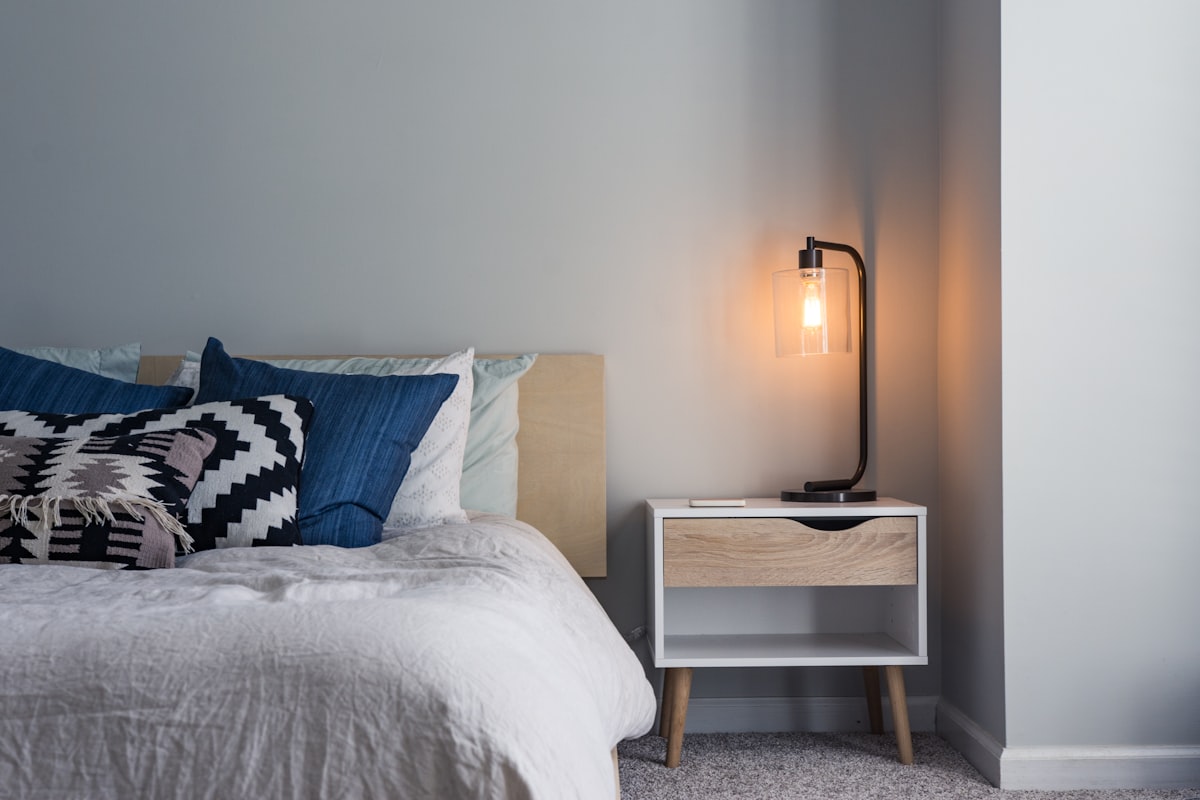
The 24-hour day is a continuous Yin-Yang dance — not a binary switch but a gradual, layered shift. Understanding the choreography matters because every sleep problem has a specific hour where it lives.
Dawn (5-7 AM): Yang rises. Sunlight, cortisol peak, body temperature climbing. This is the natural wake window. If you need three alarms and a pot of coffee to surface, your Yang is too weak to rise on its own — that's a Yang Deficiency pattern.
Midday (11 AM-1 PM): Yang peaks. The Heart hour — maximum mental clarity, maximum outward energy. The post-lunch dip is normal across all cultures, but if you're face-planting and desperate to nap, your Spleen Qi isn't keeping up with Yang's demand.
Dusk (5-7 PM): Yang begins descending. The Kidney hour — when the body's deepest energy reserves are assessed. This is the window for gentle exercise: walking, Tai Chi, Yin yoga. Activity that helps Yang descend without reigniting it.
Evening (7-11 PM): Yin rises to dominance. The Pericardium and Triple Burner hours are the transition zone. Yang must be gently invited inward here — and this is where modern life does its worst damage. Screens, work emails, late meals, stress — all keep Yang running hot, and then we wonder why it won't settle on command.
Night (11 PM-3 AM): Yin rules. Gallbladder and Liver hours. Deepest Yin phase — blood purification, growth hormone surge, cellular repair. This is non-negotiable deep sleep territory. If you're awake here, Yin is too weak to hold Yang. Something's depleted.
Pre-Dawn (3-5 AM): Yang begins its slow return. The Lung hour — transition back toward waking. If you wake here and can't fall back asleep, it's often Yin-depletion again: Yang surfaces prematurely. The battery can't hold a charge.
Map your own energy curve for a week. When do you feel sharpest? When do you crash? Compare it to the rhythm above. The moment where your curve diverges from the pattern is your diagnostic entry point. And the window from 7-9 PM — the Yang-to-Yin transition — is the most important two hours of your day for sleep. Treat them accordingly.
- Map your daily energy curve for one week. Note when you're sharpest and when you crash. Compare to the Yin-Yang rhythm to find your weak point.
- 7-9 PM is the most important two hours of your day for sleep quality. Protect them.
- Waking at the same time every night? Cross-reference with the organ clock. The hour when Yin fails to hold Yang tells you which organ needs support.
"Therefore, the sage nourishes Yang in spring and summer, and nourishes Yin in autumn and winter. To follow the rhythm of Yin and Yang is to follow the rhythm of life itself."
Bedroom Feng Shui That Actually Matters for Sleep
Bedroom Feng Shui sounds esoteric. It's not. It's environmental psychology with a 2,000-year head start — arranging your space so energy flows in a way that supports the Yin-Yang transition. The principles are practical, and they align surprisingly well with what sleep research recommends.
Bed placement: the command position. Your bed should let you see the door from where you lie, without being directly in line with it. This satisfies a deep-brain need wired into the amygdala — your unconscious surveillance system stays partially online during sleep, scanning for threats. Being able to see the entrance without being in the direct path of energy flowing through the doorway tells your Shen: safe.
You can let go. Beds directly in line with the door produce low-grade hypervigilance that keeps the sympathetic nervous system activated all night. If you can't reposition the bed, place a mirror so you can see the door's reflection.
No electronics. No screens, no blinking LEDs, no phone chargers on the nightstand. TCM and sleep science agree on this completely. Electronics emit Yang energy — light, EMFs, and symbolic content that keeps cognition active. Every little LED is a small Yang spike disrupting Yin's territory. Charger goes in the hallway. Unavoidable LEDs get covered with black tape. WiFi off at night if the router is near the bedroom.
Clear the clutter — especially under the bed. Stacks of paperwork, storage bins, laundry piles — Feng Shui calls this stagnant Qi. Energy can't flow smoothly through physically obstructed space. The area under the bed corresponds to the subconscious mind; stuff stored there symbolically represents unresolved mental clutter.
Your bedroom should be the most minimal room in your home because sleep demands the smoothest possible Qi flow.
Colors and materials: Yin-dominant. Cool, muted tones — soft blues, sage greens, warm grays, lavender — support Yin. Avoid bright reds, oranges, and chaotic patterns (Yang-stimulating). Natural materials — wood, cotton, linen, wool, silk — conduct Qi more smoothly than synthetics, which can create literal static electricity and the energetic equivalent of restless static.
Tonight's audit: turn off the main lights and count every visible light source. If you find more than zero, deal with them.
- Can't see the door from your bed? Place a mirror so you can see its reflection. This satisfies the command position.
- Bedroom lights-off audit: count every visible light source after the main lights go off. More than zero = eliminate them.
- The space under your bed should be empty, or contain only soft sleep-related items (extra blankets). Not storage bins, shoes, or paperwork.
"The bedroom should be a place of stillness and restoration. Qi flows where attention goes — when the space is calm, the spirit follows."
Evening Rituals That Build Yin, Not Just Suppress Yang

Standard sleep hygiene tells you what to avoid: no screens, no caffeine, no heavy meals, no exercise too close to bed. That's Yang-suppression. It matters, but it's only half the equation. The other half — the TCM half — is Yin-nourishment: actively building the receptive, cooling, restorative energy that will hold your Yang through the night.
Yin-nourishing rituals aren't about doing less. They're about doing differently — restorative instead of depleting, inward instead of outward, slow instead of fast.
Warm foot bath — 15-20 minutes, about 100-104°F. The Kidney meridian starts at Yongquan (KD-1) on the sole of the foot. Warm water directly nourishes Kidney Yin and draws Yang downward from the head, where it's been active all day, settling it into the lower body. Add Epsom salts — the magnesium relaxes muscles and nervous tissue through skin absorption.
This is one of the simplest, most reliable sleep interventions in TCM. Don't make it too hot; steaming water stimulates Yang rather than nourishing Yin.
Gentle self-massage — 5 minutes before bed. Focus on feet (KD-1 at the sole), ears (microsystems of the entire body), and scalp (where all Yang meridians converge). This 'closing down' massage directs Qi inward and downward.
Yin yoga or held stretching — not power yoga, not hot yoga. Floor-based, slow, held poses that compress and release connective tissue without raising heart rate. Forward folds are especially Yin-nourishing: seated or standing, fold at the hips, let the head hang heavy, breathe slowly. This drains excess Yang from the head and spine.
Poses held 3-5 minutes create 'therapeutic stress' on connective tissue that signals the nervous system to downshift.
Journaling — write down whatever your mind is fixating on. Worries, ideas, to-dos, unresolved conversations. Getting them out of your head and onto paper performs the TCM function of 'releasing the exterior' (Jie Biao). Your mind registers that these concerns have been acknowledged and don't need to be replayed during the Liver's processing hour at 1-3 AM.
Pair the journaling with extended-exhale breathing: inhale 4 counts, hold 4, exhale 6. The long exhale signals the parasympathetic nervous system and mirrors the descent of Yang.
None of this is complicated. None of it requires equipment. It just requires doing it — consistently, at roughly the same time, every night.
- Foot bath temperature: warm, not hot — 100-104°F (38-40°C). Too hot stimulates Yang.
- Pair journaling with 4-4-6 breathing: inhale 4, hold 4, exhale 6. The extended exhale mirrors the descent of Yang.
- Yin yoga poses held 3-5 minutes signal the nervous system to downshift into recovery mode.
"At night, Yang Qi should be stored within. If one exercises vigorously, becomes angry, or engages the mind intensely during the evening hours, Yang Qi is forced outward when it should be returning inward. This damages Yin and disturbs sleep."
Light Is the Loudest Thing in Your Bedroom
Light is the most powerful environmental signal affecting sleep, and it's where TCM Yin-Yang theory and modern circadian biology converge most cleanly. Light = Yang. Darkness = Yin. The daily light-to-dark transition is the primary clock-setting signal for your entire body.
The biology: specialized photoreceptors in your retina — intrinsically photosensitive retinal ganglion cells (ipRGCs) — detect blue-wavelength light (~480nm) and signal directly to the suprachiasmatic nucleus, your brain's master clock. Blue light hits those cells, the SCN suppresses melatonin and tells your body: daytime, be alert.
Every screen you own blasts blue light into these receptors after sunset. From a TCM perspective, you're artificially extending Yang dominance deep into Yin's territory. It's like leaving the sun on.
The practical protocol: morning — natural sunlight within 30 minutes of waking, 10+ minutes. This sets your circadian anchor and supports healthy Yang activation. Midday — work in bright light. Your brain needs it to stay alert. Evening after sunset — warm, dim lighting only. Red or amber bulbs in bedside lamps. Blue-light filtering software on all devices. Two hours before bed — zero screens.
This is the non-negotiable Yin-preparation window.
Red light is the elegant compromise. Red and near-infrared wavelengths (600-850nm) don't stimulate the ipRGCs and don't suppress melatonin. Used in the evening, red light creates a visually warm environment that supports the Yin transition without interfering with your circadian signaling.
A desktop red light panel — the product recommended here — is useful both in the morning (supporting mitochondrial function and Yang activation without a cortisol spike) and in the evening (warm ambient light that says 'night' to your nervous system).
If you can't avoid screens after dark, amber-lens blue-light-blocking glasses are the next best thing — not the clear 'computer glasses' that claim to filter blue light but only block a fraction. The deep amber or red ones. Candlelight, with a color temperature around 1850K and essentially zero blue, is ideal pre-bed lighting.
Morning light exposure is just as important as evening light avoidance. Bright morning light anchors your circadian rhythm, making the evening descent into Yin feel natural rather than forced.
- If you must use screens after dark, wear blue-light-blocking glasses with amber or red lenses — not the clear 'computer glasses' that barely filter anything.
- Candlelight is ideal pre-bed: ~1850K color temperature, zero blue wavelengths.
- Morning light anchors circadian rhythm. 10 minutes of natural sunlight within 30 minutes of waking makes evening Yin descent easier.
"Heaven and earth follow a constant rhythm. The sun rises, the sun sets. The body's Qi rises and sets with it. To violate this rhythm is to invite disorder."
Five Senses, One Goal: Total Sensory Surrender to Yin
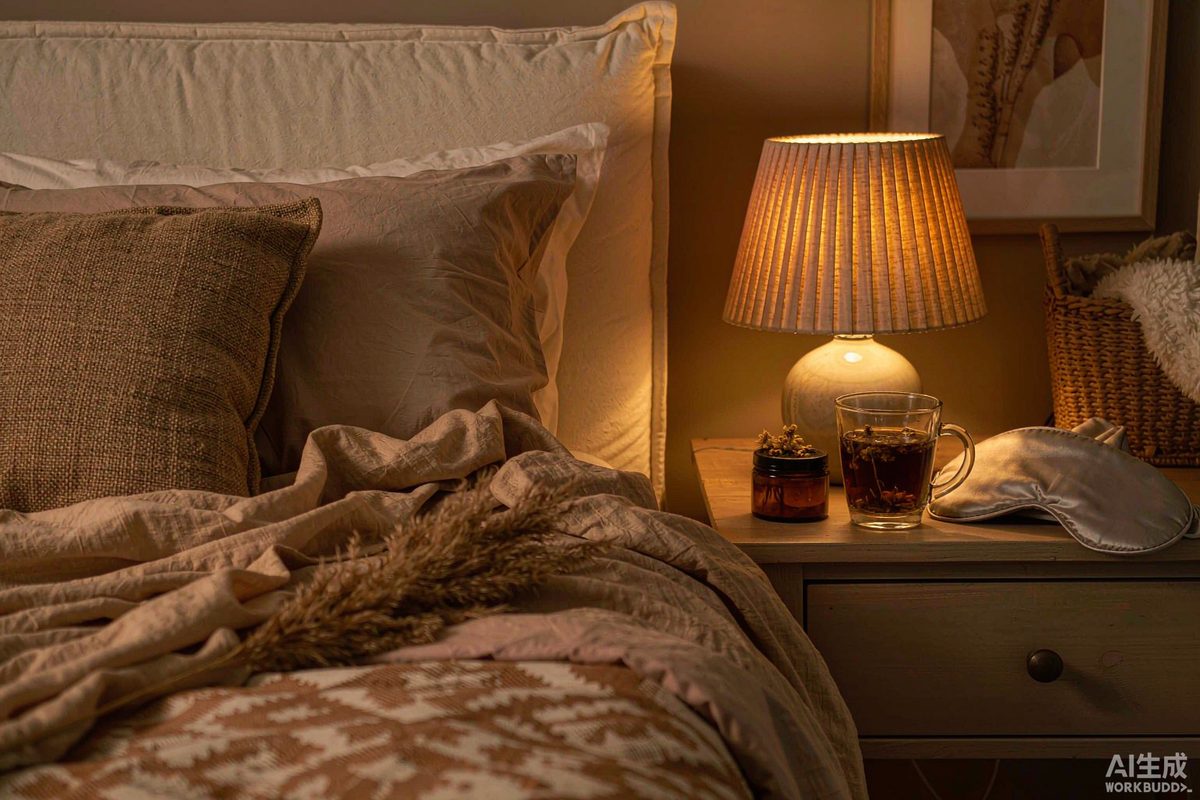
The deepest sleep states happen when all five senses are signaling 'rest' — not just your eyes, but your ears, nose, skin, and even the fading taste in your mouth.
Sight: zero light or warm dim light only. Blackout curtains or a contoured sleep mask. If you need a nightlight for safety, dim red bulb — lowest on the spectrum, least melatonin disruption.
Sound: continuous, featureless background. Pink noise — deeper and more natural-sounding than white noise — has been shown in studies to increase deep slow-wave sleep. A quality white noise machine or a fan creates a consistent auditory baseline that stops sudden sounds (car alarms, doors, partner movements) from startling the Shen awake.
Smell: grounding, Yin-supporting scents. Lavender is the most researched — multiple RCTs show improved sleep quality and reduced nighttime waking. TCM: cooling, sweet, slightly pungent, enters Heart and Liver channels, calms the Shen, moves stagnant Liver Qi. Chamomile (calming, cooling). Sandalwood (grounds the Shen). Ylang-ylang (reduces Heart Fire).
Diffuse 30 minutes before bed or put a single drop on your pillow.
Touch: cool, smooth, natural. Cotton, linen, silk — breathable and heat-wicking. Silk in particular is thermoregulatory: it keeps the head and neck cool where Yang is most concentrated. A silk pillowcase reduces friction on skin and hair, but its deeper function is thermal. The head must cool for Yin to dominate.
Taste: clean, neutral, slightly cooling. Warm water or an herbal tea — chamomile, chrysanthemum, or lavender — as the last thing that enters your mouth before sleep. Warmth soothes the Stomach and supports digestive closure for the night. Avoid alcohol entirely; it's a Yang stimulant wearing a sedative costume. It knocks you out, then causes rebound arousal 2-4 hours later as your body metabolizes it.
The full sensory ritual, 30 minutes before bed: dim lights (sight), white noise on (sound), lavender diffusing (smell), natural-fiber sleepwear (touch), small cup of warm chrysanthemum tea (taste). Every sense getting the same message: rest. Temperature sweet spot: 65-68°F (18-20°C). Your core needs to drop roughly 1.8°F to initiate and maintain sleep — a silk pillowcase and breathable bedding make the drop easier.
- Full sensory ritual: 30 minutes before bed, dim lights, white noise on, lavender diffusing, natural-fiber clothes, warm chrysanthemum tea. All five senses saying the same thing.
- Waking in the night? Re-engage one sense gently — lavender on the wrist, a few deep breaths — rather than lights or phone.
- Temperature sweet spot: 65-68°F (18-20°C). Core temp needs to drop ~1.8°F to initiate sleep. Silk pillowcase + breathable bedding supports this.
"The five senses are the gateways through which external Qi enters the body. When they are calm, the spirit is calm. When they are agitated, the Shen is disturbed and sleep cannot come."
You Can't Out-Ritual a Lifestyle That's Draining Yin
A Yin-supportive bedroom and evening ritual are essential. But if your daytime life is draining Yin faster than your nights replenish it, the math doesn't work. The deepest layer of sleep hygiene is how you live during waking hours.
What drains Yin: chronic sleep deprivation (direct Yin expenditure — spending capital you haven't earned), excessive exercise (intense cardio late in the day burns Yin fluids through sweat and leaves residual Yang heat), overwork and prolonged screen concentration (the eyes are the 'orifice of the Liver' — screen time directly drains Liver Blood, a core Yin component), too much spicy food (chili, garlic, onion, lamb — all generate internal Heat that consumes Yin), alcohol (a Yin-burning accelerant), and chronic stress (the constant cortisol elevation maps to Kidney Yin deficiency with Liver Yang rising — the single most common Yin-depleting pattern in modern life).
What builds Yin: consistency with your sleep schedule. The circadian rhythm is Yin-Yang in motion; every time you shift your bedtime by more than an hour, you're asking your body to recalibrate its entire hormonal program. Consistency provides the stable container Yin needs. Hydration with quality fluids — not just water, but bone broths, congee, soups, herbal teas.
These contain 'structured water' that TCM calls Yin fluids, carrying the essence of slow-cooked foods and hydrating more deeply than plain water. Regular moderate exercise — daily walking, tai chi, swimming, Wu Qin Xi. Moving Qi and Blood without breaking a heavy sweat or generating residual Yang Heat.
Stress management as primary healthcare — meditation, breathing practices, time in nature, meaningful social connection. Anything that downshifts the sympathetic nervous system protects Kidney Yin from cortisol-mediated depletion.
The Yin-nourishing lifestyle is boring. It doesn't trend. It's about pacing, consistency, and the radical decision to prioritize restoration over productivity. But it produces something hustle culture never will: deep, unshakable sleep from a body that has enough Yin to hold its Yang through the night.
Audit one Yin-depleting habit per month. Don't overhaul everything at once. Start with your non-negotiable bedtime. Bone broth or miso soup with dinner is one of the simplest Yin-nourishing additions — minerals, collagen, structured fluids. If your high-stress job is non-negotiable, compensate by being militant about your sleep schedule and evening wind-down.
The Yin you protect at night offsets the Yin you spend during the day.
- Audit one Yin-depleting habit per month. Start with a fixed, non-negotiable bedtime.
- Bone broth or miso soup with dinner — minerals, collagen, structured fluids that hydrate more deeply than plain water.
- Can't change your high-stress job? Be militant about sleep schedule and evening wind-down. Protected Yin offsets spent Yin.
"The sage treats the body with the same care as handling a precious vessel filled to the brim. Do not deplete it. Do not agitate it. When essence is full, the spirit is peaceful and sleep comes without effort."