That Little Device Everyone Has in Their PT Clinic
If you've been to a physical therapy clinic in the last decade, you've seen someone lying on a table with wires running from a small device to pads stuck on their back or knee. That's a TENS unit — Transcutaneous Electrical Nerve Stimulation — one of the most widely used non-drug pain relief tools in the world.
The concept is simple: a low-voltage electrical current passes through electrode pads on the skin and stimulates the sensory nerves underneath. This activates the body's own pain-inhibition mechanisms — specifically the gate control theory of pain, where large-diameter sensory fibers "close the gate" on pain signals traveling through smaller fibers.
The result is a tingling, buzzing, tapping sensation that replaces pain perception with something more tolerable.
TENS has been FDA-cleared for over-the-counter use since the 1970s. Modern units are compact, cheap, and available at any pharmacy. But here's the question that matters for this article: when you put those electrode pads on an acupuncture point, are you essentially doing acupuncture without needles?
The answer is more nuanced than most people realize — and the TCM framework gives us a surprisingly useful lens for understanding what TENS can and cannot do.
- TENS works best when the electrode pads are placed near — not necessarily directly on — the painful area, following the path of the affected meridian.
- Most people set intensity too low. You should feel a strong but comfortable tingling; if you can't feel anything, turn it up until you do.
- TENS is most effective for acute pain flares and muscle tension — not for structural problems like severe joint degeneration or bone-on-bone arthritis.
"When the channels are unobstructed, Qi flows freely. When Qi flows freely, pain ceases. The ancients understood that stimulation of specific points on the body could restore the flow of Qi and Blood — they simply used needles, where we now use electricity."
What's Actually Different Between a Pad and a Needle
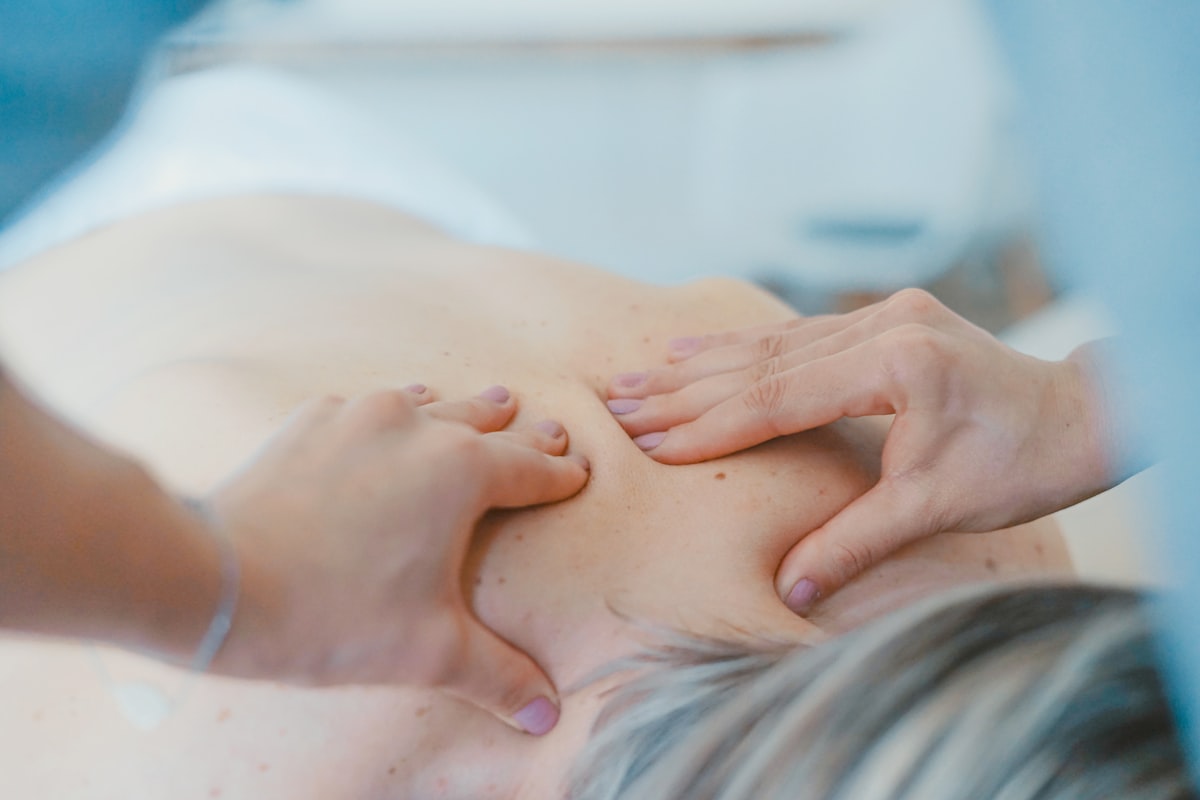
Let's be fair to TENS: it does something real. It reduces your perception of pain through electrical stimulation of sensory nerves. And when you place the pads on a recognized acupuncture point, you are stimulating that point — just not the same way a needle does.
The similarity is genuine. Acupuncture points sit in areas of high nerve density, with clusters of mast cells, small blood vessels, and unmyelinated nerve fibers. A needle inserted there produces the characteristic de qi sensation — a dull, aching, electric feeling — that signals the point has been activated. TENS at sufficient intensity produces similar neural activation.
Both methods engage the A-delta and C nerve fibers that carry pain signals, and both modulate the spinal cord's pain gate.
The differences are substantial, though. Depth first: a needle is placed precisely — subcutaneous, intramuscular, or periosteal — targeting the specific tissue where the point's effect is strongest. TENS pads sit on the skin surface.
The current penetrates deeper than skin — typically two to four centimeters depending on intensity and frequency — but it can't target tissue layers with anything close to a needle's precision.
Selectivity second: a skilled acupuncturist chooses points for your specific pattern — say, Liver Qi stagnation with Blood deficiency affecting the knees — points that address the root cause, not just the symptom. TENS simply stimulates whatever nerves happen to sit under the pads. It doesn't know your pattern. It doesn't distinguish Wind Bi from Cold Bi. It reduces pain, and that's genuinely useful.
But it's not the same as a comprehensive TCM treatment.
- Think of TENS as targeting the 'branch' (symptom relief) while acupuncture targets both the 'branch' and the 'root' (constitutional pattern). Both are needed in comprehensive care.
- If you're needle-phobic, TENS at acupoints is a reasonable bridge — but schedule regular acupuncture sessions when you can tolerate them for deeper pattern work.
- Never assume that using TENS on 'the right acupoints' is equivalent to a full acupuncture treatment. It's a useful supplement, not a substitute.
"Needle manipulation produces a directional Qi sensation — sinking, dispersing, tonifying, or reducing — that follows the channel's course. Electrical stimulation, however delivered, must still follow the channel to reach the Qi."
Why Electricity at an Acupoint Isn't as Strange as It Sounds
Here's the surprising part: TCM theory actually supports electrical stimulation at acupuncture points. The classics describe the mechanism of acupuncture as producing a change in the quality of Qi at an acupoint, which then travels along the channel to affect the organ systems and the broader physiology.
Whether that change comes from manual needle manipulation — rotating, lifting, thrusting — or from an electrical current, the principle is the same.
Yang Jizhou, writing in the Zhen Jiu Da Cheng in 1580, described manual techniques of alternating strong and weak stimulation, fast and slow manipulation, and methods for directing Qi in specific directions. He noted that stronger stimulation produced stronger effects — which is exactly what higher-frequency, higher-intensity TENS does.
The TCM framework suggests the electrical current creates a localized electromagnetic disturbance at the acupoint that propagates along the channel.
Modern research offers a compatible — if less poetic — explanation: electrical stimulation at acupoints releases endogenous opioids (endorphins, enkephalins, dynorphins) from the hypothalamus and brainstem, activates the descending pain-inhibition pathway from the periaqueductal gray to the spinal cord, and increases local blood flow through vasodilation mediated by substance P and calcitonin gene-related peptide. "
The Zhen Jiu Da Cheng explicitly notes that strong stimulation of GB-34 (Yanglingquan) "activates the tendons and relieves constraint" — which maps well onto what we observe when high-frequency TENS on GB-34 relieves hip and knee pain. The ancient practitioners didn't have oscilloscopes. They were describing real physiological phenomena with the vocabulary they had.
- TCM theory predicts that TENS works best when pads are placed along the same meridian — don't scatter pads randomly across unrelated areas.
- For Cold Bi (joint pain worse with cold, better with warmth), use continuous low-frequency TENS (2-5 Hz) for 20-30 minutes — this produces the deepest, most warming effect.
- For Wind Bi (wandering pain), use a pulsing or alternating frequency pattern that creates movement sensation — this is theoretically analogous to the 'Wind-dispelling' needle technique.
"GB-34 is the Influential Point of the Tendons. It treats joint pain, muscle spasms, and stiffness of the lower extremities. Stimulate with strong manipulation — rotating and shaking — to release constraint from the tendons."
Where TENS Shines — and Where It Falls Flat

After eighteen years of integrative pain practice, I have a clear mental map of where TENS belongs. Let me be honest about both sides.
What TENS does well: acute pain flares from muscle tension are where it shines. You slept wrong, your neck is locked up, your trapezius has a spasm that makes turning your head feel like a minor surgical procedure — twenty minutes of TENS at the right intensity will significantly reduce that, often in one session. Muscle tension headaches respond similarly.
Nerve pain — diabetic neuropathy, post-herpetic neuralgia, radiculopathy — is one of TENS's best-supported applications; the gate control mechanism is especially effective for pain that's notoriously resistant to NSAIDs and often poorly controlled even with opioids.
Post-surgical pain, with physician approval and avoiding the surgical site, can be managed with TENS as part of a multimodal protocol, reducing opioid reliance during recovery.
What TENS does not do well: deep joint degeneration — cartilage worn down to bone — won't respond meaningfully, because the problem is structural, not primarily neural. A TENS unit can't regenerate cartilage or reduce synovial inflammation in rheumatoid arthritis.
Osteoporotic bone pain from compression fractures doesn't respond well either, because the issue is inside the bone, beyond the reach of transcutaneous stimulation.
And the emotional and systemic components of pain — anxiety, sleep disruption, the depression chronic pain brings — are addressed by acupuncture through mechanisms TENS can't replicate. A properly placed needle at Shenmen (HT-7) and Yintang activates parasympathetic tone, lowers cortisol, and improves sleep in ways a pad on the knee simply cannot.
- Use TENS as part of a multimodal plan, not as your only tool. TENS + gentle movement + proper sleep + stress management = meaningful improvement.
- If your pain hasn't improved after 5-7 TENS sessions, TENS is probably not the right tool for your specific condition — consult your practitioner.
- TENS is a symptom manager, not a disease modifier. If your joint pain is progressing (getting worse over months), you need a full diagnostic workup, not more TENS.
"Acupuncture treats the root. TENS treats the branch. A wise physician uses both appropriately — treating the root with needles, moxa, and herbs, and managing the branch with whatever tools bring the patient relief."
The Five Acupoints for Joint Pain — and Where the Pads Go
The most practical question about TENS at acupoints: which points, and where exactly do the pads go? Here's a clinically grounded guide to the five most useful points for joint pain.
ST-36 (Zusanli) — three cun below the kneecap, one finger-breadth lateral to the tibia's anterior crest. Arguably the most important point in TCM for strengthening the Spleen and Stomach and boosting Qi and Blood globally. For knee pain, hip pain, and general lower extremity weakness, it's your primary point. Pad placement: one pad directly over ST-36, the other one to two cun above or below along the same line.
Low frequency (2-10 Hz) for 20-30 minutes for tonification.
GB-34 (Yanglingquan) — on the lateral lower leg, in the depression anterior and inferior to the fibula head. The Influential Point of the Tendons — the primary point for any joint pain involving tendons, spasms, or movement restriction. Pad placement: one pad over GB-34, the second over the nearby tibialis anterior muscle belly. Medium frequency (30-50 Hz) for muscle spasm release.
BL-40 (Weizhong) — on the posterior knee, midpoint of the popliteal crease. The command point of the lower back and hip. Pad placement: bilateral — one pad on each BL-40, both knees if the pain is bilateral. Low frequency (2-5 Hz) works best here.
KD-3 (Taixi) — in the depression between the medial malleolus and the Achilles tendon. Source point of the Kidney channel — the organ that governs the bones in TCM. For knee pain with underlying deficiency (weakness, worse at rest, better with warmth), KD-3 is essential. Pad placement: one pad over KD-3, the second on the nearby medial calf. Very low frequency (2 Hz) for 20 minutes for the tonifying effect.
LI-4 (Hegu) — between thumb and index finger, at the highest point of the muscle belly when they're pressed together. Command point of the face and mouth, and a powerful pain point — also contraindicated in pregnancy. For upper extremity joint pain (wrist, elbow, shoulder), it's an excellent TENS target. Pad placement: one pad over LI-4, another on the same hand's dorsum.
- Always place TENS pads in pairs — one pad creates a circuit with another pad on the same channel line. Never place two pads on opposite sides of the body in a way that would route current across the chest.
- For bilateral knee pain, use a 4-channel TENS unit with both ST-36 and BL-40 pairs simultaneously — this treats both knees in one session.
- If you're unsure about locating ST-36 precisely, place the unit on a low setting first — the characteristic 'de qi-like' sensation of electrical stimulation spreading up the leg confirms you've found the right area.
"ST-36 is the Sea Point of the Stomach channel. It strengthens the middle burner, raises deficient Qi, and treats knee pain, leg weakness, and joint disorders of the lower extremity. A point to be used daily."
Frequency, Intensity, Duration: Making TENS Precise

The settings on a TENS unit aren't arbitrary — different frequencies activate different physiological mechanisms. Understanding this turns TENS from a set-and-forget gadget into a precision tool.
High frequency (50-150 Hz): the default on most consumer units. It activates the gate control mechanism primarily — large A-beta sensory fibers are stimulated, closing the pain gate at the spinal cord, producing rapid relief within minutes. Best for acute, sharp pain; muscle tension; and quick relief before physical therapy. The catch: relief typically fades within 30-60 minutes after the unit turns off.
Low frequency (2-10 Hz): the more TCM-consistent setting. It activates the endogenous opioid system — triggering endorphin and enkephalin release from the hypothalamus and brainstem. Slower onset (20-30 minutes) but longer-lasting relief (up to four to six hours after treatment).
This is what you want for chronic joint pain, for nighttime pain that disrupts sleep, and for the deficiency-pattern pain TCM identifies as the underlying cause. It also produces a deeper, more Qi-like sensation — a dull, spreading ache rather than surface tingling.
Burst TENS combines low-frequency stimulation in rhythmic bursts — the deep opioid-mediated relief of low frequency with faster onset. Useful when you want low-frequency benefits but can't tolerate constant 2-5 Hz sensation.
Intensity: the sweet spot is the highest intensity you can comfortably tolerate — you should feel strong tapping or buzzing, but not pain. For most people that's 20-50 mA, depending on body area. Thinner skin (ankles, knees) needs less than muscular areas (thighs, upper back).
Duration: 20-30 minutes per session is sufficient for most conditions. Sessions beyond 45-60 minutes produce diminishing returns as the nervous system habituates. Two to three sessions daily is acceptable for severe pain, but most people do fine with once or twice a day.
- Start with high frequency (80-100 Hz) for the first 10 minutes to rapidly reduce acute pain, then switch to low frequency (2-5 Hz) for the remaining 20 minutes for longer-lasting relief.
- If low frequency TENS feels uncomfortable at first, start at 10 Hz and gradually decrease over several sessions as your body adapts to the sensation.
- Replace electrode pads every 15-30 uses (or when they no longer stick firmly) — degraded pads deliver uneven stimulation and can cause skin irritation.
"The Yellow Emperor's External Canon states: 'Stimulation that is too weak accomplishes nothing. Stimulation that is too strong damages the Qi. The skilled practitioner modulates the stimulation to match the condition — strong for excess patterns, moderate for deficiency patterns.'"
Can I Just Use TENS at Home Instead of Coming In?
That's the question I get most often in the clinic. My answer is always the same: TENS and acupuncture aren't competitors. They're complementary tools serving different purposes in one integrated plan.
Use TENS instead of acupuncture when: daily pain management is impractical to do in-clinic (cost, transportation, time); you're needle-phobic but open to electrical stimulation; you're in a pain flare between scheduled appointments; or you're an older patient with stable chronic joint pain who needs ongoing symptom management between constitutional treatments.
Use acupuncture instead of TENS when: the pain is part of a complex TCM pattern requiring simultaneous root-and-branch treatment; the condition is autoimmune, like rheumatoid arthritis, where systemic regulation matters; there's an emotional or stress component to the pain (insomnia, anxiety, depression alongside it); or you respond well to acupuncture's holistic effects beyond pain relief — better sleep, more energy, less stress.
Use both when: — and in my practice, this is the ideal protocol for most chronic joint pain patients — weekly or twice-weekly acupuncture for constitutional pattern work, plus daily home TENS for pain management between visits. That's how the 79-year-old patient I mentioned earlier got her 40% reduction: not from TENS alone, not from acupuncture alone, but from both working together.
If you're starting this approach: begin with two to three acupuncture sessions to establish your TCM diagnosis and treatment plan, then add daily TENS at the acupoints your practitioner identifies. Track your pain score (0-10, morning and evening), morning stiffness duration, and sleep quality.
Bring the log to your next appointment — the pattern of what improves and what doesn't tells us whether we're addressing the right pattern.
- Don't use TENS on the same acupoints immediately before an acupuncture appointment — the electrical stimulation can temporarily alter point sensitivity and affect the acupuncturist's interpretation of de qi.
- For best results, apply TENS after gentle movement or stretching — warm muscles and joints respond better to electrical stimulation than cold, stiff ones.
- If you're working with both a TCM practitioner and a physical therapist, make sure both know about all treatments you're receiving — TENS, acupuncture, PT exercises, and any supplements or herbs.
"The superior physician treats disease before it manifests. The skilled physician treats the manifested disease. The ordinary physician treats the disease after it has fully developed. The wise physician uses every appropriate tool — needle, moxa, herbal medicine, and now, electrical stimulation — in service of the patient's healing."
Safety First: Who Shouldn't Use TENS
TENS is remarkably safe when used correctly — but it has genuine contraindications you need to know before you switch it on.
The most important is cardiac: never place TENS pads on or near the chest, over the heart, or in any arrangement that lets current cross the chest cavity. For patients with pacemakers, implantable defibrillators, or other active electronic implants, TENS is generally contraindicated — the current can interfere with device function. If you have any cardiac device, talk to your cardiologist before using TENS.
Pregnancy is the second major contraindication. TENS should not be used on the abdomen, lower back, or legs during pregnancy — and certain acupoints are especially risky. LI-4 (Hegu), one of our top joint pain targets, is specifically contraindicated in pregnancy because it can stimulate uterine contractions.
If you're pregnant and have joint pain, see a qualified TCM practitioner who can treat you safely with acupuncture and moxibustion instead.
Other precautions: no pads over open wounds, broken skin, or infected areas; no pads over areas of sensory loss (neuropathy) where you can't feel the stimulation — you could use excessive intensity and burn yourself; no TENS while driving or operating machinery; no use while bathing, sleeping (unless the device is designed for it), or near water.
And stop treatment, consult a physician, if you experience dizziness, nausea, skin irritation, or worsening pain during or after use.
- Keep a TENS safety checklist on your device: no cardiac devices, not during pregnancy, no pads on the chest, no pads over broken skin. Review it every time.
- Start with short sessions (10 minutes) when trying a new electrode placement — check the skin under the pads for redness or irritation before extending to full 20-30 minute sessions.
- Clean the skin with water (not alcohol) before applying pads — alcohol dries the skin and reduces pad adhesion. A slightly damp cloth works well.
"All stimulation methods carry risk when misused. The needle that heals can also harm if placed in the wrong hand. So too with electrical stimulation — used wisely, it serves the patient; used carelessly, it may injure. Knowledge and caution are the prerequisites of treatment."