Why a Single Herb Rarely Works as Well as the Formula
Sooner or later, every patient asks me the same thing, usually with a phone screen held up showing some miracle herb. Can I just take the one that works? I get it—single ingredients are easier to buy, easier to swallow, easier to believe in. But the honest answer is that single herbs almost never do what the classical formulas do, and the reason isn't marketing. It's design.
A classical formula is six to ten herbs arranged with a structure that Chinese medicine has used for over a thousand years. The chief herb targets the root of the pattern. The deputies back it up and treat the secondary symptoms. The assistants moderate side effects, drain byproducts, or steer the action. The envoy harmonizes the whole thing and guides it to the right channel.
Every herb has a job, and the jobs interlock.
Take Er Chen Tang, from the Song Dynasty formulary Taiping Huimin Heji Ju Fang. Its four core herbs aren't four phlegm remedies thrown together. Ban Xia is the chief—it dries Dampness and transforms Phlegm, driving the turbid downward. Chen Pi, the tangerine peel, is the deputy: it regulates Qi, because in TCM logic, if Qi moves, Phlegm moves. Fu Ling leaches Dampness out through the urine, the body's drain pipe.
Ginger and licorice harmonize, and ginger takes the edge off pinellia's harshness.
Dry, move, drain, harmonize. One herb can only do one of those. The formula does all four at once, which is exactly what a stuck, heavy, damp body needs. That's why the tradition kept building and refining formulas for two thousand years instead of discarding them for singles. The combination is the technology.
It's also why the clinical literature on TCM and obesity studies formulas rather than single constituents—the 2019 reviews of classical formulas in metabolic disease work that way for a reason. So here's the map this article follows: the four most important phlegm-resolving formulas for weight—Er Chen Tang, Wen Dan Tang, Ping Wei San, and Shen Ling Bai Zhu San.
Learn the map and you'll understand what your practitioner is doing, and why 'just take the tangerine peel' isn't the same medicine.
- Think of a formula like a committee with roles: chief, deputies, assistants, and a harmonizer. When you read a formula's ingredient list, ask what job each herb is doing — you will see the design immediately.
- The classical sources matter: Er Chen Tang comes from the Taiping Huimin Heji Ju Fang (Song Dynasty), and knowing the source tells you the original intended pattern and dosage.
- Single-herb products are fine for gentle kitchen-level support (Chen Pi tea, Fu Ling in soup), but for actual treatment of a Phlegm-Dampness pattern, the formula is the medicine.
"If Qi moves, Phlegm moves; if Qi stagnates, Phlegm congeals. Therefore the formulas that transform Phlegm always regulate Qi first."
Er Chen Tang: The Two Cured Decoction That Started It All

Er Chen Tang—the Two Cured Decoction—is the foundation of phlegm medicine in Chinese herbalism. The name points at its two chief herbs, both 'cured' before use: Ban Xia, processed to remove its harshness, and Chen Pi, the tangerine peel, aged like good wine. The classical version from the Taiping Huimin Heji Ju Fang adds Fu Ling and licorice to that pair, with fresh ginger and smoked plum as traditional extras.
Most modern clinics keep it to the core four plus ginger.
The pattern it treats is the pure Phlegm-Dampness picture. Heavy, sluggish body. Thick greasy tongue coating. Sticky stools. Puffy face in the morning. Foggy head. Nausea or a stuffy chest after eating. Weight that camps out in the belly and thighs. In my clinic it's the workhorse for the person who feels like they're carrying wet sandbags.
Herb by herb: Ban Xia dries Dampness and descends the turbid—the strongest phlegm-transforming herb in the materia medica, with modern pharmacology documenting anti-inflammatory and lipid-modulating activity. Chen Pi regulates Qi and settles the stomach; its essential oils stimulate digestive secretions, which is why it's also the classic fix for post-meal heaviness.
Fu Ling drains Dampness through the urine, its triterpenoids carrying documented diuretic and metabolic effects. Licorice ties it together and protects the stomach.
Rarely do I give Er Chen Tang alone. It's the base, and the art is in what you add. Lotus leaf clears heat and guides weight downward. Coix seed strengthens the Spleen and drains gently. Astragalus goes in when fatigue sits underneath the Dampness. Base formula plus modification—that's the whole game.
What Er Chen Tang can't do is fix a body that keeps generating Dampness. Cold drinks, dairy, sugar, fried food—if the diet keeps feeding the pattern, the formula is rowing against the current. The two have to run together, which is why the supporting protocol later in this article matters as much as the prescription.
One safety note I won't soften: raw Ban Xia is toxic. It must be processed—fa ban xia or jiang ban xia—before use. This is one of the many reasons formulas belong in the hands of licensed practitioners, not assembled from a shopping cart.
- Er Chen Tang is a pattern-matched formula: greasy tongue, heavy body, sticky stools, foggy head. If those are not your symptoms, this is probably not your formula.
- The classic modification logic: add lotus leaf for weight and heat, add coix seed for Spleen weakness, add astragalus for fatigue. Your practitioner will build on the base — that is the design.
- Do not buy raw pinellia. Only processed pinellia (fa ban xia, jiang ban xia) is safe, and it should only be used in a practitioner-prescribed formula.
"Er Chen Tang is the ancestor of all phlegm-transforming formulas. Wherever turbid Phlegm accumulates in the body, this formula is the root from which the branches grow."
Wen Dan Tang: When Phlegm Comes Wrapped in Anxiety
Wen Dan Tang—the Warm the Gallbladder Decoction—is Er Chen Tang's more sophisticated cousin. It treats a picture that's everywhere in modern life: Phlegm-Dampness with a busy, anxious mind.
The formula comes from the San Yin Ji Yi Bing Zheng Fang Lun, attributed to Chen Yan in the Song Dynasty, and it starts with Er Chen Tang's core—Ban Xia, Chen Pi, Fu Ling, licorice, ginger—then adds Zhu Ru (bamboo shavings) and Zhi Shi (immature bitter orange).
Those two additions change everything. Bamboo shavings clear Heat and transform Phlegm from the Stomach and Gallbladder—the 'turbid' source of the anxiety. Bitter orange breaks up stagnating Qi and drives things downward, giving the formula its settling action.
The result treats a specific person: heavy and greasy-tongued, yes, but also anxious, foggy, wired at night, with a bitter or greasy taste in the mouth and a chest that feels full.
TCM calls this Phlegm misting the orifices of the Heart. The Heart houses the Shen, the spirit, and when turbid Phlegm clouds it, the mind can't settle. In modern terms, this is the stress-eater whose anxiety and metabolic sluggishness feed each other—worse after rich meals, worse after bad sleep, always with that tongue coating.
It's one of the most prescribed formulas in modern Chinese medicine, and no wonder. Dampness, anxiety, insomnia, indigestion—that cluster is epidemic in cities. For the weight clinic, it's the formula for the patient whose belly fat and anxiety arrived together.
Honest limits: Wen Dan Tang is stronger and more draining than Er Chen Tang, and it's not for everyone. The purely Spleen-deficient patient—weak digestion, loose stools, fatigue, pale tongue—gets drained further by it; they need the gentler formula in Section 5. And the patient whose anxiety is a primary psychiatric condition needs conventional care, with TCM as support, not substitute.
Pattern matching is the whole game. The formula is brilliant when the pattern fits, and wrong when it doesn't.
- The signature question for Wen Dan Tang: does your anxiety come with a greasy mouth, chest stuffiness, and a foggy head after meals? If the mind and the digestion misbehave together, this pattern fits.
- Wen Dan Tang is the classic for the 'wired at night, heavy by day' sleep complaint: the mind races while the body is exhausted, with a full feeling in the chest.
- If you have a diagnosed anxiety disorder, do not replace your treatment with herbs. Work with both your mental health provider and a licensed herbalist, and tell each about the other.
"When Phlegm mists the orifices of the Heart, the Shen loses its clarity: the mind races, the sleep fragments, and the chest feels full. Warm the Gallbladder, transform the Phlegm, and the mist clears."
Ping Wei San: For the Belly That Fills Like a Brick
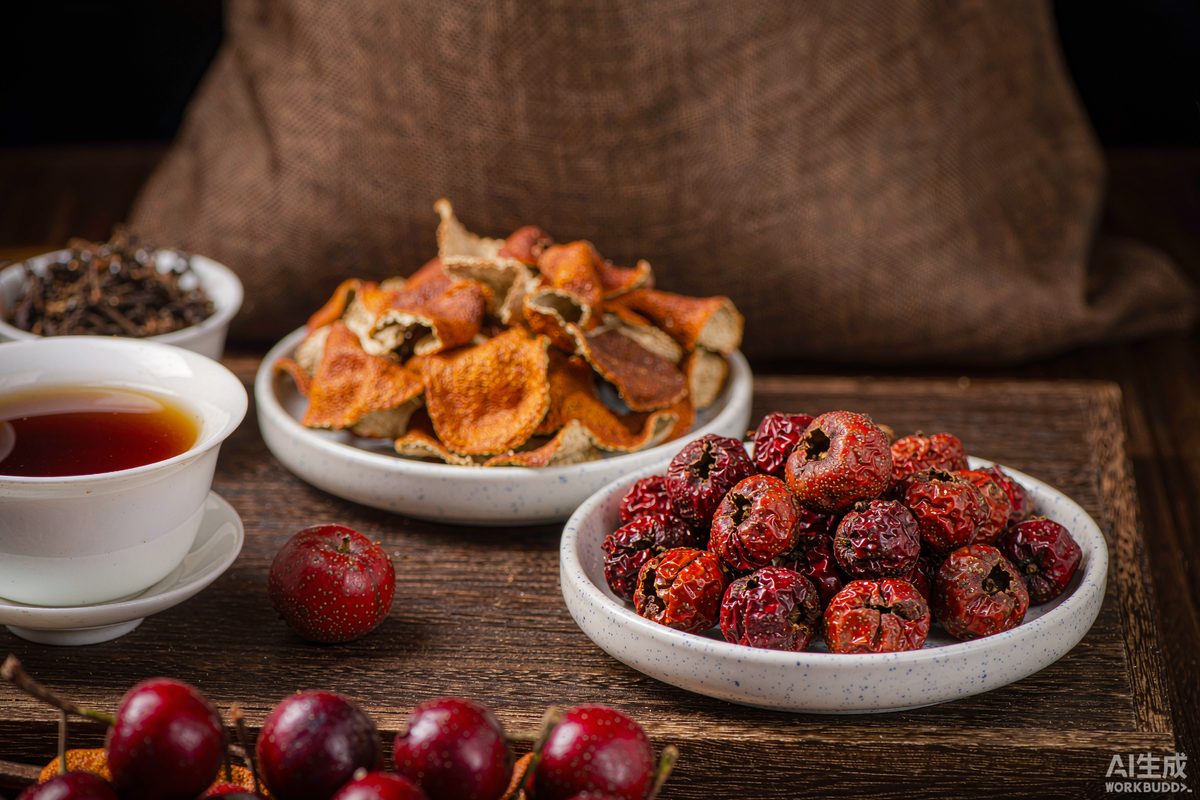
Ping Wei San—Calm the Stomach Powder—is the formula for Dampness that parks itself in the stomach and turns every meal into a fight. Its classical composition is compact: Cang Zhu (the black-fleshed atractylodes), Hou Po (magnolia bark), Chen Pi, licorice, with ginger and red dates as traditional additions.
The strategy differs from Er Chen Tang's. Er Chen Tang transforms Phlegm through the whole body; Ping Wei San dries Dampness right where it gathers, in the middle burner, the digestive core. ' Hou Po descends Qi and eliminates fullness; it's the herb for the abdomen that feels tight after eating. Chen Pi does its usual job regulating Qi, and the ginger and dates shield the stomach from the formula's drying force.
The patient is the 'beer belly' and 'heavy meal' type. Bloating and distension after eating. Fullness that won't settle. Belching. Thick greasy tongue. Nausea. Loose or pasty stools. Heavy, tired limbs. In TCM terms, Dampness obstructing the Stomach—food goes in, transformation stalls, and the middle fills with turbid stagnation instead of clean energy.
The person isn't necessarily heavy all over; the weight and discomfort concentrate in the middle, and the abdomen is the loudest voice in the room.
Use it when bloating and fullness dominate—after meals, in the evening, especially after rich, greasy, heavy food. It's also the classic reset for the day after overindulgence: the heavy meal, the drinking session, the holiday binge. Modern clinics often combine it with Er Chen Tang—the famous Er Chen Ping Wei San—for the patient with both whole-body phlegm and stomach-level dampness.
Limits again: Ping Wei San is drying, so it's not for the dry-mouth, red-tongue, Heat-sign patient, and not for the already-depleted Spleen-deficient patient. Those pictures need nourishment, not more drying. And like all strong formulas, it's a course, not a daily tonic—the practitioner uses it until the coating clears and the bloating resolves, then shifts strategy.
- Ping Wei San is the classic reset for the day after overindulgence: heavy meals, drinking, holiday binges. The bloated, full, greasy-tongued state is exactly its pattern.
- The key symptom is the middle: bloating, fullness, distension after eating. If your weight and discomfort concentrate in the abdomen with belching and a thick tongue, this formula family fits.
- Because Ping Wei San is strongly drying, watch the tongue: when the greasy coating clears and the bloating settles, the formula's job is done — continued use would over-dry. That is why courses are prescribed, not indefinite.
"Dampness in the middle burner is like mud in a pond: the water neither flows nor drains, and the belly fills with fullness. Dry the marsh, move the Qi, and the middle clears."
Shen Ling Bai Zhu San: The Gentle Formula for the Tired and Soft
Not every Phlegm-Dampness patient can handle the strong dryers. The patient with weak digestion, loose stools, fatigue, poor appetite, a pale tongue with scalloped edges—their Spleen is too depleted for Cang Zhu and magnolia bark. For that patient, the formula is Shen Ling Bai Zhu San (Ginseng, Poria, and Atractylodes Powder), the gentlest member of the phlegm family.
It treats Dampness by the root rather than by force: it strengthens the Spleen so the Spleen can do its own transforming and transporting. The classical formula, again from the Taiping Huimin Heji Ju Fang, is a long, food-like list: ginseng, Bai Zhu, Fu Ling, Chinese yam, white hyacinth bean, lotus seed, coix seed, platycodon, amomum fruit, licorice. Read it and you'll see the design—almost every herb is a food.
Yam. Lotus seed. Hyacinth bean. Coix. This is the formula famously described as one you could almost eat as a meal, and it's among the safest, most nourishing in the whole materia medica.
The actions are gentle by design. Ginseng and Bai Zhu tonify Spleen Qi. Fu Ling, coix, and hyacinth bean drain Dampness without violence. Yam, lotus seed, and licorice nourish and stabilize. Amomum moves Qi and warms the middle. Platycodon guides Qi upward and opens the Lung, which in TCM's water metabolism is the 'upper source' of fluids.
The pattern: Spleen Qi deficiency with Dampness—loose stools, poor appetite, fatigue after meals, pale tongue with teeth marks and a thin coating, soft doughy weight, bloating that's more tired than tight. This is the chronically over-dieted patient, the postpartum patient, the long-illness patient, the person whose digestion has simply worn out.
The patient for whom Er Chen Tang would be too harsh and Ping Wei San too drying.
Use it whenever Dampness comes with visible deficiency. In the weight clinic it's for the patient who tried aggressive diets and herbs and ended up more tired and more bloated—the Spleen was never strong enough for the assault, and it needs building before it can drain. It's also the formula most often used long-term, because it's gentle enough for months while the Spleen rebuilds.
In my practice it's the one I prescribe most for the soft, tired, bloated patient, and it's the one that produces slow, steady, permanent losses rather than fast, temporary ones.
- The signature of this formula's patient: tired, soft, bloated, loose stools, poor appetite, pale scalloped tongue. Deficiency under the Dampness — not pure Dampness alone.
- Shen Ling Bai Zhu San is the long-game formula: gentle enough for months of use while the Spleen rebuilds, which is why its results are slow but permanent.
- If stronger phlegm formulas have left you more tired and more bloated, your Spleen was telling you it needed building, not drying. This is the formula family to discuss with your practitioner.
"When the Spleen is strong, Dampness has nowhere to gather; when the Spleen is weak, every meal adds to the marsh. Strengthen the Spleen, and the marsh dries itself."
Four Herbs to Know Before You Read Any Formula

Before the science, let me introduce the four herbs that show up in almost every phlegm formula. Learn these four and you can read nearly any formula and see what it's doing.
Chen Pi, the aged tangerine peel, is the Qi regulator. It dries Dampness, regulates Qi, harmonizes the stomach, and its aromatic oils are the traditional answer to post-meal heaviness. It appears in Er Chen Tang, Ping Wei San, and countless others because the phlegm logic demands it: Qi moves first, then Phlegm can move.
Ban Xia, pinellia, is the phlegm transformer—the strongest drying-and-transforming herb in the arsenal. It's the chief of Er Chen Tang, settles nausea, and must be processed before use because the raw tuber is toxic to the throat and mouth. Its pharmacology includes anti-inflammatory, antiemetic, and lipid-modulating actions.
Fu Ling, poria, is the drainer—a fungus that grows on pine roots, it leaches Dampness out through the urine. Its genius is that it drains without damaging fluids, which is why it's one of the most-used herbs in Chinese medicine. Its triterpenoids carry documented diuretic, immunomodulatory, and metabolic-regulating activity.
Bai Zhu, white atractylodes, is the Spleen strengthener. Where Cang Zhu dries Dampness forcefully, Bai Zhu tonifies Spleen Qi and dries gently—the 'build the engine' herb, chief of Shen Ling Bai Zhu San, classic partner of Fu Ling in the famous Spleen-strengthening, Dampness-draining pair.
Then the supporting cast: yam and lotus seed, the food-like tonics; coix seed, the gentle grain that drains and strengthens; bamboo shavings and bitter orange, the Wen Dan Tang pair; Cang Zhu and magnolia bark, the Ping Wei San pair; ginger and licorice, the harmonizers that protect the stomach in nearly everything.
Read any phlegm formula now and you'll see the grammar: one or two transformers, one Qi mover, one drainer, a tonifier when deficiency is present, and the ginger-licorice harmonizers. Formulas stop being mysterious lists and become legible sentences.
- Learn the four roles — transformer, mover, drainer, tonifier — and you can decode any phlegm formula's ingredient list within seconds.
- Chen Pi is the safest entry point for home use: aged tangerine peel as a tea after heavy meals is kitchen-level medicine, not a prescription.
- The processed-versus-raw distinction is life-or-death for pinellia and a few other herbs: another reason the formulas belong to practitioners, not to DIY.
"The four herbs know their stations: one transforms, one moves, one drains, one builds. When each does its duty, the Phlegm dissolves and the body lightens."
What 'Drying Dampness' Looks Like Under a Microscope
It's tempting to write off 'drying Dampness' as poetry. I did, for a while. Then I started reading the pharmacology, and the actions the classics described started showing up in papers. Consider what 'drying Dampness' means biochemically.
Chen Pi's essential oils—limonene and related monoterpenes—are documented to stimulate digestive enzyme secretion, promote gastric motility, and relax gastrointestinal smooth muscle. That's the 'regulates Qi and harmonizes the stomach' action, literally: the peel gets the tract moving and secreting, which is why it relieves post-meal heaviness.
Fu Ling's triterpenoids, including pachymic acid, have documented diuretic, anti-inflammatory, and metabolic-regulating activity; the 2018 reviews on Poria cocos and metabolic regulation describe effects on glucose and lipid metabolism. So 'drains Dampness through the urine' carries a metabolic dimension—not just water weight, but regulation.
Pinellia research documents anti-inflammatory, antiemetic, and lipid-modulating effects—the 2018 studies align with its traditional role in transforming the phlegm-turbidity that TCM associates with fat.
Atractylodes volatile oils stimulate digestive secretion and motility; magnolol and honokiol from magnolia bark have documented anti-anxiety and pro-motility effects, which explains both its digestive role and its use in the anxious, damp patient. Coix's coixenolide shows lipid-lowering and anti-inflammatory activity, which is why coix keeps showing up in weight protocols.
Step back and the pattern is clear. The 'drying Dampness' herbs are, in modern terms, a coordinated set: digestive stimulation, fluid regulation, anti-inflammation, metabolic modulation. The body TCM called damp—heavy, sluggish, bloated, inflamed, slow to digest and drain—is in modern terms a body with sluggish digestion, low-grade inflammation, and dysregulated fluid and lipid metabolism.
The formulas treat that constellation as a system, the way modern medicine is only beginning to.
Which brings me to the caveat I repeat every week: real pharmacology doesn't mean safe to self-prescribe. The science is dose-dependent, interaction-aware, and pattern-specific. It validates the tradition. It doesn't replace the practitioner.
- The pharmacology cluster explains the experience: the herbs work on digestion, fluid regulation, inflammation, and metabolism together — which is why the improvement feels systemic, not like a single symptom being patched.
- Food sources of the same chemistry exist: aged tangerine peel in tea, coix in congee, ginger in cooking. Kitchen-level support and prescribed formulas are different doses of the same tradition.
- When you read a research abstract about a single herb, remember: the clinical tradition uses combinations, and the combination is the point. Single-constituent studies are clues, not prescriptions.
"The sages did not know the molecules, but they knew the actions: stimulate, move, drain, transform. The microscope confirms what the clinic observed for two thousand years."
Five Rules That Keep These Formulas Safe
Here's the map. Now the rules that keep the map safe to use.
Rule one: the formula has to match the pattern. Er Chen Tang for pure Phlegm-Dampness. Wen Dan Tang for Phlegm with anxiety and a turbid mind. Ping Wei San for stomach-level dampness with bloating. Shen Ling Bai Zhu San for Spleen deficiency with Dampness. Get it wrong and you can do real harm—the strong dryers exhaust a depleted Spleen, and a tonifying formula feeds active Heat.
The tongue, the pulse, the stool, the energy pattern: reading them is a trained skill.
Rule two: dosing is medicine. Classical formulas have classical dosages, adjusted by body size, age, severity, response. Too low does nothing. Too high over-dries. Wrong duration—indefinite use of a strong formula—is how 'it worked at first' becomes 'I feel worse.' The practitioner's skill lives in the course: when to start, when to modify, when to stop, when to switch.
Rule three: some of these herbs are toxic unprocessed. Pinellia genuinely is. This isn't a hypothetical—it's why processed herbs exist and why licensed practitioners exist. Rule four: herbs interact with medications. Licorice touches blood pressure and potassium; many herbs interact with anticoagulants, antidepressants, and diabetes drugs.
If you take medication, your herbalist and your doctor both need to know about each other.
Rule five: the diagnosis needs the full picture. Weight that looks like Phlegm-Dampness on the surface may have a Liver or Kidney component underneath, and thyroid conditions or insulin resistance can be driving things. A licensed practitioner—TCM and, where appropriate, conventional—rules out what needs ruling out and treats the pattern underneath the pattern.
So: use this article to understand the map, speak your practitioner's language, ask better questions. Chen Pi tea and coix congee are safe kitchen-level support. But the formulas themselves belong with a licensed practitioner of Chinese medicine. The formula is the technology, and the technology is only as good as the hands using it.
- Bring this article to your practitioner: 'I think my pattern is Phlegm-Dampness with anxiety — is Wen Dan Tang territory?' A good practitioner will love the informed question and refine the answer.
- The course matters as much as the formula: ask your practitioner how long the course runs and what change in your tongue or symptoms signals the course is done.
- List every medication and supplement you take when you see your herbalist — including over-the-counter and 'natural' products. Herb-drug interactions are real and preventable.
"The formula is a key, and the pattern is a lock. A perfect key in the wrong lock forces nothing open; a mediocre key in the right lock opens the door. Match first, then dose."
The Other Half of Treatment: Food, Sweat, and Sleep
The formulas are the medicine, but they're not the whole treatment. A phlegm formula given to a body that keeps manufacturing Dampness is a firefighter working on a house with the gas still on. It clears the current accumulation; the next meal starts the next one.
The diet comes first: light, warm, dry. Cut the Dampness factories before anything else—cold and iced drinks, dairy, sugar and refined carbs, fried and greasy food, and excess fruit, especially the cold, sweet, tropical kind. Then add the drying, strengthening foods: congee and well-cooked grains, barley, coix, adzuki beans, winter melon, radish, cooked greens, ginger in everything, warm soups.
Eat small, regular meals. Chew thoroughly. Stop at 70 to 80 percent full—the overloaded meal is how Dampness gets born in the first place.
Movement next. The damp body needs sweat—sweat is Dampness leaving through the pores. The classic prescription is consistent, moderate, daily: a brisk 30-to-45-minute walk fast enough to break a sweat, tai chi, qigong, cycling. Regular and daily beats intense and occasional for this patient, every time.
Lifestyle: warm the body, dry the environment. Don't sit for hours—stagnation breeds Dampness. Get morning sunlight. Keep the living space aired and dry. And fix the sleep: a tired Spleen is a damp Spleen, and the formulas work twice as well on a rested body.
There's an emotional layer too, and the Wen Dan Tang pattern makes it explicit. The damp-anxious patient needs the mind to move as well as the body—journaling, therapy, honest conversation, actually discharging stress rather than absorbing it. Formula for the current accumulation, diet to stop the production, movement to drain what remains, sleep and stress to rebuild the engine.
That combination is why classical formula medicine produces losses that stay lost. It isn't suppressing the weight. It's changing the conditions that made it.
- The 3-2-1 dampness diet is easy to remember: no cold drinks, no dairy, no fried food; congee or warm grains at breakfast; ginger in at least one meal a day.
- Sweat daily: a brisk walk with a light sweat is the damp body's drainage system. If you cannot walk, do any movement that makes you breathe harder for 30 minutes.
- Treat sleep as part of the formula: the phlegm formulas work measurably better on a rested body. The damp patient who fixes sleep often finds the tongue coating clears twice as fast.
"The herb clears the marsh that is; the diet and movement stop the marsh from forming again. Formula and life are one prescription."