Feed the Organs, and the Mind Follows
Walk into any supplement store and you'll find a wall of 'brain supplements' — exotic nootropics, proprietary blends, powders with names that sound like spaceships. The TCM approach to cognition starts somewhere else entirely: the kitchen.
For two thousand years, Chinese medicine has held that the mind is fed by the organs. Clear thinking, good memory, a calm spirit — these are downstream products of well-nourished Kidneys, Heart, and Liver. The logic runs like this. The Kidneys store Jing, the constitutional essence that fuels brain development and marrow, and TCM identifies the brain itself as the Sea of Marrow.
The Heart houses the Shen — spirit and consciousness — and the Shen is anchored by Blood; a Heart starved of Blood produces a floating, anxious, foggy mind. The Liver stores Blood and houses the Hun, the Ethereal Soul behind imagination, planning, and wide perspective; when Liver Blood runs thin, the mind narrows.
' And the remarkable thing is how well this ancient framework lines up with modern nutrition science. The foods TCM has prescribed for the mind for centuries — walnuts, goji berries, longan, black sesame, lotus seeds — turn out to be the foods modern research associates with cognitive health: omega-3s, polyphenols, iron, B vitamins, vitamin E.
This article is the complete pharmacy: twelve foods, the organ each one feeds, the modern evidence, and a daily protocol that puts them on your plate.
- Start with one brain food added to a meal you already eat — sustainability beats perfection in food therapy.
- Think in organ systems, not single foods: the goal is a Kidney, Heart, and Liver that are all fed, every day.
- The TCM brain food protocol is a pattern, not a prescription: consistency over months is what builds Jing and Blood.
"The five flavors enter the five organs. Sour enters the Liver, bitter enters the Heart, sweet enters the Spleen, pungent enters the Lungs, and salty enters the Kidneys. When the flavors are balanced, the organs are nourished; when the organs are nourished, the spirit is clear."
Twelve Foods, Three Organs, One Logic: The Map
Here's the whole map before we get into the details — twelve foods, the organ each feeds, and the mental function it supports.
Kidney–Brain foods (nourish Jing, feed the Sea of Marrow): walnuts — Kidney — memory and long-term cognitive reserve. Black sesame — Kidney — Jing and marrow nourishment, mental vitality. Black beans — Kidney — Kidney Yin and Jing support, grounding the mind. Goji berries — Kidney and Liver — vision, memory, and the clarity of Liver Blood.
Heart–Shen foods (nourish Blood, anchor the spirit): longan — Heart — calm focus and emotional stability. Lotus seeds — Heart — settling the Shen, quieting the racing mind. Red dates — Heart and Spleen — building the Blood that houses the Shen. Honey — Heart and Spleen — moistening, harmonizing, gentle calming energy.
Liver–Blood foods (nourish Blood, house the Hun): goji again — it's the double-duty superstar — Liver — eyes and mental clarity. Liver, the organ meat — Liver — directly building Liver Blood. Spinach — Liver — iron-rich Blood nourishment for the mind. Dark berries — Liver and Heart — polyphenols for circulation and cognition.
Twelve foods, three organ systems, one logic: the Kidney supplies the essence, the Heart supplies the spirit's home, the Liver supplies the blood that carries both. Add eggs — which nourish Kidney essence and Heart blood and work as a carrier food for the whole protocol — and you have a complete cognitive food pharmacy. The next sections go group by group: what each food does in TCM terms, and what the research says.
- Print the map or save it: food therapy works by repetition, and the map is your daily shopping and cooking guide.
- Aim to touch all three organ systems daily — one Kidney food, one Heart food, one Liver food is the minimum viable brain diet.
- The double-duty foods (goji, eggs) are your highest-value items: they feed two organs at once.
"The Kidneys govern the bones and produce marrow, and the brain is the Sea of Marrow. When Jing is abundant, the sea is full; when the sea is full, the spirit is bright and the memory is long."
The Kidney Foods: Walnuts, Black Sesame, Black Beans, Goji
The Kidney–Brain connection is the cornerstone of TCM cognitive theory: the Kidneys store Jing, Jing produces Marrow, and Marrow fills the brain — the Sea of Marrow. Feed the Kidneys and you feed the brain at its root.
Walnuts (Hu Tao Ren). Shaped like the brain, and the ancient 'doctrine of signatures' took that seriously. They enter the Kidney channel, nourish Jing, and strengthen the brain and memory; Sun Simiao prescribed them for the forgetful.
Modern research backs the instinct: a 2017 systematic review linked walnut consumption to better cognitive performance, and walnuts are among the few plant foods rich in the omega-3 ALA plus polyphenols with neuroprotective activity. Two or three a day is the classic dose.
Black sesame (Hei Zhi Ma). The premier Jing-building food. Black foods enter the Kidney in TCM, and black sesame is the most concentrated of them — nourishing Jing, moistening the intestines, supporting the marrow that feeds the brain. It's exceptionally rich in vitamin E, sesamin, and lignans. A tablespoon a day, ground — whole seeds pass through undigested.
Black beans (Hei Dou). Another black Kidney food: they tonify Kidney Yin and Jing, calm the mind, and support the constitutional foundation that memory draws on. Solid plant source of protein, folate, and polyphenols.
Goji berries (Gou Qi Zi). Technically a Kidney–Liver food, nourishing both Jing and Liver Blood. In TCM they brighten the eyes and sharpen the mind; modern research on goji polysaccharides shows neuroprotective and anti-inflammatory activity. A handful a day, chewed, steeped, or in congee.
Notice the pattern across all four: Jing foods are the long game. They don't spike your alertness at 3 PM; they build cognitive reserve over years. That's the point — the Sea of Marrow fills slowly, and only from consistent nourishment.
- Eat walnuts raw, not roasted — heat degrades their omega-3 content, which is their main cognitive asset.
- Grind black sesame (or buy tahini-style sesame paste): whole seeds mostly pass through unabsorbed, and the fat-soluble nutrients need the oil released.
- Goji berries work as well in savory congee as in tea — a handful in morning porridge is the classic Jing-building breakfast.
"Hu Tao Ren (walnut) is sweet and warm. It nourishes the Kidneys, strengthens the brain, and benefits the marrow. Those who eat it daily find their memory firm and their spirit bright."
The Heart Foods: Longan, Lotus Seeds, Red Dates, Honey

If the Kidneys supply the brain's fuel, the Heart supplies its pilot. The Heart houses the Shen — the consciousness that thinks, remembers, feels — and the Shen is anchored by Blood. Heart Blood deficiency produces the classic modern mental state: anxious, scattered, poor memory, light sleep, a mind that won't settle.
Longan (Long Yan Rou). The supreme Heart Blood tonic among foods. Sweet and warm, it nourishes Heart Blood, calms the Shen, and improves memory and sleep. It's naturally rich in iron and B vitamins — exactly the nutrients blood building requires — and studies associate it with better sleep quality and cognitive measures. A small handful, or steep with red dates for a bedtime tea.
Lotus seeds (Lian Zi). Sweet and neutral, they enter the Heart and Spleen, calm the Shen, and 'anchor the spirit' — the traditional food for the racing mind, worry, and insomnia. They contain a compound with documented sedative-anxiolytic properties. Add to congee, soups, or simmer in milk.
Red dates (Da Zao / jujube). The great harmonizer: sweet and warm, they nourish Spleen Qi and Heart Blood, feeding the Blood that houses the Shen. Rich in vitamin C, iron, and antioxidants. The classic pairing — red dates with longan — is the TCM equivalent of a brain tonic smoothie.
Honey. Sweet, moistening, neutral-warm: harmonizes the Spleen, moistens the Heart, gently calms the spirit. A spoonful in warm milk at bedtime is the classic Shen-settling drink — and the tryptophan in the milk, the warmth, and the ritual all reinforce each other.
The Heart–Shen foods share a signature: calm. They don't energize; they anchor. If your mind races, scatters, and won't sleep, this group is your primary pharmacy.
- For the racing mind: lotus seeds simmered in milk with a little honey, an hour before bed — the classic 'settle the spirit' porridge.
- Red dates are sweet and warming — wonderful for the depleted, but eat them in moderation if you tend toward dampness or phlegm.
- Steep longan + red dates + goji as a daily afternoon tea: it's the single most complete TCM brain tonic drink that exists.
"Long Yan Rou (longan) is sweet and warm. It nourishes the Heart and Spleen, benefits the intelligence, and calms the Shen. Those whose blood is thin and whose mind is unsettled should take it daily."
The Liver Foods: Goji, Organ Meat, Spinach, Dark Berries
The Liver stores Blood and houses the Hun — the Ethereal Soul responsible for imagination, planning, and wide-angle perspective. When Liver Blood runs thin, the mind narrows: tunnel vision, irritability, poor memory for details, the specific cognitive fog of the exhausted. These foods restore the Blood that carries the mind.
Goji berries make the list twice because they're the perfect double agent: Kidney and Liver, Jing and Blood. For the Liver specifically, goji nourishes Liver Blood and 'brightens the eyes' — and in TCM, the eyes and the mind are the same tissue. When Liver Blood is insufficient, vision and clarity both dim. The zeaxanthin in goji is literally deposited in the retina — modern confirmation of an ancient claim.
Liver, the organ meat — chicken or beef liver. The doctrine of signatures at its most direct: liver nourishes Liver Blood. Organ meats are the most nutrient-dense Blood-building foods on earth — heme iron, B12, vitamin A, and choline, the nutrient central to brain function. Once a week is the traditional dose; a little goes a long way.
Spinach. Iron-rich, folate-rich, and in TCM terms a mild Liver Blood and Yin nourisher. Cooked spinach delivers more absorbable iron than raw — and it pairs naturally with the Blood-building theme.
Dark berries — mulberries, blackberries, blueberries, cherries. Dark red and purple foods enter the Liver and Heart, nourish Blood, and protect the vessels that carry it. Mulberry (Sang Shen) is the classic TCM Blood-nourishing berry; blueberries and cherries bring modern polyphenol research to the same channel.
The Liver–Blood signature is clarity: wide vision, sharp details, a mind that can hold several threads at once. If your thinking feels narrow and your eyes tired, this group is your medicine.
- Cook spinach briefly — the oxalic acid drops and iron absorption rises; pair with a squeeze of lemon (sour enters the Liver) to double absorption.
- Organ meat once a week is plenty: a few ounces of chicken liver pâté or a liver-heavy stir-fry covers the choline and iron budget.
- Mulberries are the most TCM-specific dark berry — dried mulberries make an excellent snack and a classic Liver Blood tonic.
"Gou Qi Zi (goji) is sweet and neutral. It nourishes the Liver and Kidneys, brightens the eyes, and supports the spirit. When the Liver Blood is full, the Hun is housed and the vision is wide."
Does Any of This Survive Contact With the Research?
It would be easy to write off the TCM food pharmacy as folk tradition. Then you look at the research, which keeps landing on the same foods.
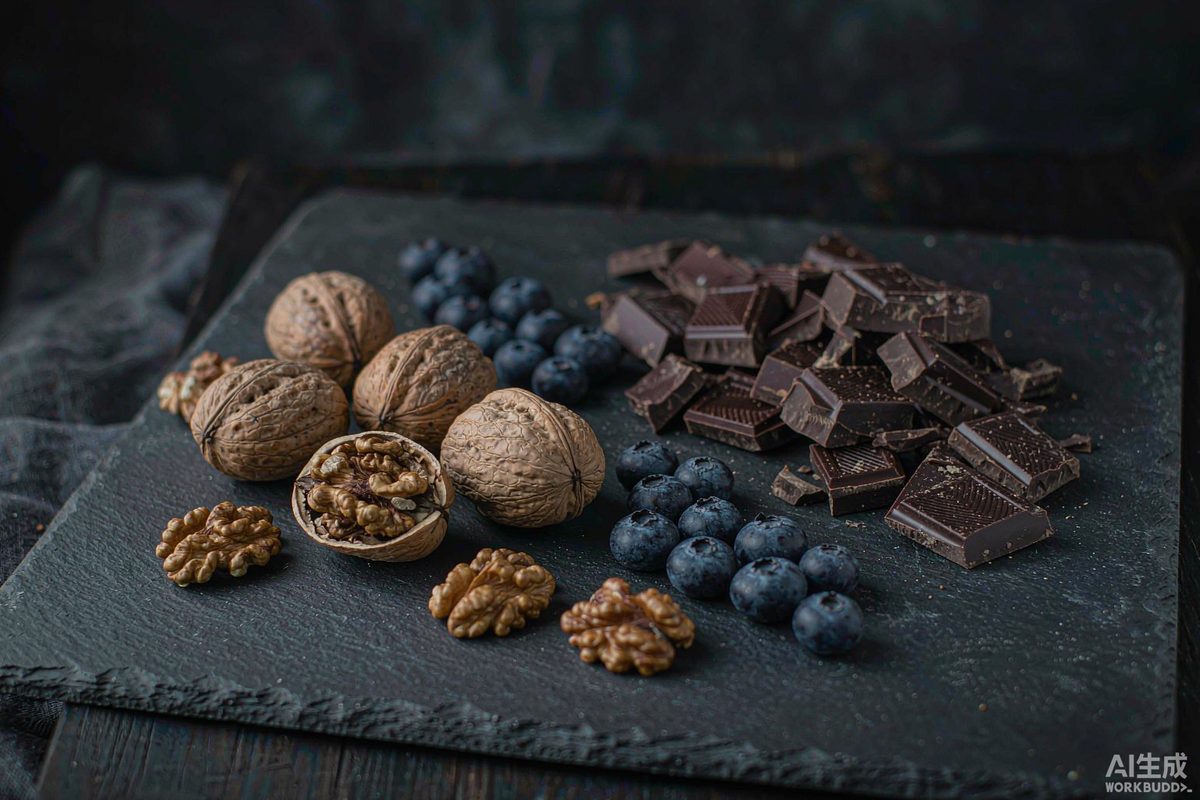
Walnuts: a 2017 systematic review in the Journal of Nutrition, Health & Aging found walnut consumption associated with better cognitive performance in cross-sectional and cohort studies. Walnuts are among the highest plant sources of ALA omega-3 and polyphenols, and trials show improved memory and processing speed in adults who eat them regularly.
Goji berries: a 2018 review of goji polysaccharides documented neuroprotective activity — antioxidant, anti-inflammatory, and anti-apoptotic effects in neuronal models — plus the zeaxanthin that supports retinal health and, plausibly, brain health through the shared visual-cognitive pathway.
Longan: less studied than goji, but randomized trials of Ziziphus-based and longan-containing preparations show improved sleep quality and reduced anxiety — consistent with the TCM claim of Shen calming.
Lotus seeds: the compound liensinine has documented sedative and anxiolytic properties. The traditional role as a Shen anchor has early pharmacological support.
Organ meats and spinach: the choline, heme iron, B12, and folate they provide are among the nutrients most consistently associated with cognitive function in cohort research.
Then there's the pattern-level evidence. A 2017 meta-analysis found that diets rich in vegetables, nuts, berries, and legumes — the Mediterranean and MIND diets, which overlap substantially with the TCM brain food list — associate with significantly slower cognitive decline.
The honest caveat: food research is correlational, doses vary, and no single food is a magic bullet. But when a two-thousand-year-old food tradition and modern nutritional epidemiology point at the same walnuts, the same berries, the same leafy greens, the same legumes — that convergence is the strongest evidence either system can offer.
- Read the meta-analyses, not the headlines: the strongest cognitive-diet evidence is about patterns (MIND, Mediterranean), not single 'superfoods.'
- The overlap between TCM brain foods and the MIND diet is your practical takeaway: walnuts, berries, leafy greens, beans, and fish are on both lists.
- Be skeptical of any food sold as a pill: the evidence is for the food in context, not the isolated molecule in a capsule.
"The superior physician treats with food first and medicine second. When food can nourish and correct, the physician does not reach for the needle or the herb."
A Day of Brain Food: Breakfast to Bedtime
Here's the whole pharmacy assembled into a practical day, built on the TCM principle of matching food to the organ clock: the Spleen–Stomach (digestion) is strongest in the morning, so breakfast carries the heaviest nourishment; the evening shifts toward Heart–Shen calming as the spirit prepares for rest.
Breakfast (7–9 AM, Stomach hour): start with congee or oatmeal — the classic Spleen-building base — and load it: a handful of goji berries (Kidney–Liver), a soft-boiled or poached egg (Kidney essence), a spoonful of ground black sesame (Jing), a few chopped walnuts on top (brain DHA). One bowl, all three organ systems. It's the most complete brain breakfast I know.
Mid-morning snack (10–11 AM): a small handful of walnuts plus a few red dates, or dried mulberries — steady Blood-building energy that skips the mid-morning crash.
Lunch (11 AM–1 PM, Heart hour): the Heart is at peak, so feed it Blood. A spinach salad with egg and a squeeze of lemon, or a stir-fry of dark leafy greens with chicken; add black beans to soup or rice. Keep lunch substantial but not heavy — Spleen overload produces the afternoon fog.
Afternoon snack (3–4 PM): the classic Qi-dipping hour. This is where goji-and-longan tea shines: steep a handful of each in hot water, eat the fruit after. Calm, sustained energy without caffeine.
Dinner (6–7 PM, earlier is better): light and settling — congee or soup with lotus seeds (Shen anchor), a small portion of fish or chicken, steamed vegetables. Once a week, swap the protein for a small portion of liver.
Evening (60–90 minutes before bed): a small cup of warm milk with honey, or longan-red-date tea — the Heart–Shen wind-down that sets up the night's repair.
Run this pattern daily and you're feeding the Kidney (Jing), the Heart (Blood and Shen), and the Liver (Blood and Hun) — the three organs the mind runs on.
- The morning congee bowl is the highest-leverage single meal in this protocol — master it and half the work is done.
- Keep the afternoon goji-longan tea in a thermos at work: it replaces the 3 PM coffee that sabotages your evening Shen.
- Eat dinner earlier (before 7 PM) — late heavy meals produce Spleen stagnation, which is the fog you'll feel tomorrow morning.
"The Spleen and Stomach are the source of Qi and Blood. When the center is strong, the four limbs are strong and the mind is clear. Food that nourishes the center nourishes the hundred functions."
What Clouds the Shen: Foods Worth Skipping
Feeding the mind is half the battle. The other half is not poisoning it. TCM identifies a clear set of dietary patterns that cloud the Shen, and modern research agrees with striking precision.
The sugar spike. Refined sugar and high-glycemic carbs cause rapid glucose surges and crashes — and the crash is a Shen event: irritability, brain fog, poor concentration, and a craving loop that keeps the cycle running. In TCM terms, sugar generates dampness and heat that mist the orifices; the mind literally gets clouded. The modern term is 'reactive hypoglycemia,' and the cognitive cost is documented.
The fried and greasy. Deep-fried and heavy-grease foods generate Phlegm and Dampness — the classic TCM cause of heavy-headedness, muddled thinking, and that cotton-wool-around-the-brain sensation. Research connects high saturated and trans fat intake with impaired cognition and higher dementia risk.
Excess alcohol. A glass of red wine is not the same as excess alcohol. Heavy drinking fragments sleep — suppressing exactly the deep sleep that runs the brain's wash — dehydrates the brain, and in TCM terms generates Damp-Heat that clouds the Shen and disturbs the Hun.
The daily caffeine overdose. Not the enemy. A morning coffee is neutral or mildly beneficial for many people. But caffeine after noon degrades deep sleep and sets up the afternoon crash-then-supercharge cycle that fragments mental energy all day.
The ultra-processed baseline. If most of your calories come from processed foods, you're systematically shorting the very nutrients the brain foods provide. A 2017 meta-analysis associated processed dietary patterns with accelerated cognitive decline.
The TCM rule of thumb is simple: eat real food, mostly plants, cooked and warm when possible; keep sugar, grease, and alcohol occasional rather than baseline; let the twelve brain foods be the default, not the exception. The mind runs on what you feed the organs. Feed them well, and the Shen stays bright.
- The 'one dessert rule': a sweet treat after lunch beats a sugar spike at 3 PM every time — timing the indulgence minimizes the cognitive crash.
- When you crave the fried or sweet, it's often the Blood or Qi dipping — reach for a red date and a few walnuts first; the craving often dissolves.
- Swap afternoon coffee for goji-longan tea for two weeks and track your evening mental clarity — most people never go back.
"Excessive sweetness injures the Spleen; excessive pungency injures the Lungs; excessive fat and grease generate Phlegm, and Phlegm mists the orifices of the mind. The moderate man eats to nourish; the immoderate man eats to cloud."