The Sunday Soup That Fixed Bones
Every Sunday morning in Chinese households around the world, someone puts a pot on the stove before the sun is up. Bones — beef, pork, chicken — go into cold water with a splash of vinegar and some aromatics. By noon the whole house smells rich, savory, faintly medicinal. The soup that comes out is called Tang — just soup.
But in the TCM framework, it's also a concentrated Kidney Jing tonic, prescribed for weak bones, stiff joints, aching backs, and slow-healing injuries for thousands of years.
Long before collagen peptides became a supplement industry worth billions, Chinese grandmothers understood something that nutritional biochemistry is now confirming: soup made from bones nourishes bones.
The marrow, cartilage, and connective tissue released during twelve to twenty-four hours of slow simmering give you glycine, proline, hydroxyproline, glucosamine, chondroitin, and minerals your body uses to maintain and repair joint cartilage.
But TCM goes further. In the Chinese medical model, bone broth is a Kidney Jing tonic — it feeds the deepest constitutional energy that governs skeletal development, bone density, joint integrity, and aging itself. It's not just about the amino acids. It's about resonance: marrow feeds marrow, bone feeds bone.
This article covers the TCM theory, the modern science, and three ancestral recipes for specific joint and bone conditions — the ones my mother learned from hers, and that I now recommend in clinic.
"The Kidney stores the essence. The essence generates the marrow. The marrow nourishes the bones. When Kidney essence is abundant, the bones are strong, the marrow is full, and the joints are flexible and painless."
Why TCM Calls Bone Broth a Kidney Tonic: The Marrow-Marrow Principle

To understand why bone broth works therapeutically — not just nutritionally — you need one TCM concept that has no clean Western equivalent: therapeutic resonance, or like-nourishes-like.
In TCM, the Kidney governs the bones, produces marrow, and stores Jing — the congenital essence that determines constitutional strength, skeletal development, and the quality of aging. Jing is the most condensed substance in the body, stored in the Kidney and distributed to the bones, brain, spinal cord, and reproductive organs.
When Jing depletes — through aging, overwork, chronic illness — the bones weaken, the joints degenerate, the teeth loosen, the hair grays early, the lower back aches. Bone broth, simmered slowly from bones and marrow, extracts the Jing from animal tissue in a form the human body can absorb.
The black marrow inside beef and pork bones is, in TCM terms, the Jing of the animal — the same substance in the same anatomical location (inside bone) that the Kidney governs in us. Consuming it is a form of targeted Jing replacement. This isn't mysticism.
The science is concrete: glycine (the most abundant amino acid in collagen, about a third of it), proline and hydroxyproline (unique to collagen — you won't find meaningful amounts in muscle meat), glucosamine (cartilage precursor), chondroitin sulfate (which blocks cartilage-breaking enzymes), plus calcium, magnesium, phosphorus, and trace minerals in forms that are actually absorbable.
What TCM adds beyond the biochemistry: timing, temperature, and synergistic herbs. A twelve-hour simmer just below boiling preserves the Jing rather than destroying delicate collagen proteins with violent boiling. Adding vinegar to the cold water at the start leaches minerals from the bone matrix that would otherwise stay locked inside.
Adding Kidney-tonifying herbs (Du Zhong, Niu Xi, Shu Di Huang) directs the Jing specifically toward the bones and joints instead of dispersing it into general nutrition. The result is a targeted therapeutic delivery system — one refined over millennia of clinical observation.
- Vinegar is non-negotiable in TCM bone broth. Add 2 tablespoons of raw apple cider vinegar or rice vinegar to the cold water at the start. The acetic acid leaches calcium, magnesium, phosphorus, and trace minerals from the bone matrix that would otherwise stay locked in the bones after simmering.
- The 'marrow test' for broth quality: after 12+ hours of simmering, the marrow should have melted out of the bones and into the broth, leaving the bone centers hollow. If marrow remains inside, simmer longer — you haven't fully extracted the Jing.
- Bone broth freezes beautifully. Pour cooled broth into silicone molds or glass jars (leaving headspace for expansion), freeze, and thaw individual portions as needed. A weekend batch yields 2-3 weeks of daily therapeutic doses.
"The Kidney corresponds to the bones and produces marrow. When the Kidney is weak, the bones lack nourishment, the marrow is depleted, and the hundred diseases arise from deficiency."
What's Actually in Bone Broth — Collagen, Glycine, Glucosamine, and More
The wellness world has embraced bone broth with evangelical intensity, but the science is more nuanced than the marketing. A 2019 nutrient analysis in the International Journal of Sport Nutrition and Exercise Metabolism looked at amino acid and mineral composition across different preparation methods. The findings confirm what TCM has known empirically for millennia, with some useful qualifiers.
When bones and connective tissue simmer in water, collagen denatures into gelatin — that's why properly made broth gels in the fridge. The gel test is real quality control: if your broth doesn't set into a firm jelly overnight, you didn't extract enough collagen. The amino acid profile is dominated by glycine (27-33%), proline (12-15%), and hydroxyproline (10-14%).
Hydroxyproline is almost entirely unique to collagen — it's used as a biomarker for collagen turnover in the body. When you consume it from bone broth, your body recycles it directly into new collagen synthesis in chondrocytes, the cartilage-producing cells.
A 2017 systematic review in the British Journal of Sports Medicine found that collagen hydrolysate at ten grams per day for three to six months produced clinically significant reductions in osteoarthritis pain scores.
Glucosamine and chondroitin — the shock-absorbing matrix of cartilage — show up in meaningful concentrations in broth made from chicken feet, pig trotters, and knuckle bones. The advantage of getting them from broth rather than pills: they arrive with the amino acid precursors for tissue incorporation, plus whatever anti-inflammatory compounds come with the herbs.
Minerals: bone broth delivers 120-300mg of calcium per cup (depending on bone type and cooking time), plus magnesium, phosphorus, and trace minerals including zinc and manganese — all cofactors for bone mineralization. Without the vinegar step, mineral extraction drops by 60-80%.
And hyaluronic acid — the main component of synovial fluid, the lubricant inside joint capsules — shows up in high concentrations in broth made from joint-included bones.
Bone broth is not a high-protein food, though. The protein is collagen-derived, not complete protein. It complements, doesn't replace, other protein sources. And it's not a cure-all. Advanced joint degeneration needs comprehensive treatment.
But as a daily supportive therapy that gives your body the raw materials for cartilage maintenance, it has a stronger evidence base — both empirical and modern — than most dietary interventions for joint health.
- The gel test: refrigerate a small cup of finished broth overnight. If it sets into a firm jelly, you've successfully extracted collagen and gelatin. If it stays liquid, add more connective-tissue-rich bones (knuckles, feet, necks) next time and simmer longer.
- Skim the foam: in the first 30-45 minutes of simmering, a gray foam will rise. Skim it off with a spoon — these are impurities and coagulated blood proteins that make the broth cloudy and affect flavor.
- Don't add salt until the end. Salting early during the simmer will concentrate the sodium as water evaporates, and salt can inhibit mineral leaching from the bone matrix.
"Food and medicine share the same origin. The superior physician treats with food first, then with medicine if food fails. For bone and joint disorders, the marrow decoction is the first prescription."
The Foundation Recipe: Perfect TCM Bone Broth
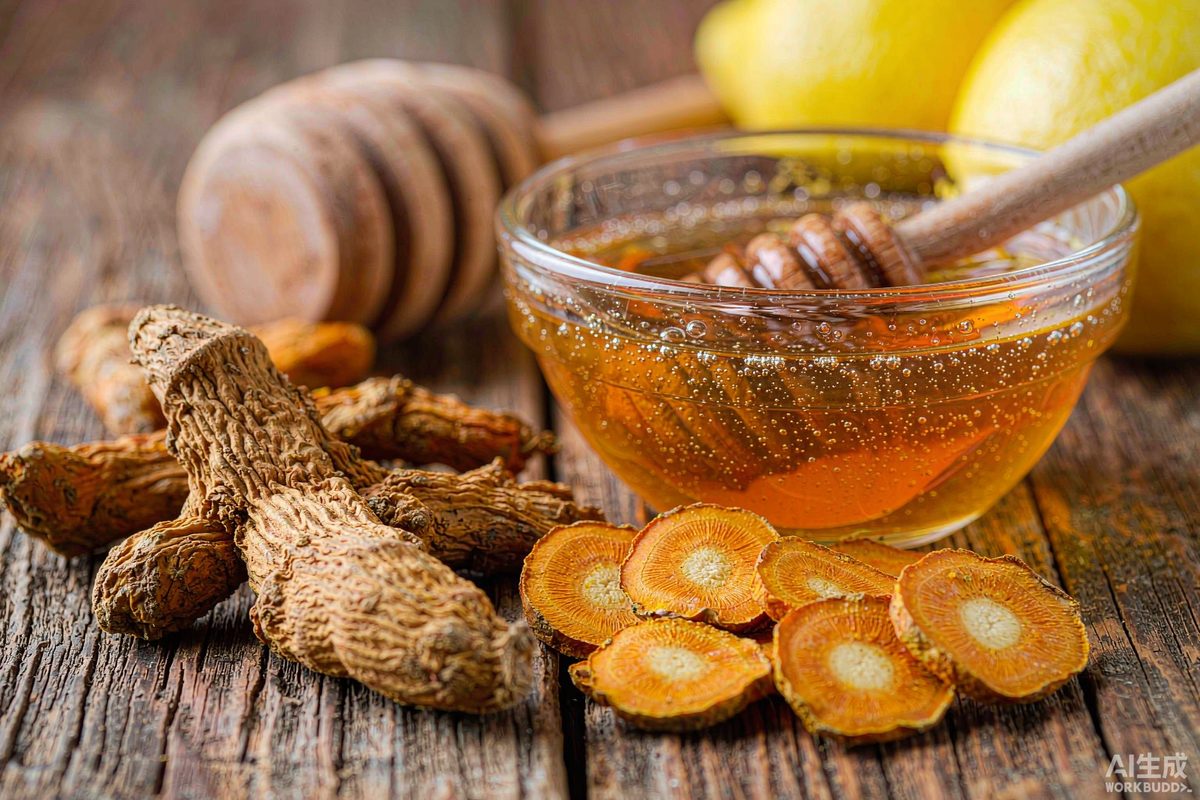
Before the specialized recipes, master this one. It produces a rich, gelatinous, mineral-dense broth you can drink on its own or use as the base for all three recipes that follow. Every element has a TCM reason.
The bones deliver the Jing — marrow and cartilage that nourish Kidney essence and supply collagen precursors. Vinegar leaches minerals from the bone matrix. Ginger, scallion, and garlic warm the middle burner (Spleen and Stomach) so the dense, nourishing broth actually gets absorbed rather than sitting heavy. The long, slow simmer extracts maximum Jing without destroying the collagen proteins.
Ingredients: 3-4 pounds mixed bones — beef knuckles and marrow bones, pork neck bones and trotters, or a whole chicken with feet (joint bones have the highest cartilage concentration); 2 tablespoons raw apple cider vinegar or rice vinegar; 1 large onion, quartered, skin on; 2 carrots, roughly chopped; 3 celery stalks; 6-8 cloves garlic, smashed; 3-inch piece fresh ginger, sliced; 2 bay leaves; 1 teaspoon black peppercorns; filtered water to cover — about 4-5 quarts.
Method: Place bones in a large pot or slow cooker. Add vinegar and cold filtered water — cold water, not hot, because hot water seals the bone pores and stops mineral leaching. Let sit thirty minutes without heat. Add everything else. Bring to a bare simmer — as soon as you see bubbles, drop the heat to the lowest setting that keeps it gently moving (185-200°F).
Skim the gray foam that rises in the first thirty to forty-five minutes. Simmer: 18-24 hours for beef/pork, 12-18 hours for chicken. Keep bones submerged, adding water as needed.
Strain when done. Discard the solids — the bones will be brittle and spent, the vegetables exhausted. Cool, then refrigerate. The fat cap solidifies on top — leave it for flavor or skim off if you prefer leaner broth. The jelly underneath should be firm. Reheat portions as needed. Refrigerate up to five days, freeze up to six months.
- The best bones for TCM broth come from joints: knuckles, feet, necks, and marrow bones. Joint bones contain the highest concentrations of cartilage, tendons, and marrow — the tissues that supply collagen precursors and Jing. Ask your butcher specifically for 'soup bones with joints.'
- If using a slow cooker, set it to LOW (not high) and aim for 24 hours. An Instant Pot on high pressure can achieve similar extraction in 3-4 hours, though the gel may be slightly weaker — the rapid temperature cycling produces a different protein pattern.
- Freeze broth in 1-cup portions using silicone muffin molds. Once frozen, pop them into a freezer bag. Each 'puck' is one serving — ready to thaw and heat in 2 minutes.
"Boiling bones for an extended period extracts the marrow. The marrow enters the decoction. The decoction enters the Stomach. The Stomach transforms and transports it to the Kidney. The Kidney distributes it to the bones. Thus, bone becomes bone."
Recipe 1: Pork Bone + Eucommia for Osteoarthritis
This is the broth my grandmother drank when her knees bothered her, and the recipe I prescribe most often to patients with osteoarthritis of the knees and hips.
Osteoarthritis, in TCM terms, is a Kidney-Liver deficiency pattern: the Kidney fails to nourish the bones, the Liver fails to nourish the sinews, and the joints lose their foundation. Pork is the foundation here — neutral in temperature, entering the Kidney and Stomach channels, the best base for a tonic broth that won't overheat the body.
Eucommia bark (Du Zhong) is the star. It's arguably the single most important herb in the TCM bone-and-joint pharmacopeia. It tonifies Kidney Yang and Liver, strengthens sinews and bones, and specifically addresses lower back and knee pain — the two most common osteoarthritis sites.
A 2016 pharmacological review found that Eucommia ulmoides contains geniposidic acid and aucubin, compounds that stimulate osteoblast activity, increase bone mineral density, and suppress inflammatory cytokines in joint tissue.
Achyranthes root (Niu Xi) guides the formula downward — its name literally means "cow's knee," and it has a specific tropism for the lower back, hips, and knees. It also invigorates Blood in the lower extremities, which matters because osteoarthritis always involves some degree of local Blood stasis in the affected joint. Goji berries (Gou Qi Zi) add gentle sweetness while nourishing Liver Blood and Kidney Yin.
Ingredients: 3-4 pounds pork neck bones and pig trotters (trotters are rich in skin, collagen, and gelatin); 20g dried Eucommia bark (Du Zhong); 15g dried Achyranthes root (Niu Xi); 2 tablespoons goji berries; 3-4 red dates (Da Zao, pitted); 1 piece dried tangerine peel (Chen Pi, about 2 inches).
Method: Follow the base recipe. Add Eucommia, Achyranthes, red dates, and tangerine peel at the start with the bones. Add goji berries in the final thirty minutes — they're delicate and lose potency with prolonged cooking. Drink 1 cup warm, first thing in the morning on an empty stomach for maximum Jing absorption. A second cup before bed is fine.
Expect reduced morning stiffness within one to two weeks, measurable pain reduction in four to six weeks. This broth complements — never replaces — movement, acupuncture, and whatever medical management you're already doing.
- Du Zhong has a characteristic 'silver thread' test: break a piece of dried bark, and thin, stretchy silver strands should be visible between the broken edges. This is the latex containing the active geniposidic acid — if there are no threads, the herb is spent or fake.
- This broth is best consumed in autumn and winter — the seasons when Kidney energy (governed by Water, the element of winter) is naturally dominant and most receptive to Jing tonification. Summer consumption is fine but may feel too warming in hot weather.
- If Eucommia bark is unavailable, Himalayan teasel root (Xu Duan) is the next best option — it also targets the Kidney and strengthens bones and sinews, with a slightly stronger focus on fracture healing and slightly weaker focus on chronic arthritis.
"Du Zhong enters the Liver and Kidney channels. It tonifies the Kidney Yang, strengthens the sinews and bones, and treats lower back and knee pain due to Kidney deficiency. When taken as a decoction over time, the bones become strong and the body feels light."
Recipe 2: Beef Bone + Rehmannia for Osteoporosis
Osteoporosis is, in TCM terms, a pure Kidney Jing deficiency pattern. The bones become porous and fracture-prone because the Kidney — which governs the bones — has depleted its essence to the point where it can no longer adequately nourish the skeletal matrix. This recipe is the most heavily Jing-tonifying of the three.
It's designed for postmenopausal women, elderly patients with low bone density, and anyone recovering from fractures where the callus is slow to form.
Beef bones are the foundation. In TCM, beef is the most nourishing common animal protein for Qi and Blood production — and Blood and Qi are what the Spleen transforms into postnatal Jing to supplement the depleting prenatal Kidney Jing.
Prepared Rehmannia root (Shu Di Huang) is the central Kidney Jing tonic in the Chinese materia medica — the cooked, processed form of Rehmannia, blackened through repeated steaming and drying. This processing transforms it from a cooling Blood-cooler into a warming, deeply nourishing Jing tonic. Shu Di Huang is the lead herb in Liu Wei Di Huang Wan, the most famous Kidney Yin formula in Chinese medicine.
Eucommia bark appears again — it tonifies Kidney Yang, complementing Rehmannia's Yin focus for balanced Jing tonification. Dong Quai (Dang Gui) nourishes Blood and invigorates circulation, which is critical for osteoporosis because bone is living tissue that needs Blood to maintain density.
Calcium supplementation alone can't increase bone density without adequate circulation — a fact Western medicine is increasingly recognizing through research on the vascular-bone axis.
Ingredients: 3-4 pounds beef marrow bones, beef knuckle bones, and oxtail (oxtail gives extra cartilage and marrow); 20g Prepared Rehmannia root (Shu Di Huang); 15g dried Eucommia bark (Du Zhong); 10g Dong Quai (Dang Gui); 3-4 red dates (Da Zao, pitted); 1 tablespoon black sesame seeds.
Method: Follow the base recipe. Add Shu Di Huang, Du Zhong, Dang Gui, and red dates at the start. Add black sesame seeds in the final hour — they release oils that oxidize and turn bitter with prolonged cooking. Drink 1 cup warm daily, ideally late afternoon (3-5 PM, the Bladder time, when Kidney energy is accessible) or before bed.
Bone density improvements take six to twelve months of consistent use, but reduced bone pain, improved lower back strength, and better dental health often show up within two to three months.
- Shu Di Huang is distinct from Sheng Di Huang — the prepared (cooked) version is black, slightly sticky, and sweet-warming, while the raw version is pale brown and cooling. For osteoporosis, you want the prepared (Shu) form. If you can only find raw Rehmannia, add an extra piece of cinnamon bark to create a warming effect.
- Combine this broth with weight-bearing exercise (walking, Tai Chi, light resistance training) — TCM recognizes that Jing is activated by movement, not just supplementation. Research in the Journal of Bone and Mineral Research found that dietary calcium plus weight-bearing exercise increased bone density more than calcium alone — consistent with the TCM principle that Qi and Blood must MOVE to nourish tissue.
- If you're taking prescription bisphosphonates (Fosamax, Actonel) for osteoporosis, this broth complements rather than conflicts with those medications. The herbs here do not interfere with bisphosphonate mechanisms.
"Shu Di Huang enters the Kidney channel. It is the supreme herb for nourishing Yin, replenishing essence, and filling the marrow. For deficiency of Kidney essence manifesting as weak bones, loose teeth, premature graying, and lower back soreness, Shu Di Huang is irreplaceable."
Recipe 3: Chicken + Turmeric + Ginger for Post-Injury Recovery
This recipe is built for active healing — acute joint injuries, post-surgical recovery, and rehabilitation following fractures, ligament tears, or joint replacement. It differs from the first two recipes in focus: where Recipes 1 and 2 emphasize chronic Kidney Jing tonification, Recipe 3 emphasizes Blood-moving, swelling-reducing, and tissue-repair-accelerating actions.
Chicken bones are the foundation because chicken is warming and enters the Spleen, Stomach, and Kidney channels. Chicken bone broth is lighter and easier to digest than beef or pork broth — important when the body's digestive resources are partially diverted toward tissue repair. The Spleen, which governs both digestion and muscle repair, responds well to chicken's gentle energy.
Turmeric (Jiang Huang) is the lead medicinal ingredient. In TCM, it enters the Spleen and Liver channels, breaks Blood stasis, moves Qi, and alleviates pain — classified with the Blood-invigorating herbs.
Modern pharmacology has made turmeric one of the most studied spices in joint health: its active compound, curcumin, is a selective COX-2 inhibitor, suppresses inflammatory pathways, reduces cartilage-degrading enzymes, and accelerates fibroblast activity and collagen deposition in wound healing.
Fresh ginger pairs with it — ginger warms the middle burner to optimize nutrient absorption, reduces postoperative nausea, and is itself a COX-2 inhibitor with comparable analgesic properties to ibuprofen in some studies.
Black pepper is not optional in this recipe. Piperine, its active alkaloid, increases curcumin bioavailability by up to 2,000% by blocking the enzymes that normally metabolize it in the gut and liver. Without black pepper, most curcumin is destroyed before it reaches systemic circulation.
Ingredients: 1 whole organic chicken (3-4 pounds) with feet plus 1-2 extra pounds of chicken feet (feet are almost entirely skin, tendon, and cartilage — the best healing collagen source); 2 tablespoons fresh turmeric root, thinly sliced (or 1 tablespoon dried ground turmeric); 4-inch piece fresh ginger, sliced; 1 teaspoon black peppercorns (whole — not optional); 1 cinnamon stick; 1 tablespoon goji berries; 3-4 red dates (Da Zao, pitted).
Method: Follow the base recipe with a 12-18 hour simmer for chicken. Add turmeric, ginger, black peppercorns, cinnamon stick, and red dates at the start. Add goji berries in the final thirty minutes. Drink 1-2 cups warm daily during the first four to six weeks of acute recovery, then 1 cup daily during rehabilitation.
Expect reduced swelling and pain within three to five days; improved range of motion during rehab; less postoperative fatigue (the chicken broth's Spleen Qi boost directly addresses postoperative deficiency).
- Chicken feet are the single richest source of collagen in any bone broth — almost entirely skin, tendon, and cartilage, with tiny bones that yield concentrated marrow. Don't skip them. If your grocery store doesn't carry them, an Asian market always will.
- Turmeric stains everything it touches permanently. Use a dedicated cutting board, or wear gloves when handling fresh turmeric root. The staining is harmless — it's the same curcumin that provides the anti-inflammatory benefits.
- This broth can be started as soon as you're cleared for oral intake after surgery — ginger soothes postoperative nausea, glycine aids tissue repair, and the warming nature counters the 'Cold invasion' that surgery (an opening of the body's defensive perimeter) creates in the TCM framework.
"Jiang Huang (Turmeric) breaks Blood and moves Qi. It treats pain from Blood stasis in the channels, especially in the shoulders, arms, and joints. When combined with Gui Zhi (Cinnamon Twig), it warms the channels and alleviates Bi pain from Wind-Cold-Damp invasion."
Using Bone Broth as Part of a Daily Joint Health Routine
Bone broth is powerful, but it's not a standalone treatment. In TCM, no single intervention resolves complex joint conditions alone — the broth addresses the Jing and Blood deficiency, but it needs to work alongside therapies that handle the other dimensions: channel obstruction (acupuncture, moxibustion), stagnation (cupping, movement), and acute inflammation (dietary change, herbs).
Here's the integrated protocol I put patients on. Morning, upon waking: 1 cup of warm broth — Du Zhong Gu Tou Tang for osteoarthritis, Di Huang Niu Gu Tang for osteoporosis, Jiang Huang Ji Gu Tang for post-injury recovery. Drink it warm, not hot (excessive heat damages Stomach Yin), on an empty stomach for maximum absorption.
Fifteen to twenty minutes later: gentle joint mobilization — Tai Chi, the Eight Brocades, or simple range-of-motion work. TCM teaches that Qi and Blood move with activity; the Jing from the broth has to get circulated to the joints.
Midday: moxibustion or far-infrared heat on the most symptomatic joints for ten to fifteen minutes. Heat dilates the microvasculature, pushing the collagen precursors and minerals from the morning broth deeper into the joint tissues. For Cold-Bi patients, moxa on ST-36 (Zu San Li) also warms the Stomach to improve absorption of the next day's dose.
Afternoon (3-5 PM): a second cup of broth if the condition is acute or severe — the Bladder and Kidney times on the Chinese organ clock are when Jing-tonifying interventions are most receptive. Evening: cupping or self-massage with a warming liniment along the channels near affected joints. The negative pressure pulls fresh, Jing-enriched blood into the joint capsule while draining stagnant waste.
End with gentle stretching before bed.
Weekly: one to two acupuncture sessions targeting the constitutional organ patterns plus local points. Acupuncture acts like a GPS for your nutrition — it directs the Jing from the broth to wherever it's needed most. Noticeable improvement typically shows up within two to four weeks for acute conditions, eight to twelve weeks for chronic degenerative ones. The key is consistency — broth once a week is just soup.
Broth every day, combined with movement and external therapies, is medicine.
- Batch-cook bone broth every other weekend. A Saturday-Sunday batch yields approximately 12-16 cups — enough for 1-2 cups daily for 1-2 weeks. Freeze individual portions and set a daily phone reminder to drink your broth. Consistent supplementation is the difference between 'tried bone broth' and 'treated my joints.'
- Layer your therapies temporally: broth first (nutritional foundation), then movement (circulation), then external heat therapy (targeted delivery), then evening bodywork (drainage and relaxation). Each step builds on the previous one.
- If you're also taking collagen supplements or glucosamine, the bone broth can replace them — a properly made cup provides comparable amino acids and glucosamine. The advantage of broth is absorption synergy: the gelatin matrix plus warming herbs plus meal timing delivers nutrients in a form the body has evolved to utilize for thousands of years.
"The superior physician treats disease before it arises. The inferior physician treats disease after it has manifested. To nourish the Kidney and replenish the Jing through food is to treat the root. To suppress joint pain with medicine alone is to treat the branch. Root and branch together — this is the complete method."