The Problem Nobody Has a Good Answer For
Here's a conversation I've had, with minor variations, more times than I can count. A patient — let's call her Diane — sits down and says: 'I fall asleep fine. No problem. But every night, around 2:30 AM, I'm awake. Eyes open. Mind already running. I lie there for two hours, sometimes three. By the time my alarm goes off I've had maybe four hours of broken sleep.'
She has already seen her primary care doctor. She got a zolpidem prescription. It knocked her out, sure — but she woke up groggy, still woke at 2:30 AM anyway, and within six weeks she was building tolerance. More drug, less effect. Same wake-up.
This is sleep maintenance insomnia, and it's the most common subtype of insomnia by a wide margin. The American Academy of Sleep Medicine estimates roughly 30% of adults experience insomnia symptoms. Of those, the people who wake up in the middle of the night and can't get back to sleep outnumber those who simply can't fall asleep.
Western medicine has decent tools for sleep onset — falling asleep — but for staying asleep, the cupboard is surprisingly bare. Z-drugs like zolpidem and eszopiclone add a modest 15-30 minutes of total sleep time on average in clinical trials, and the side effects — next-day cognitive fog, tolerance, dependence, increased fall risk in older adults — make them a short-term fix at best.
Enter Suan Zao Ren Tang (酸枣仁汤), a five-herb formula written down almost 1,800 years ago by Zhang Zhongjing, the Hippocrates of Chinese medicine. He didn't design it to sedate. He designed it to nourish — to rebuild the Yin substrate that holds sleep in place through the night. And a growing body of clinical evidence is now confirming what TCM practitioners have observed for two millennia.
- If you fall asleep easily but wake between 1-3 AM and can't return to sleep, you fit the classic Suan Zao Ren Tang pattern — write down your exact wake-up times for two weeks to confirm.
- Sleep maintenance insomnia that responds well to Suan Zao Ren Tang is often accompanied by daytime symptoms: irritability, dry eyes, mild heart palpitations, and a wiry tongue body.
- Track what happens when you wake — mental racing suggests Heart involvement, while irritability and tension point to the Liver. This distinction matters for dosage and formula modifications.
"When the Liver stores Blood, the Heart houses the Shen. When Blood is insufficient, the Shen has no dwelling — it drifts and cannot rest."
Five Herbs, Each with a Job — The Architecture of Suan Zao Ren Tang
Suan Zao Ren Tang means 'Sour Jujube Seed Decoction,' but the name undersells what's actually happening. This is not five herbs tossed in a pot. It's a carefully structured formula where every ingredient has a defined role. Change any one of them, and the clinical outcome shifts.
Here's the lineup — each herb's TCM function, plus what modern pharmacology has found.
The Chief (Jun 君) — Suan Zao Ren (Zizyphus jujuba var. spinosa): The namesake. Sweet and sour, neutral in temperature, entering the Heart and Liver channels. Its job is to nourish Heart Yin, calm the Shen, and anchor the mind during sleep. Secondary action: stops abnormal sweating — relevant because night sweats are a hallmark sign of Yin deficiency, the underlying pattern this formula treats.
Pharmacologically, Suan Zao Ren contains jujubosides — triterpenoid saponins that enhance GABA-ergic neurotransmission, increase total sleep time, and improve sleep architecture by boosting slow-wave and REM sleep. A 2017 review catalogued over 150 bioactive compounds in this single seed.
The Deputy (Chen 臣) — Zhi Mu (Anemarrhena asphodeloides): Bitter, sweet, cold. Enters Lung, Stomach, and Kidney. Its job: nourish Yin and clear Deficiency Heat. Suan Zao Ren nourishes Blood, but without Zhi Mu's cooling action, the Heat would persist and keep agitating the Shen. Modern research has found timosaponins — steroidal saponins with anti-inflammatory, neuroprotective, and mild sedative effects.
The Assistant (Zuo 佐) — Chuan Xiong (Ligusticum wallichii): Here's the curveball. Chuan Xiong is pungent and warm, famous as a blood-moving herb for headaches and gynecological pain. Why is it in a sleep formula? Because Suan Zao Ren's sour, astringent nature nourishes Blood but can also constrict.
Chuan Xiong's pungent-moving nature prevents this constriction and ensures the newly nourished Blood actually circulates to where it's needed — the Heart and brain. It's the courier. Contains tetramethylpyrazine and ferulic acid, which improve cerebral blood flow.
The Second Assistant — Fu Ling (Poria cocos): Sweet, bland, neutral. Enters Heart, Spleen, Kidney. Calms the Heart Shen and leaches out Dampness. Chronic Liver Blood Deficiency often impairs Spleen function, leading to Dampness — heavy, turbid, like mud clouding the Heart orifice. Fu Ling clears that fog. Its triterpenoids have GABA-modulating and sedative effects.
The Envoy (Shi 使) — Gan Cao (Glycyrrhiza uralensis, Licorice Root): Sweet, neutral. Enters all twelve primary channels, with special affinity for Heart and Spleen. Gan Cao harmonizes the formula — moderates Zhi Mu's cooling so it doesn't damage the Spleen, and potentiates Suan Zao Ren's calming by supplementing Heart Qi.
Glycyrrhizin and flavonoids give it anti-inflammatory, adrenal-supportive, and neuroprotective properties.
These proportions — Suan Zao Ren 18g, Gan Cao 3g, Zhi Mu 6g, Fu Ling 6g, Chuan Xiong 6g — are the ones Zhang Zhongjing wrote down 1,800 years ago. They haven't changed. That kind of stability, over that kind of timespan, is worth paying attention to.
- The chief-deputy-assistant-envoy structure isn't historical trivia — professional-grade Suan Zao Ren Tang products maintain these ratios. Bargain formulations that skimp on Suan Zao Ren (it should be at least 30% of the formula by weight) won't deliver clinical results.
- If you're trying a commercial Suan Zao Ren Tang product, check the label for the full five-herb composition. Products with only Suan Zao Ren as a single herb are useful but clinically distinct from the complete formula.
- The herb proportions in the original Jin Gui Yao Lue formula are: Suan Zao Ren 18g, Gan Cao 3g, Zhi Mu 6g, Fu Ling 6g, Chuan Xiong 6g — these ratios have stood for 1,800 years for good reason.
"Suan Zao Ren is sweet and sour, neutral. It mainly treats heart and abdominal Cold-Heat, pathogenic accumulation, Qi binding, aching limbs, and dampness impediment. Taken over time, it calms the five zang organs, lightens the body, and prolongs the years."
Ancient Theory Meets Neuropharmacology (They Don't Conflict)
The elegance of Suan Zao Ren Tang is that its TCM mechanism and its neuropharmacological mechanism describe the same reality from different angles. They don't fight each other. They converge.
TCM view: Suan Zao Ren Tang treats Liver Blood Deficiency with Deficiency Heat disturbing the Heart Shen. The Liver stores Blood. During sleep, Blood returns to the Liver for purification — this is why the Liver's peak meridian hour is 1-3 AM. When Liver Blood runs low — drained by chronic stress, overwork, insufficient sleep itself, or aging — the Liver can't anchor the ethereal soul (Hun) during sleep.
The Hun drifts, producing dream-disturbed sleep and nighttime waking. Meanwhile, the Heart houses the Shen — your consciousness, your spirit, the thing that's supposed to rest during sleep. The Heart depends on Liver Blood to anchor the Shen. When Liver Blood is deficient, the Shen becomes unmoored.
And because deficiency creates a vacuum, Heat rushes in — Deficiency Heat, or Empty Fire — which rises from the Liver to the Heart, agitating the Shen and producing the hallmark symptoms: nighttime waking with a racing mind, palpitations, irritability, that wired-but-exhausted feeling.
Now the pharmacology. The jujubosides in Suan Zao Ren are where the stories converge with almost eerie precision. Research published in the Journal of Ethnopharmacology (2017) found that jujuboside A — the primary saponin — enhances GABA-A receptor activity through a mechanism distinct from benzodiazepines.
Instead of binding directly to the benzodiazepine site (which is how zolpidem works, and why it produces tolerance and dependence), jujuboside A appears to increase the expression of GABA-A receptor subunits. It's building more receptors, not just hammering existing ones harder.
Spinosin, the primary flavonoid, works through serotonin. Animal studies show it increases serotonin in the hypothalamus and hippocampus while modulating 5-HT1A receptors — the same receptor subtype targeted by buspirone, a non-addictive anxiolytic. The combined effect — jujuboside A on GABA, spinosin on serotonin — produces a sleep architecture that looks different from pharmaceutical-induced sleep.
EEG studies show increased slow-wave sleep and REM sleep, without the REM suppression that characterizes benzodiazepine and Z-drug sleep — a suppression that may explain why pharmaceutical sleep often feels non-restorative, and why rebound insomnia hits hard on discontinuation.
The 2015 meta-analysis of 12 RCTs with 1,036 participants backs this up. Suan Zao Ren Tang significantly improved sleep quality scores versus placebo, with an effect size comparable to or exceeding benzodiazepines — without their side effect burden.
A 2012 Cochrane-style review found Suan Zao Ren Tang was the single most studied formula and consistently produced clinically meaningful improvements in sleep onset latency, total sleep time, and sleep efficiency. And patient-reported restfulness was consistently rated higher than with pharmaceutical comparators.
One important nuance: the 2015 review showed a pooled PSQI improvement of -2.86 points for Suan Zao Ren Tang alone, and -3.71 when combined with benzodiazepines — suggesting complementary, not competing, mechanisms. The combined approach allowed lower benzo doses and fewer side effects.
- The GABA-enhancing vs. GABA-receptor-building distinction is the clinical difference between a herb that works immediately and one that builds effect over 1-3 weeks. Suan Zao Ren Tang is not a 'take it and conk out' remedy — it's a restorative formula that improves sleep architecture over time.
- If you're currently taking a benzodiazepine or Z-drug, do not discontinue abruptly. TCM herbs and pharmaceuticals should be coordinated under supervision — the goal is to build the herbal foundation while tapering the pharmaceutical under medical guidance.
- The serotonin-modulating effect of spinosin may explain why patients often report mood improvement alongside sleep improvement — nourishing Heart Yin has downstream effects on emotional regulation.
"In consumptive fatigue with deficiency, restlessness, and inability to sleep, Suan Zao Ren Tang is the ruling formula."
Is This You? The Liver Blood Deficiency Picture
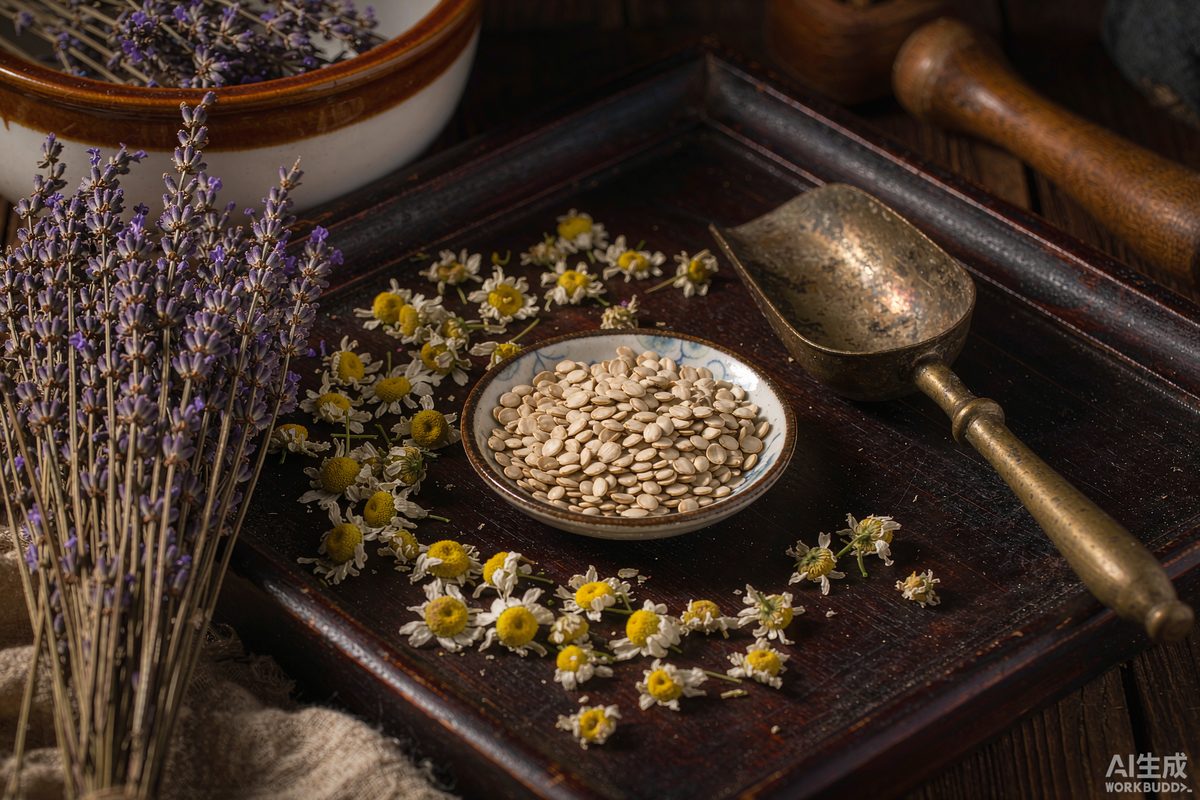
Suan Zao Ren Tang isn't for 'insomnia.' It's for a specific pattern. Give it to someone whose primary issue is Spleen Qi Deficiency with Dampness — heavy, foggy, sleepy-but-can't-fall-asleep — and you'll probably make things worse. But give it to the right pattern, and the results can be remarkable. So let's get specific.
Sleep pattern: You fall asleep without much trouble, but you wake consistently between 1 and 3 AM — the Liver meridian hour. Sometimes with a start, sometimes with heat. Your mind immediately starts spinning — worries, plans, replaying that conversation from Tuesday — and you can't turn it off. You might doze lightly before dawn, but you never sink back into deep sleep.
Physical signs: Dry eyes, blurred vision, floaters — the eyes are the orifice of the Liver, and when Liver Blood runs low, they're the first place it shows. Muscle twitching, especially in the calves at night. Mild heart palpitations when lying down. Night sweats — not drenching, usually just a sheen on the chest or neck.
Tongue: pale body (Blood deficiency), possibly with a red tip (Heart involvement from Deficiency Heat), thin dry coating. Pulse: thin (Xi) and wiry (Xian) — thready from deficiency, wiry from Liver tension.
Emotional picture: Irritability that flares fast and subsides fast — the classic short fuse of Liver Blood deficiency. Background anxiety that feels more physical than mental — you feel on edge in your body, not just your thoughts. Difficulty winding down in the evening — paradoxically, because you're exhausted. Your Yin is too depleted to embrace your Yang, so you feel wired despite being bone-tired.
Who this describes most often, in my clinical experience: high-cognitive-load professionals (engineers, lawyers, executives) who've been burning the candle for years. Women in perimenopause and menopause — estrogen decline corresponds in TCM to profound Yin and Blood depletion, and this group is the single biggest responder pool. Postpartum mothers, whose Blood has been massively depleted by pregnancy and delivery.
Students during exam season. Anyone who's been sleep-deprived long enough that the deprivation itself has become the pattern — a Yin deficiency spiral.
Who should stay away: Spleen Qi Deficiency with Dampness (heavy, foggy, loose stools, sweet cravings, puffy tongue with toothmarks) — Suan Zao Ren Tang's nourishing, slightly cloying nature worsens Dampness. Significant Phlegm-Heat (thick yellow coating, loud snoring, hot and agitated all night) — you need Wen Dan Tang first, not Suan Zao Ren Tang.
Acute cold or flu — hold tonifying herbs until the external pathogen clears. Pregnancy and breastfeeding — get practitioner supervision.
- The single most reliable self-check: look at your tongue in natural light. A pale body with a thin coating strongly suggests Blood deficiency and fits the Suan Zao Ren Tang pattern. A puffy, scalloped tongue with a thick coating does not.
- The 1-3 AM waking pattern is the strongest circadian clue. If you wake at other times — 11 PM-1 AM suggests Gallbladder involvement, 3-5 AM suggests Lungs — you may need a different approach or a modified formula.
- If you have 3 or more of the pattern signs (1-3 AM waking, dry eyes, irritability, palpitations, pale tongue, thin pulse), Suan Zao Ren Tang is worth discussing with a licensed practitioner.
What the Research Actually Shows — Beyond the Headlines
The evidence on Suan Zao Ren Tang is stronger than most people realize. It's also more nuanced than 'this herb cures insomnia.' Let's walk through it.
The landmark 2015 meta-analysis, published in Evidence-Based Complementary and Alternative Medicine, pooled 12 RCTs with 1,036 participants. Researchers found Suan Zao Ren Tang — both standalone and as an adjunct to conventional sleep meds — produced statistically and clinically significant improvements in sleep quality as measured by the Pittsburgh Sleep Quality Index (PSQI).
86 points favoring Suan Zao Ren Tang over controls. ' The effect is right at that boundary — real, not enormous, but real.
When Suan Zao Ren Tang was combined with benzodiazepines, the effect was larger: -3.71 points. This suggests the herbs and the pharmaceuticals are working through complementary mechanisms, not competing ones. Lower benzo doses, fewer side effects.
The 2012 Cochrane-style review looked broadly at Chinese herbal medicine for insomnia and identified Suan Zao Ren Tang as the single most studied formula, appearing in 28.6% of all included trials. Chinese herbal medicine overall produced a 1.88-fold greater likelihood of marked improvement versus placebo, and Suan Zao Ren Tang was among the formulas with the strongest and most consistent effects.
Here's the honest summary of what the evidence says — and doesn't say.
What it supports: Suan Zao Ren Tang works for sleep maintenance insomnia, with an effect size in the moderate-to-large range. It works best taken consistently for 2-4 weeks minimum — this is a restorative, not an acute-use, intervention. It has a significantly better safety profile than benzodiazepines and Z-drugs. Adverse events in trials were mild — GI discomfort, loose stools in a small percentage.
What it doesn't yet show: Suan Zao Ren Tang has not been head-to-head tested against CBT-I, the first-line treatment in current sleep medicine guidelines. No large-scale, multi-center, Western-population trials have been done. Optimal dosage and duration haven't been established through dose-finding studies — trial doses varied from 3g to 15g of granular extract per day.
And there's a known publication bias in TCM research: positive studies are more likely to be published than negative ones, so the effect estimates may be slightly inflated.
The 2017 pharmacological review from the Journal of Ethnopharmacology provided the mechanistic foundation: cataloguing the GABAergic, serotonergic, and anti-inflammatory pathways through which Suan Zao Ren and its compounds exert their effects. The review noted something important: Suan Zao Ren's effects are multi-target — unlike the single-receptor approach of most sleep drugs.
This may explain both the broader benefit profile and the lower side-effect burden.
- When reading TCM clinical research, pay attention to the comparison group. Trials that compare Suan Zao Ren Tang to placebo are the strongest evidence of its independent effect. Trials that add it to existing treatment are evidence of adjunctive benefit — both useful, but different clinical questions.
- The 2-4 week onset of full effect is consistent across studies. If you're going to try Suan Zao Ren Tang, commit to at least a month at a consistent dose before evaluating results.
- The PSQI is a validated, widely used instrument in sleep research — a reduction of 3+ points means you're going from 'clinically significant sleep disturbance' to 'mild or no sleep disturbance.' That's the difference between functioning and not.
Dosing, Forms, Timing — How to Actually Take It
Suan Zao Ren Tang comes in several forms. Each has trade-offs between potency, convenience, and cost.
Traditional decoction (Tang): This is how Zhang Zhongjing designed it, and it's still the gold standard. Raw herbs simmered 30-45 minutes. A practitioner can modify the formula for your specific pattern — more Suan Zao Ren if your Shen is particularly restless, He Huan Pi for emotional release, Huang Qin if Heat is pronounced.
Downsides: time, bitter taste (there's no getting around it), and you need access to a Chinese herbal pharmacy. Typical dose: one cup (about 200ml), warm, 30-60 minutes before bed.
Granular concentrates (Ke Li): Industrially prepared decoctions spray-dried into soluble powder. Dissolve 1-2 teaspoons in hot water. This is the most practical form for most people — consistent potency, portable, dissolves in under a minute. Trade-off: you can't customize, and some practitioners argue the industrial processing reduces synergistic compounds.
Typical dose: 3-6g of granular extract (equivalent to 12-24g raw herbs), 30-60 minutes before bed.
Capsules and tablets: Most convenient, generally least potent. The active compound dose per capsule is lower than what research suggests is therapeutic. You'll typically need 4-6 capsules to approximate clinical trial doses.
Timing: take it 30-60 minutes before your target bedtime, ideally during the Pericardium hour (7-9 PM) or early Triple Burner hour (9-10 PM). Too close to bedtime, and the compounds haven't peaked. Too early, and the peak might pass before you're horizontal.
Contraindications: Suan Zao Ren Tang is generally very safe — adverse events in trials are rare and mild. But skip it if you have diarrhea or loose stools — the formula's nourishing, moistening nature makes this worse. If you're on blood thinners (warfarin, clopidogrel, aspirin), consult your doctor — Chuan Xiong has mild anti-platelet effects.
If you take sedatives, the additive effect could produce excessive drowsiness; coordinate with your prescriber to reduce the pharmaceutical dose as the herbs take effect.
Long-term use: Suan Zao Ren Tang is designed for persistent patterns, not acute sleeplessness. 3-6 months of consistent use is appropriate for chronic Liver Blood Deficiency insomnia. But as sleep normalizes, the formula should be modified or discontinued. The goal is to restore your body's own capacity to sleep — not to swap one dependency for another.
- Start with granules if you're new to TCM herbs — they're the sweet spot between potency and practicality. If you respond well and want to optimize, consult a practitioner about a customized decoction.
- The bitter taste of the decoction is actually therapeutic in TCM — bitter flavors enter the Heart and clear Heat. Don't mask it with sugar; a small piece of dried fruit after drinking is fine.
- If you're prone to loose stools, ask your practitioner about adding Bai Zhu (Atractylodes) or Chao Suan Zao Ren (dry-fried Suan Zao Ren) to the formula — these modifications maintain the sleep benefit while reducing the tendency toward loose stools.
- Keep a simple sleep diary during the first month: bedtime, approximate time of any nighttime waking, wake time, and a 1-10 rating of how rested you feel. This data will tell you and your practitioner whether the formula is working faster than any subjective impression can.
What to Do Alongside the Formula — Practices That Amplify It
Suan Zao Ren Tang is powerful alone, but in Chinese medicine, herbs are never the whole treatment. These complementary practices target the same pattern — Liver Blood Deficiency with Heat — through physical, respiratory, and behavioral channels.
The warm foot bath: The single simplest add-on with the highest return. The Kidney meridian starts at Yongquan (KD-1) on the sole of the foot. Warm water directly nourishes Kidney Yin — and because Kidney Yin is the foundation of all Yin, including Liver Yin, a foot bath supports the very substrate Suan Zao Ren Tang is rebuilding. Add Epsom salts for the magnesium (GABA support). Temperature: 100-104°F (38-40°C).
Duration: 15-20 minutes. Timing: Pericardium hour (7-9 PM), about 30 minutes before your herbs. The core temperature drop that follows the foot bath is the actual sleep signal — the bath just sets it up.
PC-6 acupressure: Pericardium-6 (Neiguan, Inner Pass) sits on the inner forearm, two finger-widths above the wrist crease, between the two tendons. It's one of the most potent points for calming the Shen and regulating Heart function. Firm, steady thumb pressure for 2-3 minutes on each wrist before bed. You want a dull ache or distention, not sharp pain.
Acupressure wristbands provide continuous gentle stimulation through the night.
Liver-release breathing: Lie on your back, knees bent, feet flat on the bed. Both hands on your right ribcage — the Liver's anatomical position. Inhale through your nose for 4 counts, directing the breath under your hands — feel the right ribcage expand laterally. Hold 2 counts. Exhale through your mouth for 6 counts, making a soft 'shhhh' sound — the Liver's healing sound in TCM qigong.
As you exhale, imagine tension, heat, and the day's residue draining from the Liver. Repeat 5-10 cycles. The extended exhale activates the parasympathetic nervous system, counteracting the sympathetic dominance of Liver Qi Stagnation with Heat. The 'shhhh' isn't mystical — vocalized exhalation lengthens the exhale through forced airway resistance, which directly activates the vagus nerve.
Evening screen protocol: Suan Zao Ren Tang nourishes Yin. Blue light depletes it. The two work against each other. If you can't fully disconnect from screens after dark, install f.lux or use your device's night mode starting at sunset, wear amber blue-light-blocking glasses after 8 PM, and switch bedside lamps to red or amber bulbs.
Dietary support: The Liver stores Blood, and Blood is built from the Spleen's transformation of food. Without dietary support, the formula is refilling a leaky bucket. Foods that nourish Liver Blood: dark leafy greens (spinach, kale, chard), small amounts of organ meats (grass-fed liver, once a week), black sesame seeds, goji berries (a small handful steeped in hot water as an evening tea), bone broth.
Foods to minimize: alcohol (directly depletes Liver Yin), coffee (bitter flavor drains Yin fluids), spicy foods (generate internal Heat that counteracts Zhi Mu), and greasy fried foods (create Dampness that Fu Ling has to clear).
Layer these: foot bath first (hands are free for acupressure), PC-6 work while your feet soak, then get into bed for the breathing. The sequence creates a descending gradient — heat and sensation move downward, awareness moves inward. Do it as a ritual, not a checklist.
- The warm foot bath + PC-6 acupressure + Liver-release breath sequence takes about 25 minutes total. Do it as a ritual, not a checklist — the intention matters. You're telling your nervous system, through three different channels, that it's time to switch modes.
- Layer the practices: start with the foot bath (your hands are free for acupressure), while your feet soak do the PC-6 work, then get into bed and do the breathing. This sequence creates a descending gradient — heat and sensation move downward, consciousness moves inward.
- The 'shhhh' sound during exhale isn't mystical — vocalized exhalation lengthens the exhale through forced airway resistance, which directly activates the vagus nerve. The specific pitch that resonates with the Liver meridian is a low, breathy shh.
"To treat disease, first treat the Shen. When the spirit is calm, the body can heal."