Sun Simiao's 1,500-Year-Old Rule: Stop at Seven-Tenths Full
Every few years a new diet takes over the world. Keto, paleo, intermittent fasting, carnivore—each arrives with a book, a celebrity, and a claim to have finally cracked eating. And each one eventually joins the graveyard of abandoned systems, because every diet built on rules about what to eat collides with how people actually live.
Chinese medicine offers something else: a rule not about what to eat but about how much. It has survived, essentially unchanged, for more than 1,500 years. It comes from Sun Simiao, the great Tang physician, whose Prescriptions Worth a Thousand Gold contains the most repeated eating advice in Chinese medical history: eat until seven-tenths full, Qi Fen Bao, and you'll never need medicine for illness.
He wasn't writing a diet. He was writing a principle of health. Eat to about 70 percent full, not 100. Stop while you're still slightly hungry. Leave the table with a little room. That's the entire system—no forbidden foods, no timing windows, no macros, no phases.
The genius is that it works at every level at once. Simple enough for a child to follow, profound enough that modern longevity research keeps arriving at the same conclusion from a completely different direction: eating less than you want, consistently, is one of the most consistent interventions for health span ever studied. Sun Simiao didn't have the studies.
He had a thousand years of clinical observation and the wisdom to phrase it as one sentence a grandmother can teach.
When I give this rule to patients—many of whom have cycled through every diet of the last two decades—the reaction is almost always the same. First, disbelief that something this simple could work. Then relief that nothing is forbidden. Then, within weeks, the quiet realization that they've stopped dieting and started eating. That's the seven-tenths rule. Not a diet to go on. A relationship with food to adopt.
- The rule in one sentence: stop eating while you are still slightly hungry, at about seven-tenths full. Write it on a sticky note for your fridge — it is the whole system.
- Do not try to define 70% by math. Define it by feel: the point where the sharp edge of hunger is gone but you could comfortably eat a few more bites. That is the mark.
- This is a rule about stopping, not about what to eat. It works on top of any food style — which is why it survives every diet that comes and goes.
"Eat until seven-tenths full, and you will never need medicine for illness. The one who leaves the table slightly hungry has already treated half of tomorrow's diseases."
Why 70% Works: Digestion Has a Capacity, and Overeating Breaks It
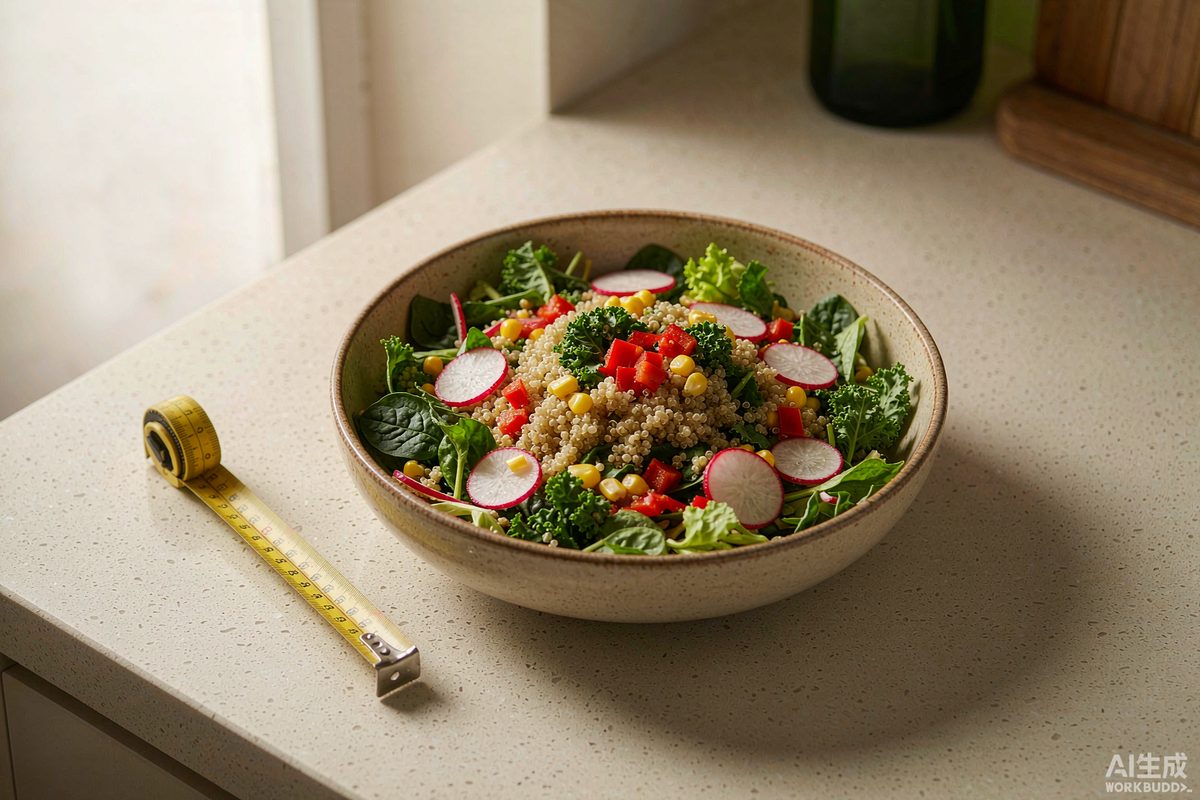
To see why the rule works, you need the TCM model of digestion, and it's genuinely elegant. In Chinese medicine the Spleen governs 'transformation and transportation': it transforms food into Qi and Blood and transports those products to every cell. It's the engine of nutrition, and like every engine, it has a finite capacity.
Feed it within capacity and everything converts—food becomes energy, nothing gets stored. Feed it beyond capacity and the overflow can't be transformed. It becomes Dampness, a heavy, sticky, turbid substance TCM describes like fog or mud. Over time Dampness thickens into Phlegm and deposits as the soft, stubborn fat that feels glued to the body.
This is the mechanism behind the classic observation that overeating doesn't just add calories—it changes the quality of the body. The fully-full meal produces fatigue, because the Spleen is overwhelmed. Bloating, because surplus is sitting in the middle. A greasy tongue coating, because Dampness is forming. And storage, because the surplus has to go somewhere.
The seven-tenths meal produces none of that: digestion completes cleanly, energy rises after eating instead of falling, and nothing is left over to store.
' The modern translation is striking. Eat beyond the liver's glycogen and muscle's uptake capacity in a sitting, and the surplus gets routed to fat tissue, driven by the insulin response. The post-meal sleepiness is the measurable glucose spike. The bloating is slowed gastric emptying.
The Dampness mechanism is a two-thousand-year-old description of what happens when intake exceeds processing capacity, and the seven-tenths rule is the simple engineering fix: keep intake within capacity and the surplus never exists to be stored.
That's why the rule produces weight loss without counting a single calorie. It's not restricting what you eat so much as preventing the overflow that becomes storage. And the effects are systemic, not just numeric—patients report better energy after meals, less bloating, clearer thinking, better sleep. All downstream of digestion that completes instead of stalling.
- Think of the Spleen as a fixed-capacity engine, not a bottomless tank: every meal is a decision about whether the surplus becomes energy or storage.
- The test of a well-portioned meal is how you feel 30 minutes after: clear-headed and steady energy means transformation completed; sleepy, heavy, and bloated means overflow.
- Notice that the overfull meal's symptoms — fatigue, bloating, brain fog — are the exact symptoms most people blame on 'getting older.' They are often just overflow.
"The Spleen governs transformation and transportation. What the Spleen can transform becomes Qi; what it cannot becomes Dampness. The art of eating is to stay within the Spleen's measure."
What the Science Says: Calorie Restriction, Portion Size, and the Satiety Signal
Sun Simiao's rule is 1,500 years old. Modern research has spent the last fifty years catching up, and the convergence is remarkable.
First pillar: calorie restriction and longevity. From yeast to primates, cutting intake below free-feeding levels is one of the most consistently reproduced interventions for extending lifespan and delaying age-related disease. The 2017 reviews of the human evidence describe improved metabolic health, reduced inflammation, and better biomarkers under moderate restriction.
The catch—and it's the catch that sank a thousand diets—is that restriction only works if people can sustain it. And that's exactly where the seven-tenths rule outperforms the spreadsheet.
Second pillar: portion size. The literature here is blunt. People eat what's in front of them, almost regardless of hunger. The systematic reviews on portion size and energy intake show a strong, consistent effect—larger portions mean larger intake, automatically, not consciously. That's the scientific basis for the simplest of the techniques: put less in front of you.
The small plate and the single serving aren't tricks. They're interventions with measured effects.
Third pillar: eating rate. The brain's fullness signal—stomach distension, gut hormones like CCK and GLP-1, glucose dynamics—takes time to arrive. The research is consistent: faster eaters consume more before the signal lands, and slower eating increases satiety for the same intake. The 2017 studies on eating rate show that slowing the meal lets the signal catch up. That's what the 20-minute meal exploits.
Fourth pillar: the 'stop before full' signal is trainable. This is the least discussed and most important finding for the rule. The interoceptive skill of noticing early fullness is a trainable capacity, not a fixed trait. Mindful-eating interventions, which train exactly the pause-and-check, consistently improve portion control and reduce binge episodes. The 70% rule isn't fighting biology.
It's training a biological skill that modern eating has atrophied.
Put it together and the convergence is striking. The rule is, in modern terms, a portion-control intervention combined with a satiety-timing intervention, delivered as a trainable skill. The tradition guessed the whole architecture. The research confirms each pillar. The difference: research tells you it works, and the tradition tells you how to do it for the rest of your life.
- The portion effect is the scientific backbone of the rule: intake tracks the portion in front of you more than your hunger — so the first intervention is the plate, not the willpower.
- Eating rate is trainable and compounding: every meal eaten slowly is a practice session for the satiety signal, and within weeks the signal arrives earlier and earlier.
- The research agrees with Sun Simiao on the mechanism: it is not about eating as little as possible, but about eating within a range the body can process and signal properly.
"The ancients said: leave the table with the stomach not quite full. The moderns say: portions drive intake, satiety lags the meal, and the skill is trainable. The two have met."
Technique 1: Make Every Meal Last 20 Minutes

The first technique is the most physiological and the simplest: make every meal last at least 20 minutes. The reason lives in the biology of satiety.
The fullness signal isn't instant. It's a cascade—the stomach stretches and sends vagal signals, the intestines release cholecystokinin, GLP-1, peptide YY, glucose rises and insulin responds. All of it takes time. The research is consistent: the cascade takes roughly 15 to 20 minutes to fully register in the brain.
Eat a meal in seven minutes, the modern default, and you've consumed your full intake before the 'I'm full' signal has left the station.
That's not just overeating in the moment. It's the trained habit of eating past the signal, meal after meal, which is how the 70% point becomes invisible. The 20-minute meal reverses this by design. If the meal lasts 20 minutes, the cascade arrives mid-meal rather than after it—and you get to notice it.
The mechanics are small and concrete. Chew each bite thoroughly; the tradition says 20 to 30 chews per bite, because digestion begins in the mouth and well-chewed food is easy work for the Spleen. Put the fork down between bites—a simple mechanical brake. Sip warm water or tea between bites.
And actually taste the food, because attention is part of satiety: distracted eating, screens on, eating standing, consistently produces faster eating and larger intake.
The results compound. A meal that once took eight minutes takes twenty-two. The satiety signal arrives while you still have food on the plate, and for the first time in years you feel 'full before the plate is empty.' That feeling is the foundation of the whole rule—you can't stop at 70% if you never notice 100% approaching.
One practical note: this is harder than it sounds, because the body has learned to eat fast. Start with one meal a day—dinner is the best candidate—and stretch it gradually. Within two weeks the pace becomes automatic, and the signal arrives earlier and earlier. That's the skill being trained, and it's the same skill Sun Simiao was describing.
- The 20-minute meal is the delivery system for the 70% rule: the satiety signal takes 15-20 minutes to arrive, so the meal must last long enough for you to hear it.
- Chew 20-30 times per bite. It is not fussiness; it is the TCM digestion principle — the mouth is where transformation begins, and well-chewed food is easy work for the Spleen.
- One screen-free meal a day is the minimum dose: no phone, no TV, no desk. Distraction is the enemy of the satiety signal, and attention is its ally.
"The one who eats slowly lets the stomach report before the hand reaches again; the one who eats quickly has already finished before the report arrives."
Technique 2: Change the Plate, Not Your Willpower
This technique requires no willpower at all, because it doesn't ask you to resist food—it asks you to change the stage the food is served on.
The plate redesign is the practical application of the portion effect, one of the best-replicated findings in eating research: people eat what's in front of them, and they eat more when more is in front of them. The effect operates below consciousness. It's visual, automatic, and it overrides hunger.
Give the same person the same meal on a 12-inch plate and a 9-inch plate, and they'll eat more from the large one and report the same fullness—because the brain judges 'how much is enough' partly by how full the plate looks.
That's the lever the rule needs. Serve less and the meal ends at 70% before you even think about it. The redesign has four parts. The plate: a 9-inch dinner plate holds roughly 25 to 30 percent less than the standard 11- or 12-inch one, and a full small plate looks as generous as a half-empty large one. The bowl and cup: same logic, smaller vessels, smaller servings.
The serving style: plate food in the kitchen and bring plates to the table—family-style serving reliably increases intake because refills are one reach away. And the visual anchor: half vegetables, a quarter protein, a quarter starch gives the eye structure, and the structure quietly enforces proportion.
Understand the psychology so you can use it instead of fighting it. The brain eats with the eyes first. The plate is the portion. And the environment beats willpower every time. That's why the rule works better with a small plate than a strong mind—the strong mind has to win the argument at every meal, forever. The small plate wins it once, silently.
So the first thing I tell patients is not to change their diet but to change their plates. Within a week, most report the same meals, the same fullness, and measurably less intake—with zero conscious restriction. That's the portion effect, doing Sun Simiao's work for you.
- Buy one set of 9-inch plates and retire the large ones. This single purchase does more for portion control than most diet books.
- Serve from the kitchen, not the table: the extra steps between you and a second serving are the second serving's best enemy.
- The eye anchors on a full plate: half vegetables, quarter protein, quarter starch makes the smaller plate look complete and the meal feel generous.
"The portion is set before the meal begins. The wise eater decides how much is enough at the stove, not at the table, when hunger and habit argue."
Technique 3: The One-Minute Pause That Separates Hunger From Habit
This is the key technique, the one that turns the rule from a portion trick into a genuine relationship with food. Midway through the meal—at roughly the point where the sharp edge of hunger is gone—stop. Put the fork down. Ask one honest question: am I still hungry, or am I just eating?
The pause-and-check is the interoceptive skill at the heart of the system: the trained ability to tell physiological hunger, where the body actually needs fuel, from habit eating, where the mouth moves because food is present, the plate isn't empty, or the moment is social or emotional.
The distinction is learnable, and the mindful-eating research shows it's precisely the skill that predicts portion control and weight maintenance.
Here's how the check works in practice. At the 70% point—most people can feel it as 'hunger is gone, but I could eat more'—pause for a full minute. Breathe. Then run the questions. Am I physically hungry? Would I eat plain rice or an apple right now? If yes, eat a little more, slowly, and check again.
If no—if the only reason to continue is that the food tastes good, or the plate isn't finished, or everyone else is still eating—then the meal is done. The food won't vanish. It can be saved. And the pleasure of the first bites doesn't extend to the fifteenth.
The deeper work is in the second question, because habit eating has a memory. I always finish my plate. I always have dessert at this restaurant. I eat when I'm stressed. These are scripts, not hunger, and the pause is where the scripts get examined. When you pause and notice the script running, you've already loosened its grip—an automatic behavior that's noticed is no longer automatic.
' And curiosity is sustainable in a way that prohibition isn't. The protocol: do the check at every meal for the first 30 days. It takes 60 seconds. Most patients report that within two weeks it becomes automatic, and the 70% point arrives earlier and earlier as the signal becomes audible again. The body always knew how to signal fullness. Modern eating drowned it out. This turns the volume back up.
- The one-minute pause is the whole technique: fork down, breathe, and ask 'hungry or habit?' before reaching for the next bite.
- The plain-food test is the fastest honesty check: would you eat plain rice or an apple right now? If yes, you are hungry; if the thought is unappealing, you are full.
- Notice the scripts ('I always finish my plate,' 'I always have dessert') without obeying them. Noticing is the first unhooking — the script loses power the moment you see it.
"Hunger is the body's voice, and habit is the mind's echo. The one who pauses can tell them apart; the one who never pauses cannot."
Techniques 4-7: Fork Down, Serve Once, Taste the First Bite, Walk It Off
The last four techniques are small, mechanical, and powerful in combination. Each reinforces the others, and together they make the 70% point almost automatic.
Technique 4: the fork-down practice. Between every bite, put the fork or chopsticks down on the table. Pick them up only for the next bite. This one mechanical brake stretches the meal, forces the chewing the 20-minute meal needs, and gives the pause-and-check a natural moment to happen. It sounds trivial.
It's one of the most effective eating-rate interventions there is, because it converts 'eat slowly' from an intention into a physical constraint.
Technique 5: the single serving. Serve yourself once, exactly once, and when the plate is empty the meal is over. The portion is decided at the stove, not negotiated at the table. If you're genuinely still hungry after the check, the answer isn't a second full serving—it's a small, slow addition of something light, fruit or vegetables or a warm drink, and a re-check.
The single serving works because it removes the decision at the exact moment you're most vulnerable: plate empty, habits loud, willpower tired.
Technique 6: the first-bite ritual. Before the first bite, pause for three breaths and actually look at the food—its colors, its smell, its warmth. Take the first bite slowly and taste it completely.
Ten seconds, and it does three things: it shifts the nervous system from grab-state into receive-state, it starts the meal in attention rather than autopilot, and it sets the standard of tasting that the rest of the meal gets measured against. Patients consistently tell me this tiny ritual is what makes the others feel natural rather than enforced.
Technique 7: the after-meal walk. When the meal ends at 70%, don't sink into the post-meal stupor. Take a gentle 10- to 15-minute walk. In TCM terms, movement after meals helps the Spleen's transportation: Qi moves, digestion completes, glucose gets disposed of by walking muscles rather than routed to storage.
In modern terms, the walk blunts the glucose spike and improves insulin sensitivity—one of the cheapest metabolic interventions there is. It's also the psychological bookend: it marks the meal as finished and confirms 70% was enough, because you walk comfortably, not stuffed.
Together the four are the operating system of the rule: the fork-down slows the meal, the single serving sets the portion, the ritual sets the attention, the walk closes the loop. None requires counting, weighing, or forbidding. All train the same skill: noticing enough.
- The fork-down practice is the highest-return mechanical habit in this entire protocol: it slows the meal, enables the check, and requires zero food decisions.
- Serve once, and let the plate's emptiness end the meal. If real hunger remains after the check, add something light and slow — not a second full serving.
- The ten-second first-bite ritual is the keystone: meals that start in attention tend to end at 70% almost by themselves.
"Eat with the hand that holds the fork and the heart that holds the attention; walk after the meal so the Qi moves and the transformation completes."
Where the Rule Meets the World: Restaurants, Stress, and Other People
The rule is simple in principle and simple at home. Then the world intervenes. Three situations defeat more beginners than anything else, and each deserves a plan rather than a hope.
Restaurant portions first. Servings are engineered to be large—the portion research shows the average restaurant entrée has grown by hundreds of calories over the decades, and the 'value' framing is built into the pricing. The strategy is a set of pre-commitments made before you walk in. Ask for the to-go box when you order, put half the entrée away before you start, and eat the plate that remains.
The box-first rule is the strongest move because it shifts the decision from the vulnerable moment—plate empty, taste buds engaged—to the calm moment, menu open, mind clear. Order from the appetizer or lunch list when possible. Share an entrée. Any of these beats deciding at the table.
Emotional eating is next. When stress, boredom, sadness, or exhaustion drives the eating, the rule hits a wall, because the hunger isn't physiological—it's the mind reaching for food as a regulator. The honest response has three parts. Name it: I am not hungry, I am stressed. The pause-and-check already trained this.
Have a non-food alternative ready: a walk, a shower, a call, a glass of warm water, ten minutes of anything that isn't eating. And if emotional eating is frequent or severe, treat it as the health issue it is. Therapy or a structured program isn't a luxury—it's the actual treatment for that pattern, and the rule can only support it, not replace it.
Social pressure last. 'Eat more,' 'try this,' 'just one more'—it's the ambient pressure of every gathering. The prepared phrase does most of the work: that was delicious, I'm perfectly satisfied, but I'd love to take some home. Or serve yourself modestly at the buffet and decline seconds with the same line. The deeper preparation is internal: the 70% eater isn't depriving themselves.
They're leaving the table comfortable, clear-headed, and energetic, which is a visible, enviable state. Most people aren't actually pressuring you to overeat—they're offering connection through food. The connection can be accepted with a warm 'I'm full, thank you' and no further negotiation.
The thread across all three: the rule survives the world when the decisions are made in advance, in calm moments, rather than in front of the food. Pre-commit, name the emotion, prepare the phrase. Then the rule can live anywhere.
- The box-first rule for restaurants: ask for the to-go box with the order and put half the entrée away before the first bite. The decision is made calm, not hungry.
- For emotional eating, name it before you feed it: 'I am not hungry, I am stressed' — then choose a non-food regulator (walk, shower, call, warm water).
- Prepare one warm phrase for social pressure and use it without guilt: 'I'm perfectly satisfied, thank you.' The 70% eater is not depriving themselves; they are the comfortable one at the table.
"The one who decides before the meal is the master of the meal; the one who decides during it is the guest of the appetite."
The 30-Day Challenge: Three Rules, One Card, a Month to Change the Habit
Here's the entire program, and it fits on one card. For 30 days you're not changing what you eat—you're changing how you finish. One goal: leave every meal at seven-tenths full, slightly hungry, comfortable. Three rules: make every meal last 20 minutes, serve yourself once from the kitchen, and pause-and-check before the last bites. No food lists, no forbidden items, no counting.
Week one is the mechanics. Implement the plate redesign, the 20-minute meal—start with dinner if you have to pick one—and the fork-down practice. This week is about the machinery: the plate, the pace, the pause. Don't worry about perfection; worry about showing up. Expect to feel slightly hungry after meals for the first few days. That's the unfamiliar sensation of 70%, and it passes as the body recalibrates.
Week two is the check. Add the pause-and-check at every meal and start using the plain-food test—would I eat plain rice right now? This is the week the satiety signal becomes audible again. Most people report noticing 'I'm full' earlier and earlier, and the 70% point arriving sooner than expected.
Week three is the world. Keep the mechanics, and practice the three world-proofing skills: the box-first rule at one restaurant meal, the named emotion at one stressful moment, the prepared phrase at one social gathering. This is the week the rule proves it can survive real life.
Week four is the walk and the review. Add the after-meal walk to at least one meal a day, and review the month. Look at what changed beyond the scale: energy after meals, bloating, sleep, the comfort of leaving the table. Weigh once if you like—most patients see four to eight pounds in the first month with no other changes, many see more—but the real outcome is the relationship.
By week four the 70% point isn't a rule you're following. It's a sensation you're meeting.
After 30 days the decision is yours. Most patients keep the rule permanently, because it's the first eating system that felt like freedom rather than a sentence. That's the whole argument of this article, and it's Sun Simiao's argument: not a diet to endure, but a measure to keep. Eat until seven-tenths full, and the body does the rest. The challenge is the on-ramp. The rule is the road.
- Write the three rules on one card and put it where you eat: 20 minutes. Serve once. Check at 70%. That card is the whole program.
- Expect the first days to feel strange — the sensation of 'not quite full' is unfamiliar, and it passes. The body recalibrates to the new normal within two weeks.
- Judge the month by the relationship, not the scale: energy after meals, comfort at the table, the end of the post-meal stupor. Those are the real outcomes; the weight is downstream of them.
"The thousand-day journey begins with a single meal left at seven-tenths full. The habit is the medicine, and the medicine is the measure."