The Kidney Is a Battery. Most of Us Are Running on Empty.
In TCM, the Kidney isn't just a filter. It's the root — the deepest well of energy in the body. The classical texts call it the storehouse of Jing: your constitutional capital, the genetic and energetic inheritance you showed up with, the reserve that determines how you age.
The Kidney governs the bones. Produces marrow — which in TCM includes the brain. Opens into the ears. Controls the lower back and knees. Stores willpower. Which is why, in Chinese medicine, the exhausted, demoralized patient and the depleted Kidney tend to be the same person.
Physically, the Kidney's territory is the lumbar region. The two kidneys sit on either side of the spine. Between them, at the level of the second lumbar vertebra, is Ming Men (GV-4) — the Gate of Life. The Yellow Emperor's Inner Canon is blunt: 'The Kidney governs bone and produces marrow.' 'The Kidney stores Jing.' Those aren't poetic flourishes. They're physiology, from a different map.
When Kidney Qi is full, bones are strong. Back is flexible. Knees are stable. Teeth tight. Hearing sharp. Energy holds through the day. When it declines — through age, overwork, neglect — the first cracks appear exactly where the Kidney lives: low back ache, weak knees, fatigue, thinning bone, fading hearing.
Every traditional Chinese movement system — Eight Brocades, Five Animal Frolics, the martial arts — pours serious attention into the lower back. The Kidney is the battery. The lumbar region is the battery compartment. These exercises are the maintenance that keeps the connection clean.
- Notice the Kidney's 'check engine lights': chronic low back ache, cold knees, weak ankles, fatigue after 3 PM — these are the classic signals of Kidney Qi depletion.
- The Kidney is associated with fear in TCM — chronic anxiety and low back tension often travel together, and treating the body helps both.
"The Kidney governs bone and produces marrow... When Kidney Qi is abundant, the bones are strong and the body is enduring."
Your Desk Job Is Eating Your Kidney Qi. Here's How.
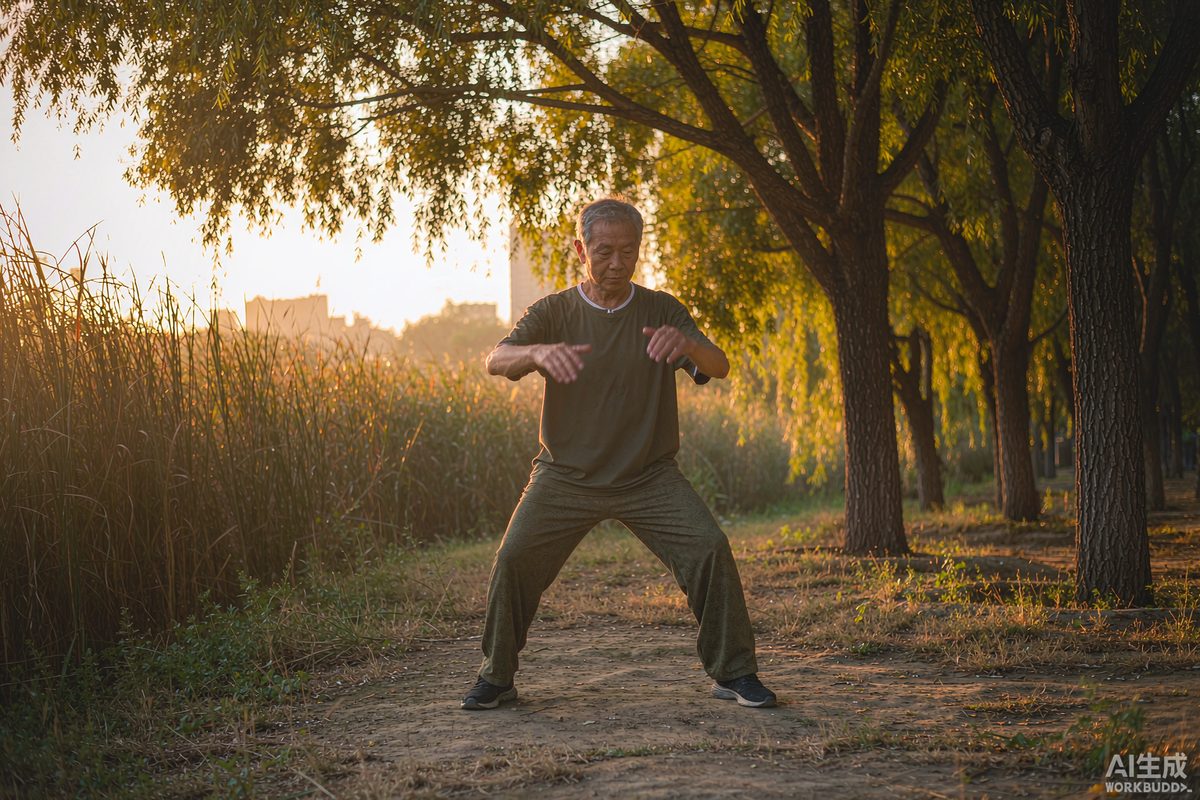
Classical Chinese medicine was written for farmers and scholars — but it's never been more relevant than it is to the modern office worker. Four things drain Kidney Qi in contemporary life, and they're all built into the default setting.
First: sitting. The Kidney's territory is the lower back. The modern posture — eight, ten, twelve hours in a chair, pelvis tucked, lumbar curve flattened — starves that territory of both circulation and load. The multifidus muscles (the deep spinal stabilizers) atrophy when they're not asked to do anything. A sedentary lumbar spine is a Kidney that's slowly being unplugged.
Second: stress. The Kidney is the seat of willpower and the organ most depleted by chronic fear and anxiety. Prolonged sympathetic activation — the stress soup of emails, deadlines, never-ending notifications — burns through the same reserves TCM calls Kidney Jing.
Third: overwork. The Kidney is a deep well, and it can be drawn down faster than it refills. Working late, skipping recovery, pushing through fatigue — this is exactly the pattern the classical texts warned about.
Fourth: late nights. The Kidney hours in the Chinese clock are 5-7 PM (its paired organ, the Bladder). More critically, deep sleep before midnight is when Jing is said to restore. Habitually staying up past midnight is like running a battery down while the charger's unplugged.
None of this is fatalism. It's a diagnosis, and it points directly to the fix: if sitting drains the lower back, movement restores it. If stress drains Jing, calm practices rebuild it. If late nights deplete, sleep repairs it. The exercises that follow are the movement lever — and for most people, it's the fastest one to pull.
- Stand up every 45 minutes — even 60 seconds of walking restores lumbar circulation and resets the postural muscles.
- Protect the evening Kidney hours (5-7 PM) by keeping the wind-down of your workday light — the classical texts counsel gentle activity as the day's Yang descends.
"Overexertion injures the Kidney. Lying long injures the Qi; sitting long injures the flesh. The sage moves in the mean between activity and rest."
Exercise 1: Rub Your Lower Back (Cuo Yao) — 90 Seconds, Zero Equipment, Start Now
Cuo Yao — 'rubbing the lower back' — is the opening move of nearly every traditional Chinese exercise system. There's a reason it comes first: nothing wakes up the Kidney's territory faster.
The method is so simple it almost feels like cheating. Stand with feet shoulder-width, knees soft. Rub your palms together briskly for 10-15 seconds — until they're genuinely warm, hot even. Not just touched. Place the warmed palms on your lower back, directly over the kidney area and Ming Men (GV-4).
Now rub up and down with firm, rhythmic strokes — from the top of the sacrum to the lower ribs — for 60 to 90 seconds, until the area glows with heat.
The classical rationale has two layers. First, warmth is medicine: cold is the enemy of Kidney Yang, and the lower back is the territory most exposed to drafts and cold. Bringing warmth directly there supports Kidney Yang immediately. Second, the friction stimulates the Bladder meridian (parallel to the spine) and Ming Men itself.
Sun Simiao, the great Tang dynasty physician, recommended Cuo Yao as the first thing you do upon waking. Many Chinese elders still practice it every morning.
From a modern physiology perspective, it's equally sound: increased blood flow to lumbar muscles, warmed stiff tissue, and — because the motion is rhythmic and self-directed — activation of the parasympathetic relaxation response. Do Cuo Yao first thing in the morning. Do it before and after any of the following exercises. Do it whenever your lower back feels cold or stiff.
It costs nothing, takes 90 seconds, and asks for nothing but your own hands.
- Warm the palms properly — cold hands on the lower back do the opposite of what you want.
- For an amplified version, use a small amount of warming oil or balm (TCM plasters with cinnamon or mugwort work beautifully) before rubbing.
- Do this after showering while the body is already warm — the heat compounds and penetrates deeper.
"Rub the hands until hot, then rub the lower back with the warm palms... This warms the Gate of Life and strengthens the Kidney."
Exercise 2: Pat Your Kidneys Awake — Percussion That Actually Does Something
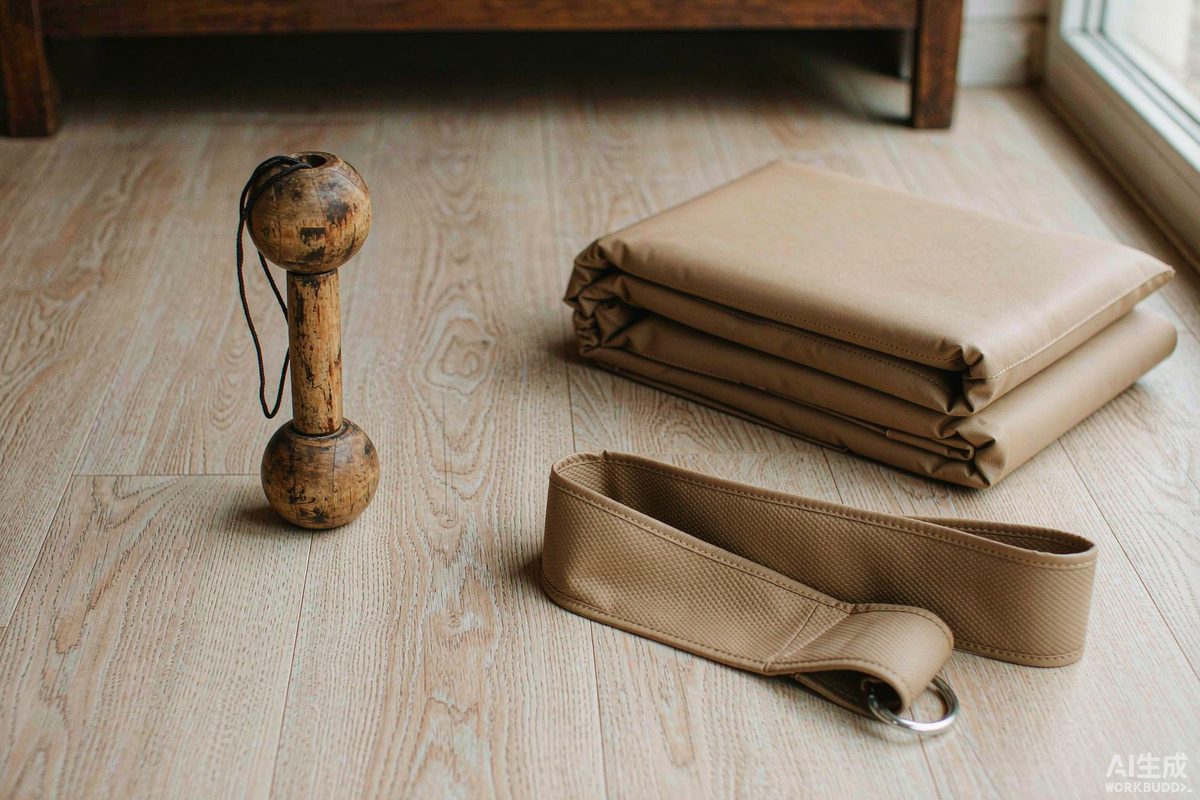
Where Cuo Yao uses friction, Kidney patting uses percussion. The practice — Pai Shen Zhuang, 'patting the kidneys' — involves striking the lower back with soft fists to stimulate the Kidney and Bladder meridians along the lumbar spine.
Make soft fists — not tight, not hard — with both hands. Swing them behind you and gently pat the lower back with alternating, rhythmic strikes: pat, pat, pat, covering from sacrum to lower ribs, with emphasis on the Ming Men zone between the kidneys. The quality of the strike is everything. It should feel like a springy, resonant thump — the sensation of a drum, not a punch. If it hurts, you're hitting too hard.
The goal is invigorating, never bruising.
Continue for 60 to 90 seconds. Let the rhythm settle into something almost hypnotic. Classical instruction adds a refinement: coordinate with breathing — pat on the exhale, let your hands float back on the inhale.
The TCM rationale: percussion disperses stagnation. When Kidney Qi is deficient or congested, the lumbar region holds tension like a frozen knot. Rhythmic striking loosens the knot, breaks up stagnant Qi and blood, and stimulates the deep muscles that sitting has forgotten exist. It's the energetic cousin of cupping and gua sha — all three are dispersing techniques.
Modern research on percussion therapy and spinal manipulation supports the intuition: rhythmic mechanical stimulation of the lumbar region increases local blood flow, reduces muscle spasm, and activates mechanoreceptors that dampen pain signaling.
A note of caution: if you have osteoporosis, acute disc herniation, or a recent spinal injury, skip patting entirely or reduce it to the gentlest fingertip tapping — and clear any new practice with your doctor first. For everyone else, it's two minutes a day that keeps the battery compartment clear.
- The sound should be a soft 'thup,' not a 'thwack' — if you can hear a sharp impact, lighten up.
- Pat through light clothing or directly on the skin; the sensation differs, and both work.
- End each patting session with 15 seconds of warm-palm Cuo Yao over the same area to smooth and settle.
"Strike the Gate of Life gently, as one would wake a sleeping drum — enough to rouse the Qi, never enough to bruise the flesh."
Exercise 3: Twist Your Waist (Niu Yao) — Oil the Axle Your Body Turns On
The waist is the axle of the body, and Niu Yao — waist twisting — is the classical way to keep that axle well-lubricated. The movement shows up in every major qigong system. The Eight Brocades version — 'Twisting the Waist and Looking Back' — is the most famous.
Stand with feet shoulder-width, knees soft, arms relaxed at your sides. Inhale. On the exhale, rotate your torso to the right, letting the arms swing loosely with the motion — right arm swings back, left arm crosses the body. Let your head follow your gaze naturally over the right shoulder. Inhale back to center. Exhale, rotate left. Continue 60 seconds.
The rotation comes from the waist and thoracic spine, not the pelvis — keep your hips facing forward.
As you settle into it, add a small refinement: imagine you're wringing out the lumbar region like a damp towel. Wringing out the day's stiffness.
' Rotation massages the entire zone — not compressing the kidneys themselves, but rhythmically squeezing and releasing the musculature, fascia, and meridian lines around them, pulling circulation into the region. The twisting also fires the Bladder meridian's lumbar segment and the Dai Mai — the Girdle Vessel that wraps the waist and is said to bind all meridians together.
Modern biomechanics agrees. Controlled spinal rotation keeps intervertebral discs healthy (they need movement to exchange fluid) and facet joints lubricated. A lumbar spine that rotates freely is a lumbar spine that doesn't lock up — and a locked-up lower back is one of the most common complaints of the sedentary decade.
- Keep the pelvis still and let the twist come from the ribs and waist — if your hips swing, you're doing a hip twist, not a waist twist.
- Breathe continuously; never hold your breath during the rotation.
- For a deeper stretch, add a gentle push with the opposite hand on the outer thigh as you twist.
"Twisting the waist and looking back — the heart fires and the Kidney water is drawn upward to meet it, and the hundred ailments depart."
Exercise 4: The Deer Kick — Your Low Back Will Thank You for This One
The Deer is the Water element animal in Wu Qin Xi — and Water is the element of the Kidney. Of all the animal forms, this is the one I prescribe most for rebuilding a lumbar foundation.
The signature movement is a gentle rear-leg kick. Stand with feet together, arms relaxed. Shift weight onto your left leg. Lift the right leg behind you, knee soft, and kick back gently with the sole of the foot — not a martial arts strike, but a relaxed, flowing extension. The kind of motion a deer makes flicking a fly off its haunch.
As the leg extends back, your torso naturally tips forward slightly and your arms swing forward for balance. It creates a long line from fingertips to heel. Lower with control, return to standing, switch sides. Six to eight reps per side, slow and smooth. The key quality is softness — the Deer never strains. It extends and returns.
The TCM rationale: the movement puts the lumbar spine into slight extension, compressing the Kidney region gently and then releasing — a pump that draws blood and Qi into the area. It engages glutes and hamstrings (the posterior chain that supports the lower back from below) and strengthens deep hip stabilizers.
In the classical framework, the Deer 'circulates Qi through the Governing Vessel' (Du Mai, running up the spine) and connects it to the Kidneys, the source of Jing. Because it's slow, weight-bearing, and single-legged, it also trains balance and proprioception — the quiet neural work that prevents falls.
A 2018 systematic review of qigong for low back pain found consistent improvements in pain and function. And the single-leg component of the Deer is exactly the kind of balance training research links to fall prevention and longevity. If you do only one exercise from this article, do this one.
- Hold onto a chair back or wall for balance for the first two weeks — stability before range.
- The kick should be small at first: a 30-degree extension is plenty. Range grows with practice, not force.
- Coordinate breath: inhale as the leg lifts, exhale as it extends back — the exhale-extension pairing deepens the lumbar release.
"The Deer stretches its neck and kicks its haunches, drawing Qi through the spine to the Gate of Life... thus the Jing is preserved."
Exercise 5: Stand Like a Tree (And Let Your Kidneys Drink)
Zhan Zhuang — 'standing like a tree' or standing pole — is the foundational standing meditation of Chinese internal arts. It deserves its own article (it has one on this site). Here, we're using a Kidney-focused variation.
Stand with feet shoulder-width. Knees slightly bent — soft, never locked. Tuck the tailbone gently under, like you're sitting on a high stool. Relax your shoulders. Let your arms float in front of you at chest height, elbows soft, fingers gently spread — as if hugging a tree. Close your eyes or soften your gaze.
Now the Kidney focus: breathe in and imagine the breath sinking past your navel and settling into the lower back — into the space between the kidneys, the Ming Men area. Breathe out and imagine warmth and Qi radiating from that point outward through the whole lower back and down both legs. Hold the posture for 3 to 5 minutes, breathing slow and continuous.
If your arms tire, drop them to your sides — the power is in the legs and spine, not the shoulders.
Three things make Zhan Zhuang work for the Kidney. First, load: the slight knee bend and rooted stance place gentle, sustained weight through the lumbar spine and legs — exactly the low-level stimulus that strengthens bone density and deep postural muscles. Second, circulation: stillness with relaxed structure lets blood pool and flow through the lower body unimpeded.
The legs and lumbar region get sustained perfusion that sitting never gives them. Third, the mind-body axis: standing with calm, focused breath is a parasympathetic practice, and the Kidney is the organ most depleted by stress. You're not just holding a posture — you're telling your nervous system, for five minutes, that there's no emergency.
For patients in their sixties and seventies, I often make Zhan Zhuang their primary exercise. It's gentle enough for nearly anyone and deep enough to rebuild from the ground up.
- Start with 2 minutes and add 30 seconds per week — this practice rewards patience and punishes force.
- Check yourself every minute: shoulders down, jaw soft, knees over toes, breath slow. Correct and return.
- If your legs shake, welcome it — the tremor is the deep stabilizers waking up, and it fades as they strengthen.
"Stand like a tree, rooted and still... The Qi gathers at the Ming Men and the Kidney is nourished as the roots drink deep water."
Exercise 6: Heel Drops — The Simplest Move With the Deepest Roots
The last exercise is also the simplest — and maybe the most profound. The Kidney meridian begins at the sole of the foot, at Yongquan (KD-1), the 'Bubbling Spring.' TCM says Kidney Qi rises from that point. Heel drops train the connection.
Stand tall, feet hip-width, hands at your sides or on your hips for balance. Rise slowly onto the balls of your feet — heels up as high as is comfortable. Pause at the top for a moment. Then let the heels drop to the floor with a light, controlled impact — a soft thump, not a slam.
The impact sends a subtle wave up through the legs and into the spine, stimulating the heel, the sole, and the full chain of Kidney and Bladder meridians. Do 20 repetitions, slow and steady. Inhale on the rise, exhale on the drop.
The classical logic: the sole is where the Kidney meridian surfaces, and the rhythmic impact 'opens' the Bubbling Spring, drawing Qi upward from the earth while the weight of the drop anchors the body down. It's grounding in the most literal sense.
The modern physiology is equally interesting. Gentle heel-drop impact delivers controlled axial loading to the lower limbs and spine — a safe way to stimulate bone density in the heels, shins, and vertebrae. Modified heel-drop protocols appear in research on bone health and Achilles rehab for exactly this reason.
The drop also activates the calf pump, returning venous blood from the lower legs and reducing that heavy, tired feeling by evening.
As a transition practice, the rhythmic, repetitive quality is deeply calming — a natural partner for winding down. Do heel drops at the end of the sequence. Let the soft thump settle everything to a close.
- Land through the whole foot evenly — heel first, then a soft wave forward — to avoid jamming the knees.
- Do heel drops on a padded surface (mat, carpet, grass) — barefoot if possible, to feel the sole connect with the ground.
- Follow with 30 seconds of standing quietly, noticing the warmth that has gathered in the feet and lower back.
"The Kidney Qi rises from the Bubbling Spring beneath the foot... When the feet are warm and rooted, the Kidney is strong."
Putting It Together: 12 Minutes, Every Morning, for the Rest of Your Life
Here's the complete daily routine, timed and ordered. Total: about 12 minutes.
Warm-up (90 seconds): Cuo Yao — rub palms until they're hot, then rub the lower back until it glows. Exercise 1 (60 seconds): Kidney patting — soft rhythmic thumps along the lumbar region, pat on the exhale. Exercise 2 (90 seconds): Waist twisting — slow rotations, about 15 per side, breath continuous. Exercise 3 (2 minutes): Deer rear-leg kicks — eight per side, soft and flowing.
Exercise 4 (3-5 minutes): Kidney-focused Zhan Zhuang — stand, breathe into Ming Men, hold as long as comfortable. Exercise 5 (60 seconds): Heel drops — 20 slow drops, rising on the inhale, dropping on the exhale. Close (30 seconds): warm-palm Cuo Yao over the lower back one more time, then stand quietly and feel the warmth you've generated.
Morning is ideal — Yang is rising, and the routine sets the tone for the day. My grandfather did his at 6 AM, and he lived to 94 without back pain.
The foods complete the picture. TCM nourishes the Kidney from the plate as much as the mat: black sesame (the seed that mirrors the Kidney's color, tonifying Jing), walnuts (in the classics, they benefit the Kidney and the brain), goji berries (a gentle Kidney and Liver tonic), black beans (the 'kidney bean' of the tradition), and bone broth (supporting the bones the Kidney governs). Moderate, warm meals.
Limited cold drinks. Sleep before midnight. Three dietary pillars that reinforce the same foundation.
Finally, a word of caution: these exercises are gentle, but they are still exercise. Acute back pain, herniated discs, osteoporosis, any spinal condition — have your doctor or physical therapist review the routine before you start. And let pain be your teacher. Not a single movement here should ever hurt.
Done right, daily, these twelve minutes are one of the highest-return investments in longevity that TCM offers: a stronger back, steadier energy, and a battery that actually holds its charge.
- Anchor the routine to an existing habit — morning tea, or right after brushing — so it survives busy weeks.
- Track a simple marker: how your lower back feels at 5 PM. Most people notice the afternoon ache fading within 3-4 weeks.
- Pair the routine with adequate water and sleep — the Kidney is the water organ, and the exercises work best on a well-hydrated, well-rested body.
"The Kidney stores Jing, and Jing is the root of the hundred movements... One who nourishes the Kidney nourishes the years to come."