The RICE Protocol Is Coming Undone — and Its Creator Agrees
For close to 50 years, if you sprained an ankle or felt joint pain, the answer was automatic: RICE. Rest, Ice, Compression, Elevation. Coined by Dr. Gabe Mirkin in 1978, it became the default — drilled into every first-aid course, every sports medicine textbook, every gym locker room.
Then Mirkin himself walked it back.
In 2015, he publicly retracted his recommendation for ice. The rationale he'd originally proposed — that ice reduces inflammation and therefore speeds healing — had been undercut by a growing body of evidence. Inflammation, it turns out, isn't just collateral damage. It's the body's repair crew. Macrophages, cytokines, growth factors — they all ride in on the same inflammatory signal that ice suppresses.
When you ice an injury, you're not just numbing pain. You're turning down the volume on the healing response itself.
Recent systematic reviews have sharpened the picture. A 2023 meta-analysis in the Journal of Pain Research compared heat and cold therapy for chronic musculoskeletal pain. Heat produced significantly better outcomes — reduced pain scores, improved range of motion. Infrared heat, in particular, stood out.
The mechanism is straightforward: heat dilates blood vessels, increases local circulation, brings oxygen and nutrients to damaged tissue, and flushes out the metabolic waste that accumulates during injury. Cold does the opposite.
There's also the lymphatic drainage problem. Ice constricts vessels and slows lymphatic clearance. The pooled fluid, dead cells, and inflammatory byproducts that need to leave the tissue — they stay put. A 2015 review in the American Journal of Sports Medicine found that icing delayed recovery markers across multiple soft-tissue injury models. Not neutral. Actively slower.
None of this means ice has zero role. For acute pain relief — the first few hours after a nasty ankle roll — ice can help with the pain itself, and that matters. But as a healing strategy? The data increasingly says: use heat.
Cold as a Pathogen — How TCM Has Understood This for Two Millennia
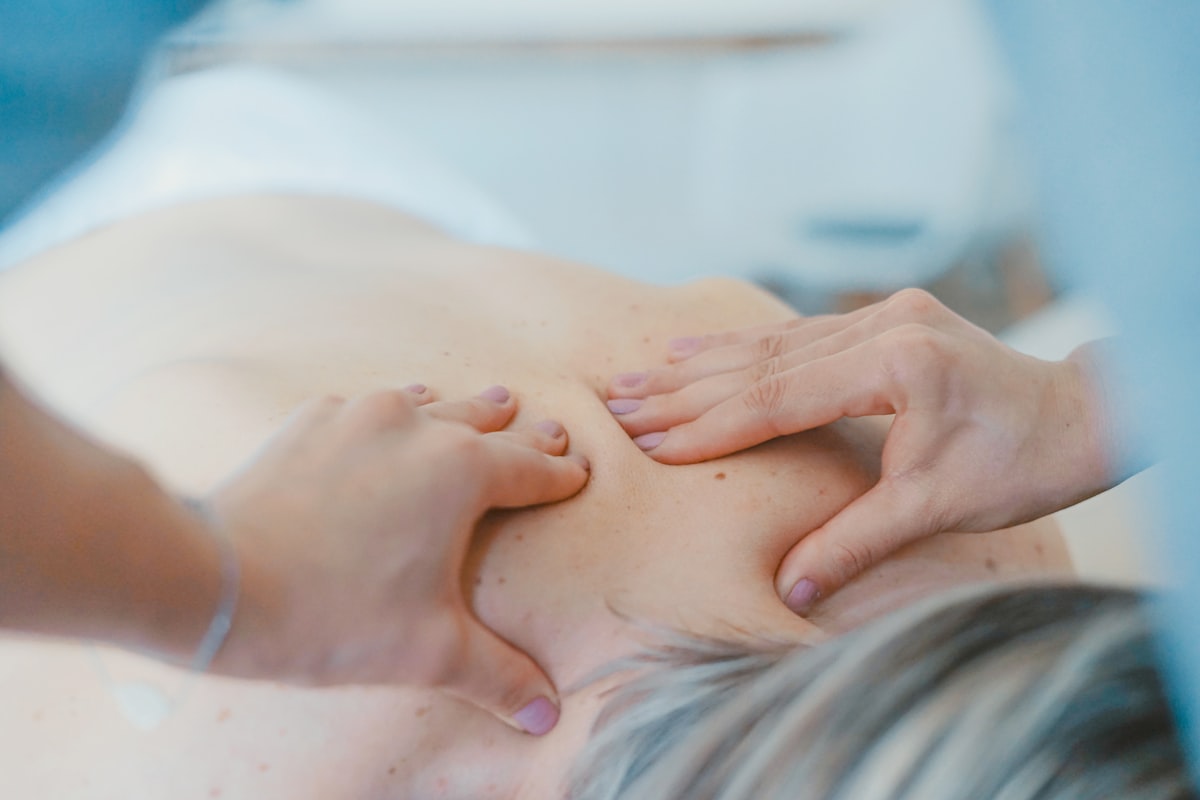
Chinese medicine didn't need a meta-analysis to figure this out. It has classified joint pain as Bi Syndrome (痹证) — painful obstruction — for over two thousand years, and it has always understood Cold as one of the primary invaders.
In TCM theory, Bi Syndrome arises when Wind, Cold, and Dampness penetrate the body's defenses and lodge in the joints, muscles, and channels. These are not metaphors. Cold is understood as a pathological force that contracts tissues, congeals Blood, and blocks the free flow of Qi through the meridians. The classic description from the Yellow Emperor's Inner Canon: 'Where Cold prevails, there is contraction. '
The clinical picture of Cold-Bi is distinctive. Pain that's fixed rather than moving. Worse in cold weather. Better with warmth. Stiffness in the morning that eases as the day warms up. Joints that feel cold to the touch even when the rest of the body is warm. If you've ever noticed your knee aching more in January than in July, you've experienced Cold-Bi.
From this perspective, slapping an ice pack on an already cold-obstructed joint isn't just unhelpful — it's adding Cold to Cold. The TCM framework sees ice as reinforcing the very pathogen it claims to treat. It contracts already-contracted tissue. It congeals already-sluggish Blood. It deepens the obstruction rather than clearing it.
What TCM prescribes instead is warming, moving, and dispersing. Heat the channels. Move the Blood. Drive out the Cold and Dampness. This is the entire therapeutic logic of moxibustion, warming liniments, ginger compresses, and the dietary advice to avoid cold foods during joint flares.
The modern biomechanics align surprisingly well with this ancient framework. Cold reduces blood flow, increases tissue viscosity, and decreases the elasticity of collagen — three effects that are exactly what a stiff, painful, poorly-circulated joint does NOT need. Heat does the reverse. The two-thousand-year-old advice was never just folk wisdom. It had a mechanical basis that we're only now measuring.
Moxibustion — 2,500 Years of Burning Mugwort to Warm the Joints
If the TCM answer to Cold-Bi is heat, then moxibustion (moxa) is the tool that delivers it deepest.
Moxa involves burning dried mugwort (Artemisia vulgaris, ai ye, 艾叶) near acupuncture points and affected joints. The technique has been documented for at least 2,500 years. The dried mugwort is compressed into sticks, cones, or loose wool — lit at one end, held close enough to the skin to deliver penetrating warmth without burning.
The heat radiates downward, into the joint capsule, into the surrounding soft tissue, through the channels that TCM maps across the body.
What makes moxa different from a heating pad? Two things. First, the quality of the heat. Burning mugwort emits infrared radiation in a specific wavelength range — roughly 2–5 micrometers — that happens to be particularly compatible with human tissue absorption. Modern research has characterized this spectrum and found that moxa's infrared penetrates deeper than the far-infrared from standard heating pads.
The tissue absorbs it more readily.
Second, mugwort itself has pharmacological activity. Even without direct skin contact, the smoke and volatile compounds — borneol, cineole, thujone — interact with the skin and nasal passages. Some of these constituents are vasodilatory on their own. Others have mild analgesic effects. The combination of thermal and chemical stimulation is what distinguishes moxibustion from simply applying warmth.
Clinically, moxa is used for chronic joint pain, arthritis (both osteo and rheumatoid, in the right pattern), menstrual pain, digestive cold patterns, and — historically — for turning breech babies (that one's been studied more than any other moxa application, and the evidence is surprisingly positive).
For joint pain specifically: indirect moxa sticks are the home-friendly form. Light the stick. Hold it about 2–3 cm from the skin over the affected joint or over a supporting point like ST36 (Zusanli — four finger-widths below the kneecap, just lateral to the tibia). Move it in small circles. Keep it there for 10–15 minutes per point, 2–3 times weekly.
The sensation should be pleasant, spreading warmth — never painful heat. Keep the room ventilated. The smoke is traditional, but you don't need to hotbox yourself.
- Use indirect moxa sticks rather than direct scarring moxa for home use
- Apply to ST36 (Zusanli) — 4 finger-widths below the kneecap — for general joint support
- Always ventilate the room well during moxibustion sessions
When Ice Still Makes Sense — and When It Doesn't
If the takeaway here were simply 'ice bad, heat good,' this article would be doing you a disservice. The real picture is more specific. And knowing the difference between the two patterns — and when to reach for each — is what separates informed self-care from cargo-cult medicine.
Ice still has its moments. For acute trauma — the first 6 to 12 hours after a severe sprain, fracture, or impact — ice can reduce the immediate pain and limit the extreme swelling that sometimes causes secondary tissue damage. This is pain management, not healing acceleration. And the key distinction: ice is for acute, traumatic, swollen injury — not for chronic, stiff, achy joint pain.
Once the acute swelling phase passes (usually 24–48 hours), the evidence tilts toward heat.
The inflamed joint — red, hot, swollen, throbbing — is a different category altogether. This is what TCM calls Heat-Bi, and it wants cooling, not warming. Think gout flare. Think an actively inflamed rheumatoid arthritis joint. Applying heat to these is like throwing gasoline on a fire. Ice or cooling topicals make sense here temporarily — but these situations also require medical attention.
An inflamed joint is not a self-treatment situation.
So the decision tree looks like this: Is the joint red, hot, and visibly swollen? If yes — seek medical care, and use cool (not freezing) compresses for symptom relief in the meantime. Is it a fresh traumatic injury (less than 24 hours, actively swelling)? Ice for pain, briefly, and don't expect it to speed healing. Is it chronic stiffness, aches worse in cold weather, feels better after a hot shower?
Heat — moxa, warming balms, infrared pad, warm bath. This is where the TCM framework maps cleanly onto the modern evidence.
The RICE protocol dominated injury care for half a century not because it was proven right, but because it was simple, memorable, and repeated often enough to become background noise. The data is finally catching up. And as it does, the ancient advice — warm the channels, move the Blood, don't add Cold to what's already cold — looks less like folk wisdom and more like physiology we hadn't yet measured.
"Where there is free flow, there is no pain. Where there is pain, there is no free flow."