What a nutrition label doesn't tell you
Look at any packaged food in an American supermarket and the label tells you the same five things: calories, fat, carbs, protein, sodium. What it never tells you is what that food will do to your body an hour after you eat it. Will it warm you or cool you? Build you up or clear you out?
Those questions are the foundation of Chinese dietary therapy, organized into a system called Si Qi Wu Wei — the Four Natures and Five Flavors. It was never meant to compete with calorie counting, and it doesn't.
It's about the energetic signature of food: the heat that spreads from your stomach to your fingertips after a bite of ginger, the way cucumber settles an overheated body in August, the slow steady fullness of a bowl of congee.
The physicians who built this system had no lab equipment. They watched patients over centuries and mapped how common foods behave — thermally, directionally, organ by organ. They did it precisely enough that the system still works today, which is more than you can say for most diet movements from fifty years ago.
The other thing this system offers is something keto, paleo, vegan, and Mediterranean all share a blind spot on: it's personal. Two people can eat the same meal and one walks away energized while the other bloats. The Four Natures and Five Flavors is built around that difference. The rest of this article is about how it works and how to use it.
"The five grains provide nourishment. The five fruits provide assistance. The five meats provide benefit. The five vegetables provide fullness. When these are combined in harmony, they supplement the essence and benefit the Qi."
The four natures: hot, warm, neutral, cool, cold
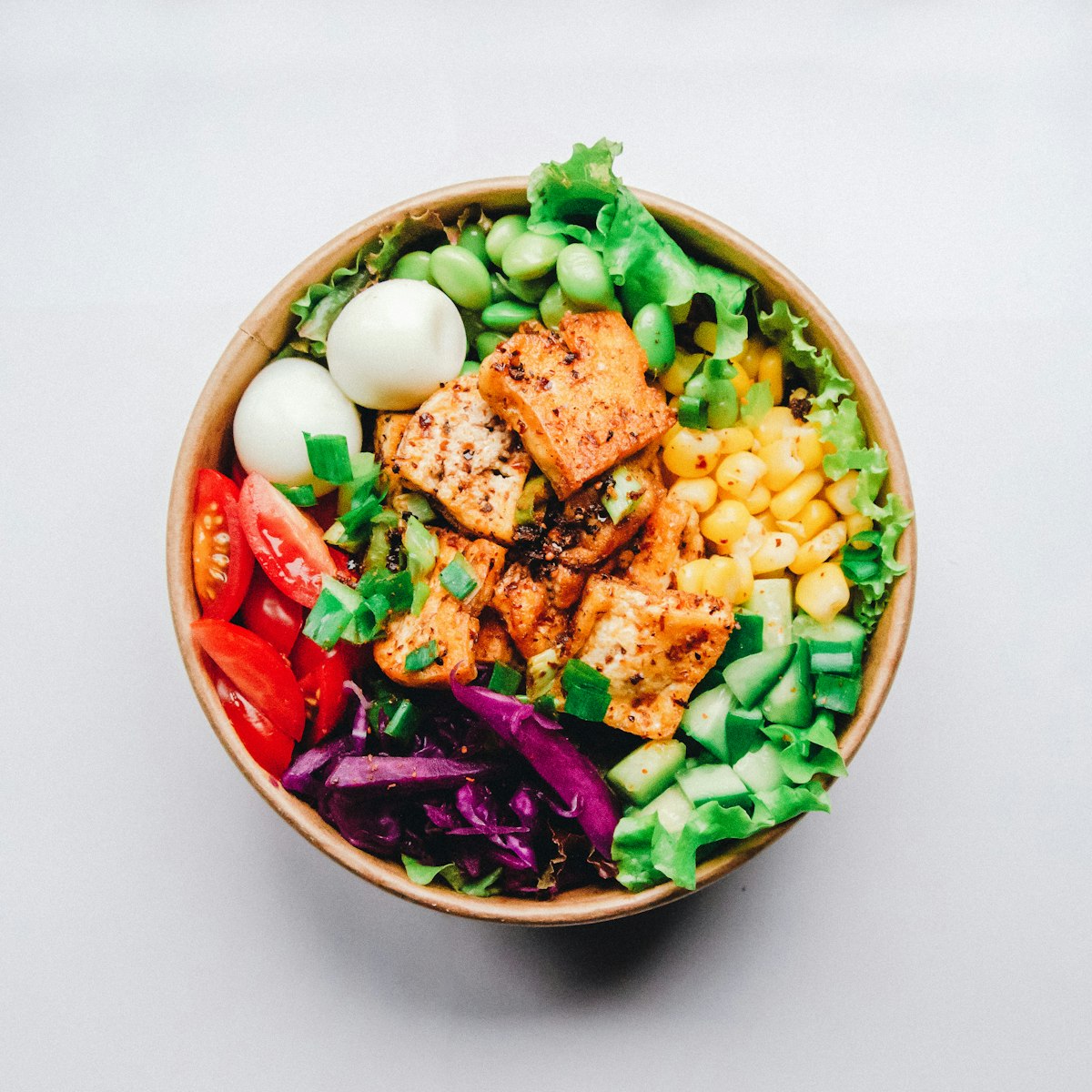
Every food in this system carries a thermal nature, and there are five of them: Hot, Warm, Neutral, Cool, and Cold. Not the temperature on your plate — a bowl of hot soup can be cooling if it's made from cucumber and mint. It's about what the food does once it's inside you.
Hot foods — lamb, chili, garlic, dried ginger, black pepper — hit fast and hard. They scatter Cold, get circulation moving, push sweat out. Warm foods like chicken, oats, onions, and cinnamon do the same job with a lighter touch, the way a banked fire heats a room better than a bonfire.
Neutral sits in the middle: rice, potatoes, carrots, eggs, milk, goji berries. These are the daily staples, foods that nourish without tipping your balance either way. Then the cooling end — tofu, celery, cucumber, watermelon, green tea, peppermint — which pulls heat out of the body and moistens dryness. At the far end, Cold foods: raw salads, iced drinks, bananas, grapefruit, seaweed.
Used deliberately they treat genuine Heat conditions. Overdone, they damage Spleen Yang and you end up bloated, tired, and running to the bathroom.
Here's the part that matters: your ideal mix depends on your constitution. Someone who runs hot — rosy cheeks, always thirsty, prefers cold drinks, tends toward constipation — needs more cooling foods. Someone who runs cold — pale, cold hands and feet, loose stools, hates drafts — needs warming ones. Eating against your own type is like fighting your metabolism with a fork.
The green smoothie that energizes your neighbor can leave you shivering and sluggish. That's not a failure of willpower. It's a mismatch.
- The simplest self-test: do you prefer hot or cold drinks? Your answer says a lot about your constitution.
- Cooking method changes thermal nature. Steaming and boiling are neutral. Stir-frying and roasting add warmth. Raw food is most cooling.
- Seasonal eating aligns with thermal nature. Summer calls for cooling foods (watermelon, cucumber, mint). Winter calls for warming foods (stews, ginger, lamb).
"Cold diseases must be treated with hot remedies. Hot diseases must be treated with cold remedies. This is the unalterable law of food and medicine."
Five flavors, five destinations
Where the Four Natures describe temperature, the Five Flavors describe direction — which organs a food reaches and what it does when it gets there. Sour, Bitter, Sweet, Pungent, Salty. Each one has a home organ, a job, and a penalty for overuse.
Sour enters the Liver. It's astringent; it holds things in. Bite into a lemon and watch what happens: your whole face puckers, your pores tighten, saliva floods your mouth. Sour foods — vinegar, pickles, hawthorn, sour plum — stop excessive sweating and diarrhea. Lean on them too hard and your tendons tighten and your Spleen complains.
Bitter enters the Heart. It drains, dries, and sends things downward, which is why bitter foods — dandelion greens, bitter melon, coffee, dark chocolate, reishi — are the body's clearing crew. Too much and you damage the Stomach and drain Qi. Sweet enters the Spleen, and it's the workhorse: grains, root vegetables, dates, honey.
It builds Qi, relaxes tension, moistens dryness — and in excess generates Dampness and taxes the Kidneys. That's the bloating and heaviness of the sugar-heavy diet, described two thousand years before the term 'ultra-processed' existed.
Pungent enters the Lungs. Ginger, garlic, mint, radish, Sichuan peppercorn — they open things up, induce sweating, get the nose running and the circulation moving. Excess dries out Yin and stresses the Liver. Salty enters the Kidneys: seaweed, miso, shellfish, millet. It softens hardness — the classical use for lumps and nodules — and anchors energy downward. In excess it thickens the blood and taxes the Heart.
The traditional meal puts all five on one table for a reason: something sour as a pickle, something bitter in the greens, rice as the sweet, ginger or chili as the pungent, soy sauce or miso as the salt. You don't have to think about the theory at that point. You're just eating the way Chinese tables have eaten for centuries.
- Include all five flavors in each meal for optimal organ balance — this is why traditional Asian meals include something sour (pickle), bitter (greens), sweet (rice), pungent (ginger or chili), and salty (soy sauce or miso).
- Craving a particular flavor intensely is a diagnostic signal — a salt craving suggests Kidney deficiency, a sugar craving suggests Spleen deficiency.
- The flavor you most dislike is often the one you need therapeutically. Pay attention to what you avoid.
"The five flavors enter the body and each has its own destination. Sour enters the Liver. Bitter enters the Heart. Sweet enters the Spleen. Pungent enters the Lungs. Salty enters the Kidneys."
Which foods fit your constitution?
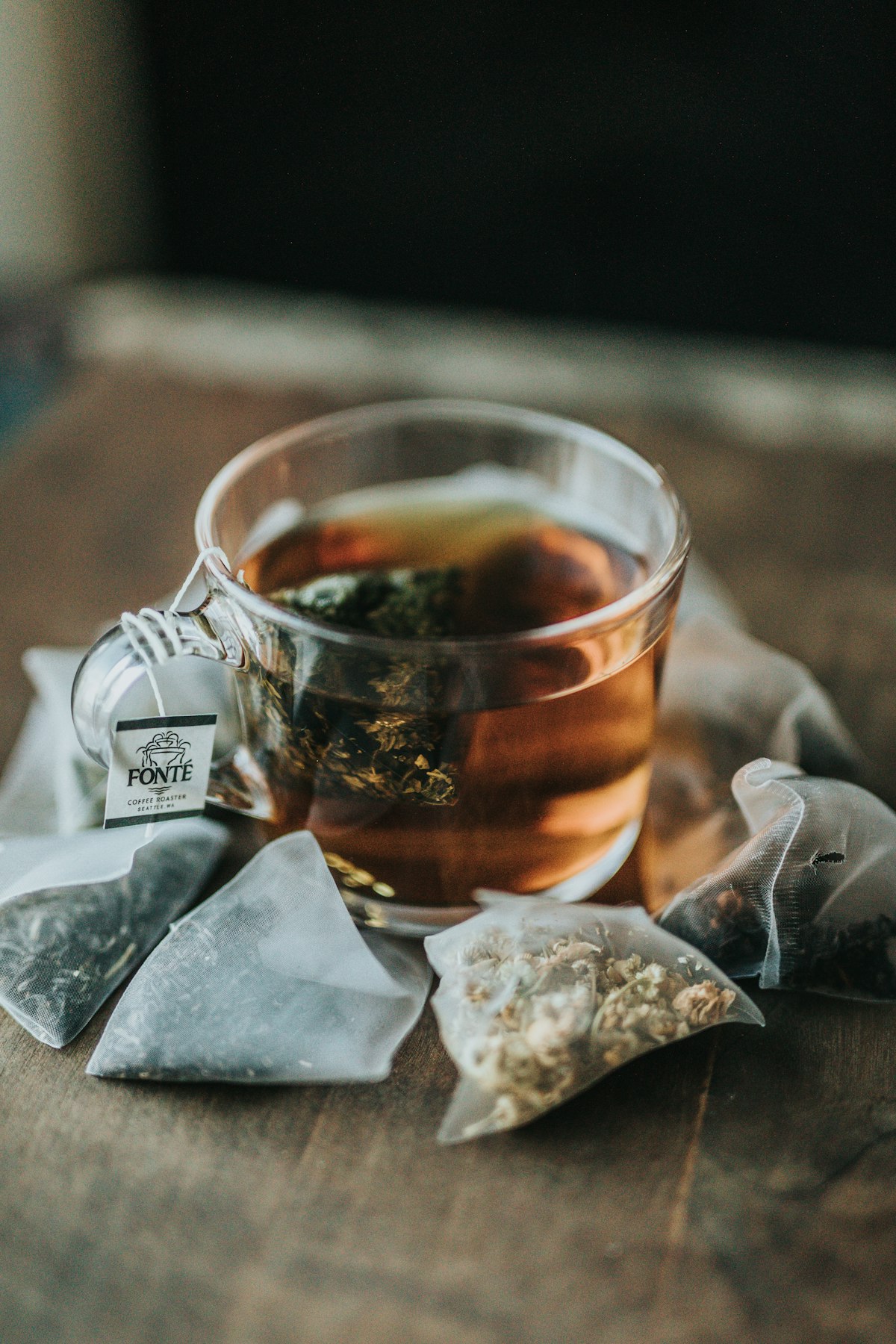
Theory only helps if you can act on it, so here's a working chart. These are the four most common constitutional patterns in TCM. If you're not sure where you fit, check which one you recognize in yourself.
Yang deficiency runs cold. You're the person wearing a sweater in June, low on energy, with loose stools and a pale tongue with a white coating. You crave hot drinks. Your foods: lamb, chicken, shrimp, oats, onion, ginger, fennel, winter squash, sweet potato, cinnamon, cloves. Your limits: raw salads, cold smoothies, ice cream, iced drinks, banana, watermelon.
Yin deficiency runs hot and dry. Night sweats, dry skin and eyes, constant thirst, a red tongue with little or no coating. You prefer cold drinks. Your foods: duck, tofu, barley, cucumber, celery, spinach, pear, goji berries, eggs, mint, chrysanthemum. Your limits: chili, lamb, alcohol, coffee, deep-fried anything.
Dampness feels heavy. You're bloated, foggy-headed, your tongue coat is thick, and humid days make everything worse. Your foods: adzuki beans, mung beans, barley, corn, scallion, radish, celery, bitter melon, cardamom, cumin. Your limits: dairy, sugar, wheat, greasy food, bananas, peanuts.
Qi deficiency runs out of gas. Easily fatigued, weak voice, poor appetite, short of breath on the stairs. Your foods: congee, oats, sweet potato, carrot, chicken, beef, eggs, dates, ginger in moderation. Your limits: raw and cold food, heavy bitter food, skipped meals, eating while stressed.
Most people are a mix, and that's normal. Prioritize the pattern that's loudest and adjust as your symptoms change. And remember this is a long game. Nothing here is forbidden forever — a food that's wrong for your constitution in January can be fine in July, or fine in small amounts, or fine cooked differently. The system runs on proportions, not purity.
- Constitutional eating is a long game. You're not eliminating food groups — you're shifting proportions toward what supports your type.
- Foods that are 'wrong' for your constitution might be fine in small amounts, at the right season, or when cooked differently.
- If you have mixed patterns (which most people do), prioritize the most dominant one first and adjust as your symptoms change.
"In treating disease, one must first determine the root cause. Once the root is addressed, the symptoms will naturally resolve. Dietary therapy is the foundation of all treatment."
Goji, astragalus, reishi: three herbs that earn their keep
Some herbs straddle food and medicine so comfortably that Chinese kitchens have cooked with them for centuries. Three stand out — not because they're exotic, but because they're common, cheap, and aimed squarely at modern problems.
Goji berries are nearly unique among food-grade herbs: truly neutral in nature. They neither heat nor cool, so almost anyone can eat them daily. ' The modern nutrient profile is startling: the highest zeaxanthin concentration of any known food, plus lutein, a complete amino acid profile with all eight essentials, and immune-modulating polysaccharides. A tablespoon in oatmeal, congee, or tea.
That's the whole prescription.
Astragalus is the gentle giant of the Qi tonics — warm, sweet, entering the Spleen and Lung channels. If ginseng is the emergency rocket fuel, astragalus is the slow-burning daily log. Its main job is strengthening Wei Qi, the defensive energy that patrols the body's surface, which is why modern researchers have spent so much time on its immunomodulatory effects.
A 2019 review in the American Journal of Chinese Medicine laid out the mechanisms: increased natural killer cell activity, T-cell proliferation, antibody production. In the kitchen it goes in anything that simmers — 3-5 woody slices in your broth or rice pot for at least 30 minutes, then fish the slices out before serving.
Reishi is the one that used to be reserved for emperors, and it tastes like it — bitter, in the way that signals medicine. It's a rare triple tonic, entering Heart, Liver, and Lungs at once, calming the Shen, protecting the Liver, and strengthening the Lungs. Researchers have catalogued over 400 bioactive compounds, with triterpenes and beta-glucans doing most of the anti-inflammatory and immunomodulating work.
A 2012 double-blind RCT in the Journal of Ethnopharmacology found reishi extract significantly cut fatigue and raised well-being scores in patients with neurasthenia — a diagnosis that maps almost exactly onto what TCM calls Shen disturbance.
One honest warning: don't mask the bitterness completely. The bitter taste is part of the treatment — it stimulates digestion and clears Heat. And if you're on blood thinners, talk to your doctor before adding reishi. It has mild antiplatelet effects, and that's exactly the kind of interaction worth respecting.
- Goji berries and astragalus are safe for daily use in food quantities. Start with a tablespoon of goji berries and 3-5 slices of astragalus.
- Reishi is bitter — start with half a teaspoon of powder in warm water and work up. If the bitterness is overwhelming, blend into a small amount of coffee or dark chocolate.
- If you take blood-thinning medications, consult your doctor before using reishi — it has mild antiplatelet effects.
"Goji berry is sweet and balanced. It treats damage to the center and counteracts pathogenic Heat. It nourishes the Kidney and brightens the eyes. Long-term consumption strengthens the sinews and bones and prevents aging."
One day of eating, mapped by energy
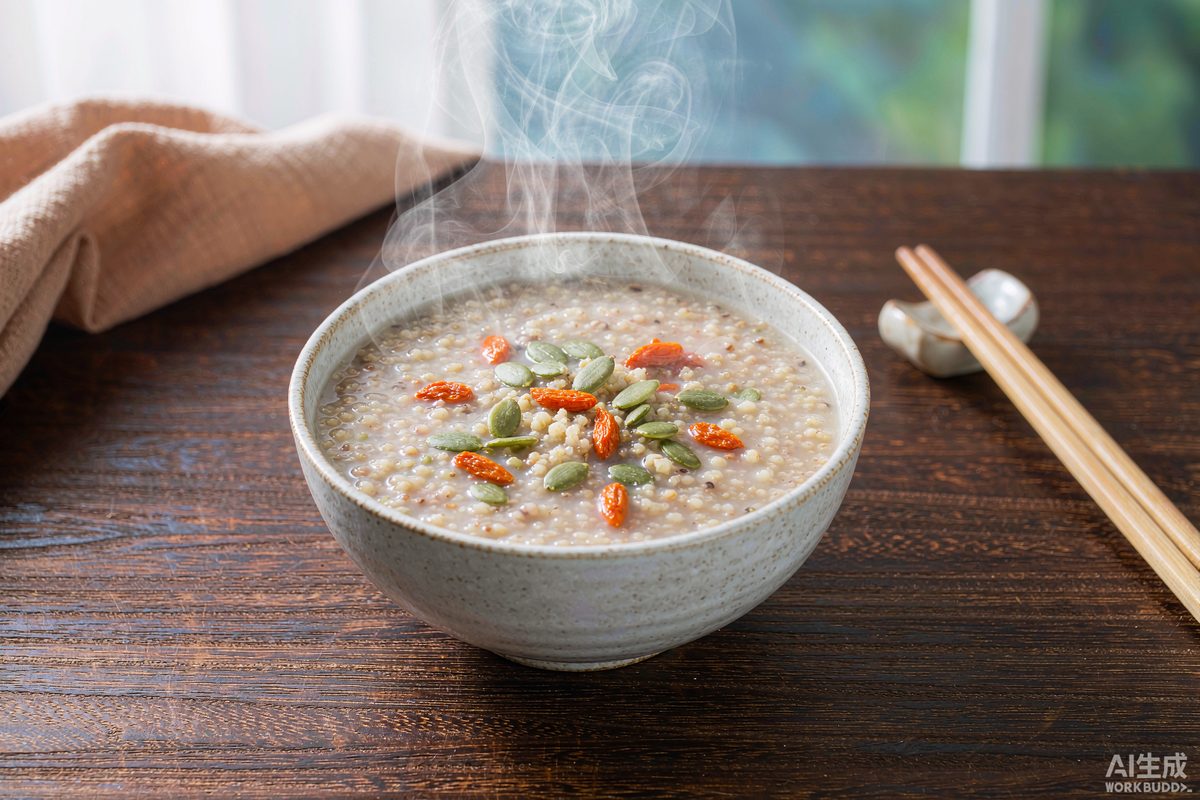
The best way to learn this system is to cook with it. Here's a day of eating, mapped by energy — not a prescription, a template. Adapt it to your constitution, your season, and whatever is actually in your refrigerator.
Breakfast: congee. Rice is neutral and sweet; it tonifies the Spleen and Stomach without asking anything of them. Now build on it: a few slices of fresh ginger (pungent, warm — opens the Lungs, warms the Stomach), a soft-boiled egg (neutral — nourishes Blood and Yin), a scatter of scallions (pungent — disperses Cold), a few goji berries (neutral, sweet — Liver and Kidney). One bowl, all five natures accounted for.
Lunch: a warm grain bowl. Barley (cool — drains Dampness, clears Heat) or quinoa (warm — tonifies Qi), roasted vegetables, protein matched to your constitution — chicken if you run cold, tofu if you run hot — a small side of kimchi or pickled radish for the sour, and a dressing of sesame oil and rice vinegar.
Dinner: soup or stew, the traditional evening meal. The long simmer extracts the essence of the ingredients and makes them easy to digest, which matters because the Spleen-Stomach system is winding down for the night. Bone broth base, astragalus and ginger if you need Qi, root vegetables, a modest amount of animal protein. End with warm water or ginger tea.
Not ice water — ice water is the single most common way Western eaters douse the digestive fire they've been feeding all day.
Between meals: green tea in the morning and early afternoon (cool, bitter-sweet — clears Heat, sharpens the mind). Switch to ginger tea, cinnamon tea, or plain warm water in the evening. And the habit that upgrades everything: chew.
The Spleen's work starts in the mouth, and poorly chewed food is the number one cause of what TCM calls Food Stagnation — the bloating and heaviness after meals that too many people just accept as normal.
- Warm breakfast, warm lunch, warm dinner — the simplest TCM dietary upgrade is eating fewer cold and raw foods.
- Season your food with intention: ginger for cold types, mint for hot types, cardamom for damp types, cinnamon for all types in winter.
- Chew thoroughly. The Spleen's digestive work begins in the mouth, and poorly chewed food is the most common cause of what TCM calls 'Food Stagnation.'
"The stomach is the sea of food and fluid. It receives all that is eaten and drunk. When the stomach is harmonious, the five zang organs are peaceful."
The ancients got to personalized nutrition twenty centuries early
We're in a strange moment for nutrition. The science has never been more sophisticated — metabolomics, microbiomics, nutrigenomics — while the popular conversation has never been more reductive. Calories in, calories out. Protein targets. Carb restriction. Food as fuel, a spreadsheet problem with a solution.
The Four Natures and Five Flavors isn't an alternative to that science. It's a complement. You can know kale has vitamin K and sulforaphane and also know it's cool and bitter, that it enters the Liver and clears Heat. You can hit your protein target and still recognize that chicken soup warms the Spleen while a raw protein smoothie chills it.
Both things are true — and the second one explains a lot that the first can't.
Because here's what Western nutrition struggles to explain: two people eat the same meal, same calories, same macros, and one feels energized while the other bloats and wants a nap. The ancient Chinese had a framework for this. The first person was eating with their constitution. The second was eating against it.
Personalized nutrition is the industry's newest promise — continuous glucose monitors, microbiome testing, genetic panels, all tailored to the individual. The tradition in this article got there twenty centuries early, with no blood tests, just careful observation and a willingness to see food as more than the sum of its chemical parts. That's a head start worth using — one meal at a time.
- Start a food diary that tracks not just what you ate, but how you felt energetically 1-2 hours after each meal — this is the modern equivalent of what ancient physicians did for their patients.
- Experiment with one constitutional adjustment for two weeks — for example, if you're always cold, eliminate raw salads and iced drinks and note the difference.
- The goal is not perfection. It's awareness. Once you can feel the difference between a warming meal and a cooling meal, your body will guide you.
"Heaven provides the five qi. Earth provides the five flavors. The five qi enter through the nose and are stored in the Heart and Lungs. The five flavors enter through the mouth and are stored in the Stomach and Intestines. When flavors are harmonious, the body thrives."