A Fetus Doesn't Breathe. So Why 'Embryonic'?
In the womb, a fetus gets oxygen through the umbilical cord. It doesn't need lungs. But if you watch an ultrasound, you'll see its tiny diaphragm rising and falling in a rhythm so subtle, so effortless, that no conscious intent is involved. The Daoists, who spent centuries observing nature for clues about the human body, found this image arresting.
What if an adult could breathe that way — not laboring with the chest, not gulping air, but sustaining a quiet, deep, almost invisible movement of the lower abdomen that carries on without attention? That is Tai Xi: embryonic breathing.
The practice goes back more than two thousand years. Early Daoist cultivation texts describe Tai Xi as 'breathing like a child in the womb' — respiration so refined that a feather held beneath your nose would barely stir. Sun Simiao, the great Tang dynasty physician, wrote extensively on breathing for longevity, and embryonic breathing sits at the center of his system. The 'fetal' in the name isn't a metaphor.
It's an instruction. A fetus breathes with its whole trunk, from the deepest part of the abdomen. When you practice Tai Xi, you're not learning some exotic technique. You're clearing away the layers of stress, posture, and habit that overwrote the breath you were born with.
- Think of embryonic breathing as un-learning, not learning — you're removing the chest-breathing habit, not acquiring a new skill.
- The Daoists practiced Tai Xi at dawn and dusk, when the nervous system is most pliable. There's a reason beyond tradition.
"Can you breathe like a newborn child? The soft and pliable overcome the hard and rigid."
How Modern Life Turned Us All into Chest Breathers

Nobody arrives on Earth as a chest breather. Watch a sleeping baby: the belly swells and settles with each breath, the diaphragm doing almost all the work, the chest practically still. Somewhere between infancy and adulthood, most of us lose this. The forces that steal it are so embedded in daily life that we stop seeing them.
Stress comes first. Fight-or-flight evolved for short bursts — predator, danger, emergency. But the modern version never turns off. Emails. Deadlines. Notifications. Chronic sympathetic activation produces a chronic pattern of fast, shallow, upper-chest breathing. The shallow breathing then feeds the stress response, and round and round it goes.
Posture is second. Sitting eight, ten hours a day over screens shortens the chest muscles and stiffens the thoracic spine. A collapsed posture physically compresses the diaphragm's available range, so the accessory muscles of the neck and shoulders take over. You're literally being reshaped by your chair.
Then there's the screen itself. Absorbed in a phone or monitor, we unconsciously hold our breath, then take a quick shallow sip of air — researchers call it 'screen apnea.' The net effect: a population of adults breathing 14 to 18 times a minute, mostly in the upper chest, mostly through the mouth, barely engaging the muscle built to handle 80 percent of the work.
This isn't just about oxygenation. The diaphragm is the primary engine of the parasympathetic nervous system. Every slow, deep, belly-driven breath mechanically stretches the vagus nerve and signals the brain to downshift into rest-and-digest. Chest breathing bypasses that engine completely. You're depriving your nervous system of its own brake pedal.
- Self-test: one hand on chest, one on belly, breathe normally. Which hand moves? Most adults get an unpleasant surprise.
- Set a 'breath check' alarm three times a day. When it goes off, take three slow belly breaths and feel your shoulders drop.
"When the spirit is agitated, the breath becomes rapid; when the breath becomes rapid, the spirit is further agitated. Calm the breath and the spirit calms itself."
Stage 1: Abdominal Breathing — Getting the Diaphragm Back Online
Stage 1 is where everyone starts. Including certified trainers who really should know better. The assignment is simple: relearn how to breathe with the muscle that was built for it.
Lie on your back, knees bent, feet flat. Put one hand on your lower belly — just below the navel — and the other on your chest. Close your eyes. Inhale through your nose for four counts. Let the belly rise into the lower hand. Your chest should stay nearly still. If the upper hand moves more than an inch, you're still chest-dominant.
Exhale through your nose for six counts. The belly falls, like a balloon deflating. The exhale is longer than the inhale — not because it feels nice, but because a longer exhale directly engages the parasympathetic branch and slows the heart. This is a physiological lever, not a preference.
Five minutes, twice a day. First week: lying down. Gravity is on your side here; the organs settle toward the spine and the diaphragm has room to descend. Once lying feels natural, progress to sitting, then standing. A common trap: forcing the belly outward with muscular effort, like you're posing for a flex shot. That's not abdominal breathing. That's posturing.
The belly should rise passively — a consequence of the diaphragm dropping and pushing the organs downward. If it feels forced, you're overdoing it.
The book drill from my own story is a useful benchmark. Lie down, put a light book on your navel. Breathe so it rises and falls smoothly, like a small boat on a gentle swell. When you can sustain that for ten minutes without your shoulders hitching, Stage 1 is done.
- Inhale 4 counts, exhale 6 — the 4:6 ratio is a research-backed starting point, not dogma.
- Exhale through the nose. The slight resistance keeps the breath cycle steady and encourages longer exhales.
- Don't chase depth. A relaxed, medium breath that moves the belly is worth far more than a forced 'deep' breath that tenses the neck.
"The ancients who understood the Dao... breathed from their heels. The ordinary person breathes from the throat."
Stage 2: Reverse Breathing — When the Pattern Flips
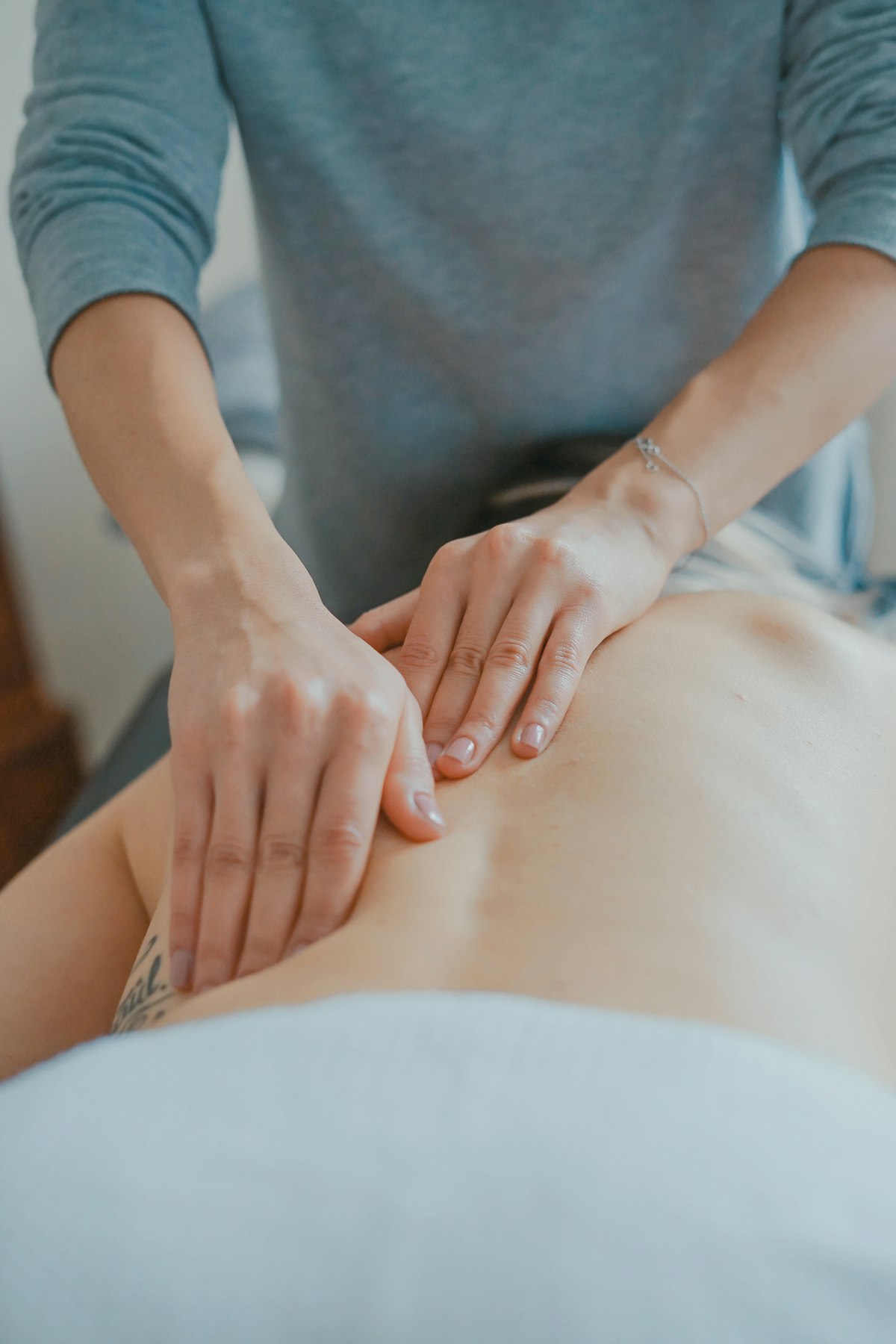
Once abdominal breathing has settled in — give it two to four weeks, minimum — you can begin Stage 2. This is reverse breathing, Ni Hu Xi, and it's going to feel wrong the first time you try it.
In normal abdominal breathing, the belly expands on the inhale. Reverse breathing flips the pattern: on the inhale, the lower abdomen draws gently inward and slightly upward. On the exhale, the belly releases and expands. I know. It sounds backwards. That's because it is — and that's the source of its power.
This pattern came out of the martial and internal arts. Martial artists discovered that drawing the lower abdomen inward on the inhale — while lightly engaging the pelvic floor — creates a compressed, stable core that absorbs and transmits force. It's like loading a spring. The inward draw stores tension on the inhale. The expansion on the exhale delivers it.
In standing practice, reverse breathing roots the body, protects the lower back, and generates power from the ground.
But its benefits go beyond punching things. Because the pattern is unfamiliar, it demands conscious engagement with the deepest torso muscles — transversus abdominis, pelvic floor, the diaphragm itself. It also massages the internal organs through alternating abdominal compression and release. That rhythmic pressure-and-release, sustained over minutes, does something no foam roller can reach.
A necessary warning: don't jump here. Reverse breathing should never be forced. The abdominal draw is subtle — maybe two or three centimeters inward, not a vacuum-sucked belly. Never hold the breath. Never lock it down. Dizziness, tightness, or anxiety? Back to Stage 1. In the classical teaching, reverse breathing is the bridge between physical breathwork and energetic Qi circulation.
Stage 3 sits at the other end of that bridge.
- Do not attempt this until you've had at least 2–4 weeks of consistent Stage 1. The foundation isn't optional.
- The inward draw is subtle: imagine your navel moving gently toward your spine. Not a hard vacuum.
- Pair reverse breathing with downward qigong movements: as your hands press down, let the belly expand on the exhale.
"The breath descends to the Dan Tian and the Qi is stored; when the Qi is stored, the body is full of power."
Stage 3: Breathing Into the Dan Tian
Stage 3 is where breathwork becomes what the Daoists called Dao Yin — guiding Qi. The destination is the Dan Tian: the lower abdomen center, about three finger-widths below the navel, roughly two inches deep toward the spine. In TCM, this is the body's energetic center of gravity and the storage site for foundational Qi.
To locate it, press three fingers below your navel. You'll feel a slightly softer depression between the pubic bone and the navel. That's the neighborhood. Now imagine that spot as the floor of a well, and direct your breath there.
The method is this: on the inhale, imagine the breath traveling down through nose, throat, and chest, and arriving at the Dan Tian. You're not 'filling the lungs' so much as settling into the lower abdomen — water finding its level. On the exhale, the breath expands outward from the Dan Tian through the whole lower body, down to the soles of your feet.
Keep the visualization plain. No lights. No swirling energy. The classical instruction is the opposite of dramatic: 'The mind follows the breath, and the breath follows the Dan Tian.' Attention itself becomes the tool. Modern research backs this up — where you place awareness during breathing measurably changes diaphragmatic excursion. Focus on the lower abdomen, and the diaphragm actually moves more.
After weeks of practice, the sensation of breath 'arriving' at the Dan Tian shifts from abstract to tangible: warmth, fullness, a quiet presence in the lower belly. This is when breathing and meditation merge. The final refinement is to let the breath become so subtle you stop noticing it — the Daoist ideal of breathing as if not breathing.
At this level, the classic signs of deep parasympathetic states appear: slowed heartbeat, warm hands and feet, a calm and alert mind. You've returned, in the old language, to the fetal state.
- Beginners often 'chase' the Dan Tian with muscular tension. It's found by relaxing, never by forcing.
- Use the 4:6 count as scaffolding: inhale 4 counts arriving at Dan Tian, exhale 6 counts radiating outward from it.
- Practice Stage 3 seated with a tall spine, or in Zhan Zhuang (standing meditation) — the standing posture makes the lower-abdominal focus more obvious.
"The Dan Tian is the sea of Qi. When the sea is calm, the hundred rivers run clear."
The Science That Maps onto the Practice
The Daoists called it returning to the fetal state. Modern physiology measures it as increased vagal tone, visible in heart rate variability (HRV). Here's the ancient-to-modern translation.
HRV is the variation in time between successive heartbeats — not heart rate itself, but its flexibility. A healthy heart doesn't tick like a metronome. It adjusts constantly, speeding slightly on the inhale, slowing on the exhale. This phenomenon, respiratory sinus arrhythmia, is driven by the vagus nerve and is the best non-invasive window we have into parasympathetic activity.
High HRV means your nervous system shifts gears fluidly. Low HRV means it's locked in sympathetic overdrive — and low HRV correlates with anxiety, poor sleep, cardiovascular risk, and markers of accelerated aging.
A 2016 systematic review in Frontiers in Psychology examined how slow breathing affects cardiovascular autonomic function. The finding: breathing at 4 to 6 breaths per minute — the exact tempo of classical Tai Xi — significantly increases baroreflex sensitivity and high-frequency HRV, the gold-standard markers of vagal activation.
Follow-up intervention studies in 2017 confirmed that regular diaphragmatic breathing raises resting HRV and lowers resting heart rate over 4 to 12 weeks. A 2018 clinical review of breathwork for stress and anxiety concluded that slow, extended-exhale breathing protocols produce reliable reductions in state anxiety, with effect sizes comparable to some first-line relaxation interventions.
The mechanism is mechanical and, in its own way, elegant. Each deep diaphragmatic inhale stretches the vagus nerve fibers woven through the diaphragm and thoracic cavity. Each slow exhale engages the 'vagal brake' on the heart. Repeated over months, the nervous system resets its baseline, like recalibrating a thermostat.
This is why the Daoist emphasis on subtlety was precision, not mysticism: the quieter the breath, the more the parasympathetic branch takes over.
- Track your morning resting HRV, same time daily. Improvements typically appear within 2–3 months.
- The sweet spot is 4–6 breaths per minute. A full breath cycle (inhale + exhale) of 10–12 seconds produces the best vagal activation.
- Consistency destroys intensity: 10 minutes daily beats 45 minutes once a week. Every time.
"When the breath is regulated, the heart is regulated; when the heart is regulated, the spirit is regulated; when the spirit is regulated, the body follows."
The 10-Minute Daily Protocol
This is what I give every student. Same thing I do myself. Ten minutes.
Minute 1 — Settle. Chair or cushion, spine tall, hands on thighs, eyes closed. Three slow ordinary breaths. Let your shoulders drop.
Minutes 2–4 — Stage 1 abdominal breathing. Hand on the belly. Inhale 4, exhale 6. Feel the hand rise and fall. Mind wanders? Fine. Bring it back to the hand on the belly. That's the whole game.
Minutes 5–7 — Stage 3 Dan Tian breathing. Move your hand to three fingers below the navel. Direct each breath there, same 4:6 rhythm. Each round, let the breath get a little quieter.
Minutes 8–9 — Subtle breathing. Drop the counting. Let the breath find its own pace, its own depth. This is the embryonic phase — quiet enough that you almost forget you're breathing.
Minute 10 — Return. One full natural breath. Rub your palms together until they're warm, press them over your closed eyes. Open slowly. Carry the quiet with you.
Do this once in the morning to set the nervous system for the day. Once in the evening, as part of a wind-down, to signal sleep. If you practice qigong, spend the first ten minutes of any form in embryonic breathing, then let the breath carry itself through the movements. If sleep is the goal, finish your evening session with five minutes of lying-down belly breathing.
You'll notice the transition from awake to asleep becoming smoother.
The results accumulate. Around the three-month mark, the practice stops being an exercise and becomes a baseline. You'll catch yourself belly-breathing while you're waiting for coffee — the way you used to catch yourself chest-breathing under stress. That's the fetal state coming back.
- Anchor it to an existing habit. Practice right after brushing your teeth, morning and night. The routine you already have triggers the one you're building.
- If ten minutes feels long, start with three. A practice you keep is worth infinitely more than a protocol you abandon.
- The evening session will be harder at first — a racing mind during quiet breathing is normal for the first two weeks. Stay with it. The breath will pull the noise down.
"Cultivate the breath to fullness, then store it; store it deeply, and it becomes the root of long life."