The First Medicine Was a Bowl of Porridge
Before capsules and tinctures. Before apothecaries and chain drugstores and prescriptions written on white pads. There was congee. A pot of water, a handful of rice, and time — and for at least two thousand years, Chinese physicians have reached for it first, for everything from the common cold to a digestive system in collapse.
Zhang Zhongjing, writing in the Eastern Han dynasty around 200 CE, told patients to take their herbal decoctions with a bowl of warm congee — not as an afterthought, but as part of the treatment. The congee, he explained, supports the Stomach Qi so the herbs can do their work. Without it, the medicine wouldn't land.
That's a radical idea in modern terms: the delivery system matters as much as the active ingredient. A drug that can't be absorbed is useless. A nutrient that can't be digested might as well not exist. Congee solves this at the root by being, in effect, pre-digested food — broken down by heat, water, and time until absorbing it takes almost no digestive effort.
The patient from my personal note — the one with 14 supplements and a broken digestive system — makes the point better than any theory. She was spending hundreds a month on high-quality, well-researched supplements that were passing through her essentially unused. Her Spleen Qi was so depleted that her digestive capacity was running at maybe 20%. The supplements were expensive stool decoration.
Congee bypassed the problem entirely. Two weeks on a simple job's tears congee, and her tongue coat normalized, her bloating resolved, and suddenly — interestingly — the supplements she'd been taking all along started working. Not because the supplements changed. Because her ability to absorb them changed. Congee had rebuilt the foundation.
- If you're taking supplements and not seeing results, ask yourself whether your digestion is actually absorbing them. Signs of poor absorption include undigested food in stool, bloating after meals, and a thick tongue coating.
- Congee isn't a breakfast food. It's a therapeutic vehicle. Think of it as your daily medicine base — the canvas on which you paint whatever your body needs that day.
- The congee prescription is almost never 'just congee.' It's congee plus one or two specific additions matched to your pattern. Plain congee is nourishing but neutral; medicinal congee is targeted therapy.
"The Spleen and Stomach are the root of postnatal Qi. Without them, neither food nor medicine can be transformed into the energy and Blood that sustain life."
Why Liquid Rice Heals: The TCM Physiology of Congee
To understand why congee works, you need to understand how the TCM digestive system operates. The Spleen and Stomach form the central digestive axis: the Stomach receives food, the Spleen separates the pure from the impure and transports nourishment upward to the Lungs and Heart. All of it runs on energy — digestive fire, or Spleen Yang. In a healthy person this happens quietly, in the background.
When Spleen Qi is deficient, every meal becomes an energy drain instead of an energy source.
The more difficult something is to digest, the more Spleen Yang it demands. Raw vegetables, cold smoothies, greasy fried food, excessive protein, large rushed meals — all of it asks for more digestive fire than a depleted Spleen can produce. The result is food stagnation: partially digested food sitting in the tract, fermenting, producing gas, triggering inflammation, generating Dampness.
Congee is radical because it asks almost nothing. The rice cooks in excess water for 90 minutes to 3 hours, the starch granules break down into a semi-dissolved state closer to liquid than solid, and the grain's cellular structure is destroyed by prolonged heat and hydration. By the time congee reaches the Stomach, the work of digestion is already 70% complete.
Three things follow. 6 degrees before digestion can begin. Fluid: congee is roughly 85-90% water, so it nourishes the Stomach Yin — the mucosal lining and digestive secretions — while delivering energy at the same time. That dual action, tonifying Qi while generating fluids, is rare in food.
And the vehicle effect: because congee absorbs so easily, any medicinal addition — herbs, spices, seeds, roots — enters the bloodstream rapidly alongside the rice. This is why Zhang Zhongjing insisted on congee as the vehicle for his formulas. It's a drug delivery system disguised as breakfast.
- The longer congee cooks, the easier it is to digest. A 30-minute congee is fine. A 90-minute congee is therapeutic. A 3-hour slow-cooker congee is the gourmet heirloom version that Chinese grandmothers have been making since before electric stoves existed.
- The water-to-rice ratio determines texture. 8:1 gives you a drinkable thin congee (good for acute illness and very weak digestion). 6:1 is the Goldilocks ratio — creamy but spoonable. 4:1 is essentially soft cooked rice with extra liquid.
- If you're coming off a stomach bug, recovering from surgery, or dealing with a flare of IBS or Crohn's, start with thin congee (8:1) and gradually thicken as your digestion strengthens.
"After taking the decoction, drink a bowl of hot congee to assist the medicine's power. The congee warms the center, strengthens the Stomach Qi, and ensures the herbs reach their destination."
The Base Recipe: Plain Congee Done Right
Before the medicinal variations, you need the base. Every therapeutic congee starts with properly made plain congee — the blank canvas that carries whatever medicine you add.
The rice matters. Short-grain white rice — Japanese sushi rice or Calrose — makes the creamiest, most easily digested congee. Long-grain jasmine or basmati works but the texture is less velvety. Brown rice is more nutritious and significantly harder to digest, which misses the point of congee's therapeutic gentleness; use it only once digestion has strengthened. Start with white.
The classic ratio is 1 part rice to 6-8 parts water. For a single generous serving, half a cup of rice to 3-4 cups of water. Wash the rice once — not the aggressive three-rinse method you'd use for steamed rice, because you want to keep some surface starch for that creamy texture. One quick rinse to knock off dust is plenty.
Three cooking methods, each with tradeoffs. Stovetop: bring rice and water to a boil in a heavy-bottomed pot, drop to the lowest simmer, cover with the lid slightly ajar, cook 60-90 minutes, stirring occasionally. Most control, best texture. Slow cooker: combine rice and water, set on low before bed, wake up to perfect congee — the smoothest, most thoroughly broken-down version, and you don't stand over it.
Instant Pot: 20-25 minutes on high pressure, natural release. Faster, slightly less creamy.
A pinch of salt — literally a pinch, no more than an eighth of a teaspoon — brings out the rice's natural sweetness. Any more, and you lose the neutral quality that makes congee such a versatile base. The finished congee should be creamy and pourable, individual grains still faintly visible but completely soft and disintegrating at the edges. It should coat the back of a spoon. Too thick? Stir in more hot water.
Too thin? Cook uncovered another 10-15 minutes.
- Freeze leftover congee in individual portions. It reheats beautifully with a splash of water — the texture actually improves on the second day.
- A heavy-bottomed pot (enameled cast iron, ceramic-coated, or thick stainless steel) makes a significant difference in preventing scorching during long simmers. A thin aluminum pot will burn your congee every time.
- If you forget to stir and the bottom scorches slightly, do NOT scrape the burnt rice into the congee — it will ruin the entire pot with a bitter, acrid taste. Pour the un-scorched congee carefully into a new pot.
"Rice is sweet and neutral. It tonifies the Spleen and Stomach, nourishes Qi, harmonizes the five zang organs, and stops thirst and diarrhea. When cooked as congee, its gentleness is unmatched — it feeds the weak without burdening them."
Ten Medicinal Congees, Each Matched to a Pattern
Now the heart of congee therapy: the additions that turn a simple bowl of rice porridge into targeted medicine. These ten recipes cover the patterns I see most in clinic, from acute colds to chronic deficiency. Each includes the TCM indication, the modern nutrition rationale, and precise instructions.
1. GINGER-SCALLION CONGEE (Sheng Jiang Cong Bai Zhou). For the early-stage wind-cold invasion — the chilled, achy, clear-runny-nose, no-sweating feeling of a cold coming on. Prepare plain congee. While it's still bubbling, add 3-4 thin slices of fresh ginger (don't peel — the peel is cooling while the flesh is warming, and you want both here) and 2-3 chopped scallion whites. Cook 5 more minutes.
Eat as hot as you can tolerate, then get under a blanket and let yourself sweat lightly. Ginger's pungent warmth — gingerols and shogaols — is a documented circulatory stimulant and diaphoretic; scallion's allicin provides antimicrobial support. It's TCM's answer to a hot toddy, minus the alcohol that burdens the Liver.
2. GOJI-JUJUBE CONGEE (Gou Qi Hong Zao Zhou). For blood deficiency: pale complexion, dizziness, dry eyes, poor night vision, scanty periods, postpartum recovery. Add 1 tablespoon goji berries and 5-6 pitted red dates to the rice at the start of cooking, so their sweetness infuses the whole pot. The long cooking softens the dates completely and the goji berries plump up, releasing their orange-red color.
Sweet enough that you need no added sugar. Goji's zeaxanthin and polysaccharides support retinal health and immune modulation; red dates carry iron and cyclic AMP, a signaling molecule involved in energy metabolism.
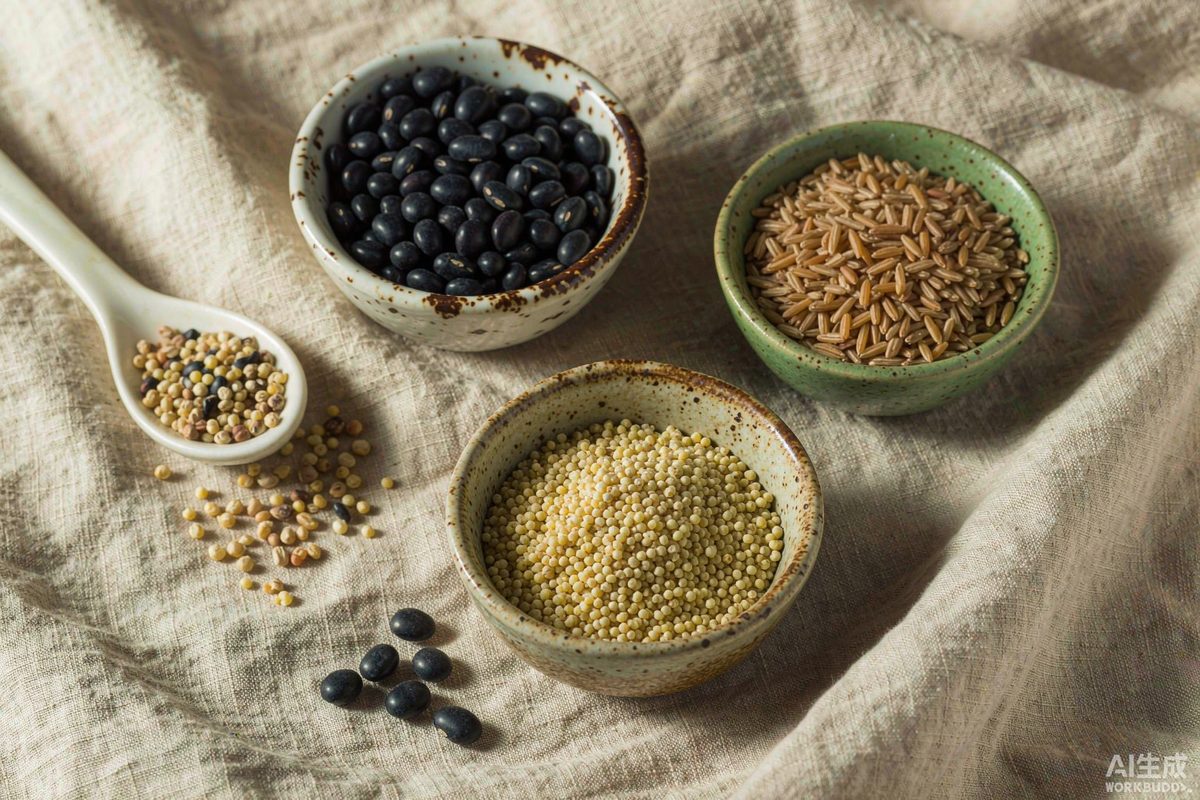
3. JOB'S TEARS CONGEE (Yi Yi Ren Zhou). For dampness accumulation: edema, joint pain worse in damp weather, loose sticky stools, cloudy urine, acne with thick yellow pus, that cotton-wrapped-around-the-brain heaviness. Use half rice, half job's tears — a quarter cup each to 4 cups water. Job's tears need longer cooking, so pre-soak 4 hours or overnight.
The result is nuttier and slightly chewier than plain rice congee. The bioactives coixenolide and coixol have documented anti-inflammatory, diuretic, and immunomodulatory effects; a 2017 review in the Journal of Ethnopharmacology covered coix seed's use in ulcerative colitis and other inflammatory bowel conditions.
4. CHINESE YAM AND LOTUS SEED CONGEE (Shan Yao Lian Zi Zhou). For Spleen deficiency with chronic loose stools or diarrhea, poor appetite, fatigue, thin children who don't gain weight, restless sleep with frequent waking.
Add 2 tablespoons fresh Chinese yam (peeled, diced) or 1 tablespoon dried yam powder, plus 1 tablespoon lotus seeds — pre-soaked 2 hours if dried, and remove the green germ in the center, it's bitter. Cook with the rice from the beginning. The yam's mucilage makes the congee even creamier.
Lotus seeds are an astringent tonic, one of the few foods that tonify and hold in at the same time — ideal where weakness and leakage coexist.
5. MUNG BEAN CONGEE (Lu Dou Zhou). For Summer-Heat: excessive sweating, thirst, irritability, red face, dark scanty urine, red inflamed skin eruptions and boils. This is the classic Chinese summer food, eaten through July and August across China to prevent heatstroke. Add a quarter cup of mung beans (pre-soaked 4 hours) to the rice at the start. The congee turns pale green with a cooling, slightly sweet flavor.
Do NOT add ginger to this one — you want the full cooling effect. A pinch of rock sugar at the end is traditional. Mung beans are rich in vitexin and isovitexin, flavonoids with documented antioxidant and anti-glycation properties.
6. BLACK SESAME AND WALNUT CONGEE (Hei Zhi Ma He Tao Zhou). For Kidney Essence deficiency: premature graying, hair loss, lower back and knee weakness, poor memory, tinnitus, dry constipation, frequent nighttime urination. This is the beauty-and-longevity congee. Grind 1 tablespoon black sesame seeds and 2 walnuts to a coarse powder, add to the rice at the start.
The congee takes on a striking grey-purple from the sesame and a rich nutty depth from the walnuts. Black sesame's calcium (nearly 1000 mg per 100 g), sesamin lignans, and walnut's omega-3s and polyphenols support bone density, cognitive function, and vascular health. Full disclosure: this is my personal favorite, and the one I eat most often.
7. PUMPKIN-MILLET CONGEE (Nan Gua Xiao Mi Zhou). The pediatric and geriatric congee — gentle enough for the weakest digestion, sweet enough that children love it, nourishing enough to support growth and recovery. Half millet, half rice (a quarter cup each), plus half a cup of diced pumpkin, cooked with 5 cups water. The pumpkin breaks down completely, turning the congee golden and naturally sweet.
Millet is one of the few grains that nourishes the Spleen without generating Dampness; pumpkin's beta-carotene supports the intestinal epithelial barrier. Together it's a complete meal for anyone whose digestive fire is running low.
8. REISHI-DATE CONGEE (Ling Zhi Da Zao Zhou). For Shen disturbance: anxiety, palpitations, insomnia with frequent waking, a restless agitated mind that won't settle. Add 3-4 thin slices of dried reishi and 4-5 red dates to the rice at the start. Remove the reishi before eating — it's woody and inedible, but its bitter medicine has infused the congee.
Reishi's triterpenes are anxiolytic and immunomodulating; the dates balance the bitterness with sweetness and nourish Blood to anchor the Shen. Best eaten in the evening, about 2 hours before bed.
9. PORK-BONE CONGEE (Gu Tou Zhou). For recovery: after illness, surgery, or childbirth; chronic exhaustion; elderly frailty; convalescence after a long hospitalization. Simmer 2-3 pork neck or marrow bones in 6 cups of water for 2-4 hours first, strain, and use that broth as the congee liquid.
The long-simmered broth provides gelatin, glycine, proline, and minerals — raw materials for tissue repair, in a form that requires almost no digestion. A sprinkle of finely chopped scallion and a few drops of sesame oil at serving complete it. This is TCM's version of the Jewish grandmother's chicken soup: the universal recovery food.
10. CHRYSANTHEMUM CONGEE (Ju Hua Zhou). For Liver Heat rising: red, dry, irritated eyes — especially from screen overuse — temporal headaches, irritability, dizziness, early colds and flu with sore throat and red eyes. Steep 1 tablespoon dried chrysanthemum flowers in 1 cup of boiling water for 10 minutes, strain, and use that tea in place of 1 cup of the congee's cooking water.
Chrysanthemum's luteolin and apigenin provide anti-inflammatory and mild sedative effects. Add a few fresh petals on top for beauty — TCM values the sensory experience of food as part of its therapeutic effect.
- Start with one medicinal congee and eat it daily for 7-10 days before switching. Herbal additions work cumulatively — you won't notice much from a single bowl, but after a week of consistent use, the effects compound.
- If you're combining multiple herbal additions, less is more. Pick one specific action (drain Dampness, nourish Blood, calm Shen) and commit to it. A congee with eight different herbs is a confused congee.
- Keep a congee journal for the first month. Note which recipe you ate, how you felt that day, and any changes in digestion, energy, sleep, or symptoms. Patterns emerge that you'll miss if you rely on memory.
"In the Ming dynasty, the physician Li Shizhen compiled 62 medicinal congee recipes in his monumental work. He wrote: 'Congee is the first food of the sick, the daily nourishment of the weak, and the great harmonizer of the five zang organs.'"
What NOT to Put in Congee: Cold, Raw, and Overly Sweet
Knowing what to keep out of congee matters as much as knowing what to add. The most common mistake I see — especially from health-conscious Westerners trying congee for the first time — is treating it like oatmeal and loading it with raw toppings. Raw fruit, cold milk, granola, honey by the tablespoon, chia seeds, protein powder. All of it undermines congee's therapeutic purpose.
Raw fruit is energetically cold and brings live enzymes the Spleen must work to process — the opposite of congee's easy-digestion principle. Want fruit with your congee? Cook it in: diced apple or pear at the start of cooking, goji berries, red dates, longan.
Never top hot congee with cold milk or yogurt — the temperature clash shocks the Stomach and generates Dampness through what TCM calls cold congealing the Spleen Yang. Need extra protein? A soft-boiled egg or a little shredded chicken beats protein powder every time.
Honey in small amounts — a teaspoon — is fine in medicinal contexts, like chrysanthemum congee for a sore throat. But drizzling tablespoons of honey or maple syrup over congee is a recipe for Dampness and blood sugar spikes. Sugar overloads the Spleen, which in TCM is uniquely vulnerable to sweet excess. And remember: the congee itself, being rice, already breaks down into glucose.
Piling concentrated sweeteners on top overwhelms the very organ you're trying to support.
One more caution, and it's one people rarely think about: stale herbs. Goji berries, black sesame, lotus seeds, red dates — they lose potency over time and go energetically stale in a way that generates Dampness. Buy from a source with high turnover. Store in sealed containers away from heat and light. Replace anything that smells musty, tastes flat, or has changed color.
Freshness matters in food therapy far more than most people realize.
- The 'oatmeal trap': congee is not oatmeal. Oatmeal toppings like raw berries, cold milk, nut butter, and maple syrup are all wrong for congee from a TCM perspective. Think savory, warm, and gently medicinal.
- If you absolutely need sweetness, a single pitted red date (da zao) or a few goji berries added during cooking provides natural sweetness that's Blood-nourishing rather than Dampness-generating.
- Store dried herbs properly: glass jars, cool dark cabinets, and if you live in a humid climate, consider keeping them in the refrigerator. A $4 bag of goji berries that's been open for 18 months is worse than useless — it's actively generating Dampness.
"Cold and raw foods damage the Spleen Yang. Sweet and greasy foods generate Dampness. The path of dietary therapy is to eat warm, cooked, simply prepared foods that the Spleen can easily transform into Qi and Blood."
When to Eat It: Timing, Seasons, and the Ritual
Congee is traditionally a morning food in China, and the physiology backs it up. In the TCM body clock, the Stomach channel peaks between 7-9 AM and the Spleen between 9-11 AM — the digestive system's prime window. Eating your most substantial meal there aligns with the body's natural rhythm. But congee's flexibility means it adapts to other times, depending on the condition.
Morning congee suits Spleen-tonifying formulas — Chinese yam, millet, lotus seed — because you're feeding the digestive system when it's naturally ready to receive. Evening congee suits Shen-calming formulas — reishi-date, goji-jujube — because warm, grounding food helps the nervous system shift into parasympathetic mode for sleep. Make it thinner at night; the digestive fire is weaker after dark.
And around 3-4 PM, when energy dips, a small bowl of plain congee with a pinch of salt and a few goji berries beats caffeine — sustained blood glucose without the crash.
Seasons change the recipe. Summer: cooling congees — mung bean, job's tears with a few slices of fresh lotus root if you can find it, or plain congee served warm but not scalding. Winter: deeply warming ones — ginger-scallion, black sesame-walnut made with an extra slice of dried ginger.
Spring, the Liver's season: green-focused congees with chrysanthemum, celery leaf, or lightly cooked spinach stirred in at the end. Autumn, the Lung's season, runs dry: moistening congees — tremella, pear, almond, or the yam-lotus seed combination.
The meta-pattern across all seasons: eat congee warm but not scalding, in a calm setting, and chew it — yes, chew liquid food; it mixes with salivary enzymes — then follow with 10-15 minutes of gentle activity. Walking, not running. Standing, not lying down immediately. The ritual matters.
Congee eaten standing over the kitchen counter while scrolling your phone is not the same medicine as congee eaten sitting down, with attention.
- The 7-9am window for congee isn't arbitrary — it's when your stomach acid production peaks (circadian-regulated gastric function) and your insulin sensitivity is highest. Breakfast congee supports stable blood sugar through the morning.
- Seasonal congee rotation prevents boredom and aligns your food with environmental demands. Think of it as a quarterly menu change: cooling congees for summer, warming for winter, green/coursing for spring, moistening for autumn.
- Chew your congee 10-15 times per spoonful. This sounds absurd until you try it — the extra mixing with saliva significantly improves starch digestion and reduces the glycemic load by slowing your eating pace.
"In spring, eat more greens to course the Liver. In summer, eat cooling foods to clear Heat. In late summer, eat yellow foods to strengthen the Spleen. In autumn, eat moistening foods to protect the Lungs. In winter, eat warming foods to store the Kidney's essence."
Congee and the Microbiome: Feeding the Bacteria That Feed You
If there's one place where ancient congee therapy and cutting-edge nutrition science meet most elegantly, it's the gut microbiome. The last decade of research has made it clear that the trillions of bacteria, fungi, and archaea in your digestive tract aren't passive passengers — they regulate immune function, mood, metabolism, and even gene expression. And what you feed them matters enormously.
Congee, it turns out, is a prebiotic delivery system disguised as comfort food. When rice cooks for a long time in excess water, the starch granules swell, rupture, and release amylose and amylopectin into the solution. As the congee cools slightly — even from scalding to warm — some of that released starch retrogrades, re-forming into a crystalline structure called resistant starch type 3 (RS3).
Resistant starch passes through the stomach and small intestine undigested and arrives in the colon intact, where beneficial bacteria — Bifidobacterium, Lactobacillus, Akkermansia muciniphila — ferment it.
A 2017 study in the American Journal of Clinical Nutrition looked at the glycemic response to rice porridge and found something interesting: the immediate glycemic index was relatively high, but the satiety effect lasted longer than with steamed rice, and the resistant starch content rose significantly when the porridge was cooled and reheated.
Translation: yesterday's congee, reheated this morning, may be metabolically superior to fresh congee.
Fermentation produces short-chain fatty acids — acetate, propionate, butyrate — the primary fuel for colonocytes, the cells lining the colon. SCFAs reduce gut inflammation, strengthen the intestinal barrier, and signal to the brain via the vagus nerve in ways that modulate appetite, mood, and stress. In TCM terms, this is the modern mechanism for strengthening the Spleen and transforming Dampness.
A healthy microbiome extracts nourishment efficiently — strong Spleen transformation. A dysbiotic one produces endotoxins and triggers systemic inflammation — Spleen deficiency generating Dampness.
The medicinal additions amplify the effect. Job's tears contain beta-glucan, a fermentable fiber. Chinese yam's mucopolysaccharides are preferential substrates for Bifidobacterium. Lotus seeds contribute resistant starch and polyphenols that inhibit pathogens while letting beneficial strains flourish.
Even ginger — whose pungent heat seems antithetical to a feeding-the-bacteria story — has been shown to increase microbial diversity and shift the Firmicutes-to-Bacteroidetes ratio away from obesity and metabolic disease. Different words, same physiology.
- Cooled-and-reheated congee has more resistant starch than fresh congee. Make a batch, refrigerate overnight, and reheat individual portions for a more microbiome-friendly version.
- A teaspoon of aged tangerine peel (chen pi) added to congee supports digestion and gently moves stagnant Qi. From a modern perspective, the volatile oils in aged citrus peel (primarily d-limonene) stimulate gastric motility and have mild carminative effects.
- If you've been on antibiotics, congee is one of the gentlest foods for rebuilding gut integrity. Start with plain rice congee, progress to job's tears congee after a few days, and add Chinese yam and lotus seeds once bowel movements have normalized.
"The Intestines and Stomach are the sea of water and grain. They are the great warehouse of the body. When they are in harmony, the five zang organs are peaceful and the hundred diseases do not arise."