The Ice Pack Paradox — and What It Misses About Joint Pain
You twist your knee on the court, and before you've even limped off, three people have told you the same thing: ice it. RICE — rest, ice, compression, elevation. Coaches drill it in, trainers swear by it, the internet repeats it like scripture. So you wrap the joint in a cold pack and sit there shivering, waiting for the swelling to go down.
Here's what nobody mentioned: a medical tradition that has treated joint pain for two thousand years thinks that advice is wrong for most joint pain. Not merely unhelpful. Actively counterproductive. Chinese medicine treats joint pain with heat — moxibustion, cupping, warming liniments — and its theory of why is startlingly coherent.
The reasoning runs like this. Your joint hurts because something is stuck in it. Ice makes things more stuck. Heat gets things moving again. Modern research on microcirculation and inflammatory signaling is starting to line up behind that logic, which is one of those moments where you stop and check the calendar.
TCM calls joint pain Bi Syndrome (痹证) — literally 'painful obstruction' — and its treatment approach flips the Western ice-first protocol on its head. If you've been icing for years and only getting temporary relief, the next ten minutes might change your mind about the whole thing.
"When Wind, Cold, and Dampness combine and enter the body, they cause Bi Syndrome. Cold dominates — the pain is severe and fixed. Wind dominates — the pain wanders. Dampness dominates — the pain is heavy with numbness."
Bi Syndrome: When Wind, Cold, and Dampness Move Into Your Joints

In TCM, joint pain is rarely a purely mechanical problem. It's an invasion. Three external forces — Wind (Feng), Cold (Han), and Dampness (Shi) — slip in through the skin and the channels, settle into a joint, and block the flow of Qi and Blood. Pain, swelling, stiffness, a joint that won't do what you ask. That's Bi Syndrome.
What makes the theory genuinely useful is how it sorts pain by quality. Wind Bi wanders — the knee hurts Tuesday, the shoulder Wednesday, the wrist Thursday. Cold Bi sits in one spot, severe and fixed, and it worsens when the weather turns cold, improves with warmth. Damp Bi feels heavy — swollen, numb, worse in humidity, better after movement or drying therapies.
Most chronic joint pain is a mix, and the commonest blend is Cold-Damp: winter miserable, hot baths genuinely relieving, stiffness that takes twenty minutes to walk off in the morning.
Now apply the theory to the ice pack. If the problem is Cold and Dampness lodged in the joint, what does the coldest, dampest intervention you can apply do? TCM's answer: it drives the pathogen deeper, tightens already-obstructed channels, and trades temporary numbness for long-term stagnation. Heat does the opposite — it warms the channels, disperses Cold, dries Dampness, and gets Qi and Blood moving again.
A caveat before you run off with this. If your joints are red, hot to the touch, and throbbing, that's a different pattern — Heat Bi — and heat can make it worse. The rule of thumb: cold-weather pain that loves a hot shower is cold-pattern pain, and that's the kind that responds to warmth.
- Identify your Bi type: if your joints feel worse in cold weather and better with a hot shower, you're likely dealing with Cold-Damp Bi — avoid ice.
- If your joints are red, hot to the touch, and throbbing, you may have Heat Bi (less common) and should consult a practitioner before applying heat.
- Track your joint pain against weather changes for two weeks — the pattern will reveal the dominant pathogenic factor.
"The five zang organs each have their corresponding Bi: Lung Bi causes dyspnea; Heart Bi causes vessel obstruction; Liver Bi causes spasms; Kidney Bi causes bone deformities; Spleen Bi causes muscle weakness."
Moxibustion: Burning Mugwort on Joints, and the Science That Finally Caught Up
Moxibustion — moxa for short — is the front-line heat therapy for Cold and Cold-Damp Bi, and it's the most important one you've probably never heard of. The practice: burn a dried, processed form of mugwort (Artemisia argyi, Ai Ye in Chinese) and hold it near the acupoints around the painful joint.
What surprised me when I first looked at the physics: burning mugwort emits far-infrared radiation in the 2-10 micron band — the exact wavelengths that penetrate deepest into human tissue. A thermographic study in the Journal of Traditional Chinese Medicine measured tissue temperature rising 2-4°C at 2-3 centimeters of depth. Hot packs barely reach a centimeter.
That's the difference between surface warmth and joint warmth.
The chemistry adds a layer the heat alone can't explain. Mugwort carries volatile oils — cineole, thujone, borneol — that aerosolize as it burns and absorb through the skin, and lab work has shown these compounds have real anti-inflammatory and analgesic activity. The heat also fires polymodal receptors in the skin, which trigger the release of substance P, CGRP, and endogenous opioids — your body's own painkillers.
The clinical picture holds up too. A 2018 systematic review pooled 13 RCTs and more than 1,000 patients with knee osteoarthritis and found moxibustion beat conventional oral meds — NSAIDs, glucosamine — on pain and function, with fewer side effects. I've seen patients who couldn't kneel to garden get back down on their knees within weeks.
I've also seen it do nothing, and that matters: moxa is specific, not universal.
- Never hold burning moxa directly against the skin — maintain a distance of 1-2 inches and use a heat shield or moxa box for safety.
- Moxibustion is ideal for morning joint stiffness that improves with a hot shower — this pattern strongly suggests Cold Bi.
- The smoke can be strong — practice in a well-ventilated room or use smokeless moxa sticks if sensitive.
"When the condition is not suitable for acupuncture, moxibustion is appropriate. When neither acupuncture nor moxibustion works, the disease has penetrated too deeply."
Cupping: What Are Those Purple Circles Actually Doing?
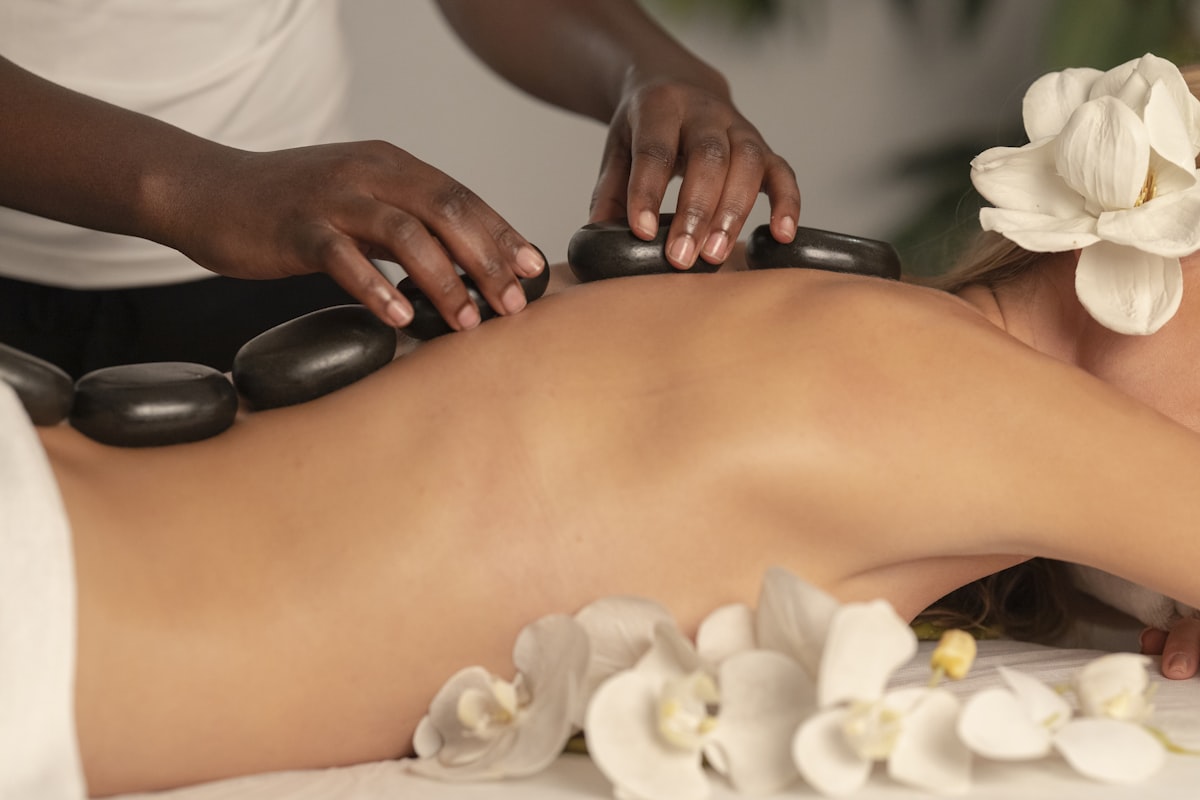
Michael Phelps's shoulders at the 2016 Olympics introduced more people to cupping than two millennia of Chinese medicine ever managed. The circles looked like bruises, and the internet argued about them for weeks. But cupping isn't a sports fad — there's archaeological evidence of cupping instruments dating back to 3000 BCE.
The mechanism is almost embarrassingly simple: a vacuum in a glass, silicone, or bamboo cup pulls the skin, fascia, and superficial muscle upward, creating space between tissue layers. That decompression breaks up fascial adhesions, mobilizes stagnant blood and interstitial fluid, and gives the lymphatic system a clear run at draining the area.
For joints, cups go along the meridians that cross the joint — the Bladder line along the spine for knee and hip pain, the San Jiao line for shoulders, the Large Intestine line for wrists. And those marks? They're not bruises in the usual sense. They're extravasated blood the body brings to the surface deliberately, and the color reads like a gauge: light pink means mild stagnation, dark purple means years of it.
A 2020 meta-analysis in BMJ Open found cupping produced clinically meaningful pain reduction for musculoskeletal pain, sustained at the four-week follow-up. My own experience tracks with that — though I'll be honest, the marks alarm some patients, so I warn people before the first session. The marks fade in 3-7 days, and usually so does the pain.
- Start with silicone cups and light suction (leave on for 3-5 minutes) — you can build tolerance gradually.
- Apply a thin layer of massage oil before cupping for joint areas to allow the cups to glide (moving cupping, or 'sliding cups,' is traditional for large joint areas).
- Don't cup over open wounds, varicose veins, or areas of sensory loss — and never cup a joint that's red, hot, and acutely inflamed.
"Where there is free flow, there is no pain. Where there is pain, there is no free flow."
Warming Herbs: Can You Heat a Joint From the Inside?
External heat only goes so deep. TCM also reaches for a pharmacopeia of warming herbs taken internally — the idea being to generate heat from the core out, driving Cold and Dampness out of the joints from within.
The heavyweight is Aconite (Fu Zi), the most Yang-tonifying herb in the entire materia medica. It produces deep, core-level warmth that radiates through the channels into joints and bones. It's also genuinely toxic — it must be pre-boiled for 60-90 minutes before it's safe, and the margin between therapeutic and dangerous is thin. This is not a DIY herb. Full stop.
Safer home options do real work: dried ginger (Gan Jiang) warms the middle burner and dries Dampness; cinnamon twig (Gui Zhi) warms the channels and carries other herbs to the limbs; Notopterygium (Qiang Huo) targets Wind-Damp-Cold in the upper body; Angelica pubescens (Du Huo) does the same for the lower back and knees.
The formula most often written for chronic Cold-Damp joint pain is Du Huo Ji Sheng Tang — fifteen herbs that expel Wind-Damp, warm the channels, nourish the Liver and Kidney (which govern sinews and bones), and invigorate Blood. Clinical studies show WOMAC pain scores dropping comparably to diclofenac, with notably better gastrointestinal tolerability.
I prescribe it often, and I always pair it with the conversation about loading and movement — herbs alone never fixed a joint that wasn't being used.
- Dried ginger tea is the simplest home warming remedy — simmer 3-5 slices of fresh ginger with 2 cups of water for 15 minutes, strain, and drink warm. Add cinnamon stick for extra warming power.
- Turmeric, while not a classical TCM herb, is functionally similar to the 'blood-moving' category — pair it with black pepper and healthy fat for absorption.
- Never self-prescribe aconite or any TCM formula containing it — the margin between therapeutic dose and toxic dose requires professional management.
"Aconite is acrid and warm. It treats wind-cold-damp Bi, joint pain, and inability to walk. It warms the center and the middle burner."
RICE vs. TCM: Two Protocols, Two Assumptions
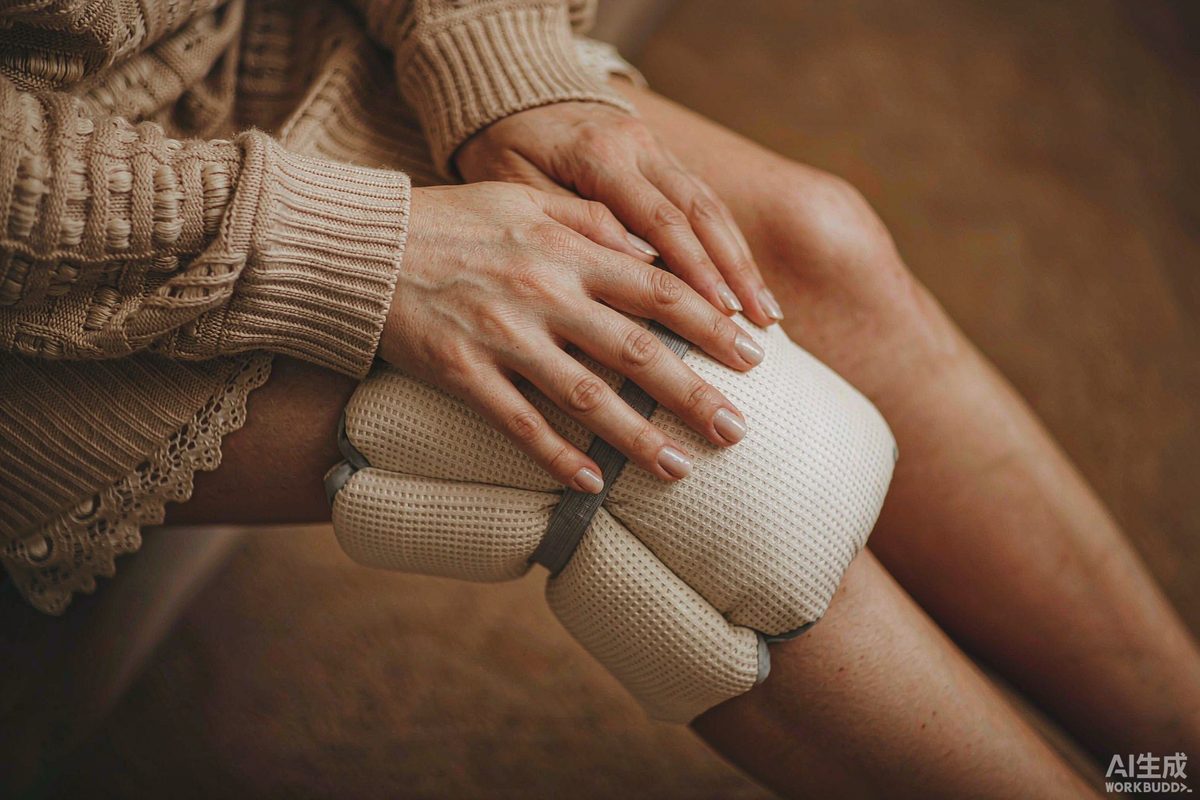
The RICE protocol — Rest, Ice, Compression, Elevation — was codified in 1978 by Dr. Gabe Mirkin and became sports-medicine gospel. The logic is simple: inflammation is bad, so suppress it. Ice, immobilization, gravity. For four decades, that was the answer.
Then, in 2015, Mirkin himself retracted the ice recommendation. His public statement was blunt: ice delays healing by preventing the release of IGF-1, the growth factor damaged tissue needs to repair. The inflammation ice suppresses is the first phase of healing — macrophages have to get into the injured tissue to clear debris, and cold constricts the vessels they travel through.
TCM never went through this loop, because it never tried to suppress the healing response in the first place. For an acute injury, the classical approach is a mild warming liniment and gentle movement within a pain-free range. Movement pumps the lymphatics that drain swelling; warmth keeps the microvasculature open for repair cells.
Sports medicine has drifted toward the same model. The updated acronym is MEAT — Movement, Exercise, Analgesics, Treatment — and notably, ice is not in it.
That's not to say ice never has a place. Acute gout flares and hot, red rheumatoid flares are a different story, and heat makes those worse. But for the vast majority of chronic joint pain, the two traditions have arrived at the same answer: warm it, move it.
- For acute injuries (first 24-48 hours): avoid ice, use gentle range-of-motion movement, and elevate to assist lymphatic drainage.
- For chronic joint pain: apply heat (warm bath, infrared lamp, or moxibustion) for 15-30 minutes before gentle movement or stretching.
- The 'heat or ice' question has a clear TCM answer for most chronic joint conditions: heat. The exception is acute gout or rheumatoid flare with visible redness and heat — see a practitioner.
"Cold contracts and obstructs. Warmth disperses and promotes flow. When treating Bi, warm and move — do not freeze and fix."
Your Daily Heat Protocol: A Routine You Can Start Tonight
Morning, 10-15 minutes: start with a warm shower and let the water run over the affected joints for two or three minutes each. Nighttime stagnation is why mornings are usually worst, and the heat kickstarts circulation. While the water runs, move each joint through its full range of motion — the warmth supports the movement, and the movement pumps lymph.
After you dry off, a warming liniment helps — look for menthol, camphor, or capsicum, which dilate surface capillaries and give mild analgesic effect. Midday, if you've been parked at a desk, do the two-minute version: rub your palms together until they're hot, then lay them over the joint for thirty seconds.
The center of the palm — the Laogong point — runs genuinely warm, and I tell patients it's the cheapest moxa you'll ever use. Follow with ten slow circles of the joint in each direction.
Evening is the main session, 20-30 minutes: moxa held near the most painful points for 5-10 minutes each, an infrared lamp 12-18 inches from the joint for 15-20 minutes, or cupping along the meridian lines. Evening works best because sleep is when the body does its deepest repair — warm the joint first, and the repair happens in a better environment.
End with a warm drink — ginger-cinnamon tea or turmeric golden milk — and get into bed while the warmth is still moving. One honest note: consistency beats intensity, and most people see measurable change in two to three weeks, not two days. Track your morning pain score out of ten and your stiffness in minutes.
And if heat consistently makes things worse after 72 hours, stop — you may be dealing with Heat Bi, and that needs a practitioner's eyes, not a guess.
- Consistency matters more than intensity. A 10-minute daily routine produces better results than an hour once a week.
- Track your morning pain score (0-10) and morning stiffness duration (in minutes) daily — most people see measurable improvement within 2-3 weeks.
- If heat therapy consistently makes your pain worse rather than better after 72 hours, you may have Heat Bi rather than Cold Bi — consult a TCM practitioner for accurate diagnosis.
"Treat winter disease in summer. Treat cold syndromes with warmth. When the Yang Qi of heaven and earth is at its peak, the body's own Yang Qi rises to meet it — this is the optimal time to disperse Cold from the joints."