A Clock in Your Organs
The red digits read 3:07. You're awake — again. Not groggy-awake, but alert-awake, mind already scrolling through everything that went wrong yesterday and everything that might go wrong tomorrow. You do the desperate math: if I fall asleep right now, I'll get three hours and twenty minutes. The math never helps. And somehow, this happens at almost the exact same time every night.
Two thousand years ago, Chinese physicians described a system that explains this. They called it Ziwu Liuzhu (子午流注) — the midnight-noon ebb-flow — and it maps a 24-hour cycle of organ function so precise that your 3 AM wake-up stops being a mystery and becomes a signal. A signal with a name, an organ, and a fix.
I've been using this clock in clinical practice for over a decade. When a patient says 'I wake up every night at 3:15,' I don't think 'insomnia.' I think 'Liver.' And more often than not, that's exactly where the problem lives.
"The human body corresponds with the rhythms of heaven and earth. Qi and blood flow through the meridians in a fixed order, each organ receiving its peak abundance at a specific hour."
How the 12-Organ Clock Actually Runs

Ziwu Liuzhu translates loosely to 'Midnight-Noon Ebb-Flow.' It describes Qi — your body's operating energy — moving through twelve organ meridians in a fixed sequence. Each organ gets a two-hour window where its energy peaks. Twelve hours later, that same organ hits its lowest point.
Think of it like a city's power grid. At noon, the grid is blasting electricity downtown — that's your Heart and Small Intestine running at full capacity. Meanwhile, the residential neighborhoods (your Gallbladder and Liver) are idling. At midnight, the whole allocation flips. Simple mechanics, ancient insight.
Here's what makes this practical: when something's wrong in a meridian — a blockage in the Liver, or a Kidney network running on empty — you'll feel it most during that organ's peak hour. That's why your 3 AM wake-up arrives like clockwork. Your body has an internal chronometer far older than the alarm on your phone. Modern chronobiology has only recently started catching up.
The circadian clock genes that regulate liver enzyme expression, cortisol rhythms, and melatonin timing? '
None of this means you should panic over one bad night. A single 3 AM wake-up is a fluke. A pattern over weeks or months? That's your body sending a memo.
- Keep a sleep log for one week noting exact wake-up times — this is your personal diagnostic map.
- Cross-reference your wake-up time with the organ clock chart below to identify the primary organ involved.
- Remember: a single night of waking at 3 AM means less than a recurring pattern over weeks or months.
"The Qi of the zang-fu organs flows in a circle without end. The twelve meridians connect above and below, so that the five zang organs and six fu organs communicate as one."
7-9 PM: The Pericardium, Your Emotional Doorman
The Pericardium isn't just the sac around your heart — it's the Heart Protector. In TCM, it acts as an emotional filter, deciding what experiences are safe to let through and what needs to be processed before it reaches the sovereign organ. The two hours from 7 to 9 PM are its shift. This is sacred wind-down time.
If you're still working, arguing, or doom-scrolling during the Pericardium hour, you're forcing your emotional doorman to stay on duty when it should be clocking out. The result is what TCM calls Pericardium Fire — a state of mental restlessness that makes falling asleep feel impossible. You'll lie in bed with a racing mind, replaying a conversation from 8 PM and wondering why you can't switch off.
Western research, when it finally caught up, found the same thing. Blue light exposure during this window suppresses melatonin by up to 85%. Cortisol takes roughly 45 minutes to drop once you stop engaging with stressors. The Pericardium hour is a decompression chamber. Use it or pay for it at midnight.
One of my patients, a corporate lawyer, couldn't understand why she couldn't sleep despite being exhausted. When I asked about her evening routine, she said she checked work emails until 9:30 PM, then tried to sleep at 10. 'But I'm just reading email,' she said. The Pericardium doesn't know the difference between reading an email and actively litigating a case. Stress is stress. We moved her email cutoff to 7 PM.
Within two weeks, she was falling asleep in under twenty minutes.
- Dim all lights by 7:30 PM and switch to warm amber lighting if you must read.
- Practice a 10-minute 'emotional download' ritual: write down three things that bothered you and one that you're grateful for.
- Keep phones outside the bedroom — the Pericardium hour is a no-notification zone.
"The Pericardium is the ambassador of the Heart. It receives joy and transmits it, protecting the sovereign organ from harm."
9-11 PM: The Triple Burner Isn't an Organ, But It Runs Everything
The Triple Burner — San Jiao — doesn't map to any Western organ, and that's confused people for centuries. Think of it as your body's thermostat and plumbing system combined: it regulates fluid metabolism, body temperature, and the distribution of Qi across every system. During its peak window of 9-11 PM, the Triple Burner shifts the body into maintenance mode.
Digestion slows. Core temperature drops about 1°F. The lymphatic system ramps up drainage. All of this is preparation for sleep — specifically, for the deep restoration that happens during the Gallbladder and Liver hours that follow.
This is why eating a heavy meal after 8 PM is such a disaster for sleep. The Triple Burner has to divert energy to digesting your late-night pasta instead of calibrating your temperature and fluid balance. I've seen this pattern so many times I can predict it: patient eats dinner at 9:30, wakes up at 2 AM hot and sweaty, maybe needs the bathroom. The Triple Burner never finished its work.
The ideal bedtime sits at the end of this window, around 10:30-11 PM, just as the Triple Burner hands things over to the Gallbladder. If you can hit that transition point in bed, lights off, you're giving your body the easiest possible entry into deep sleep.
- No food after 8 PM. Your last meal should be fully digested by the time the Triple Burner hour begins.
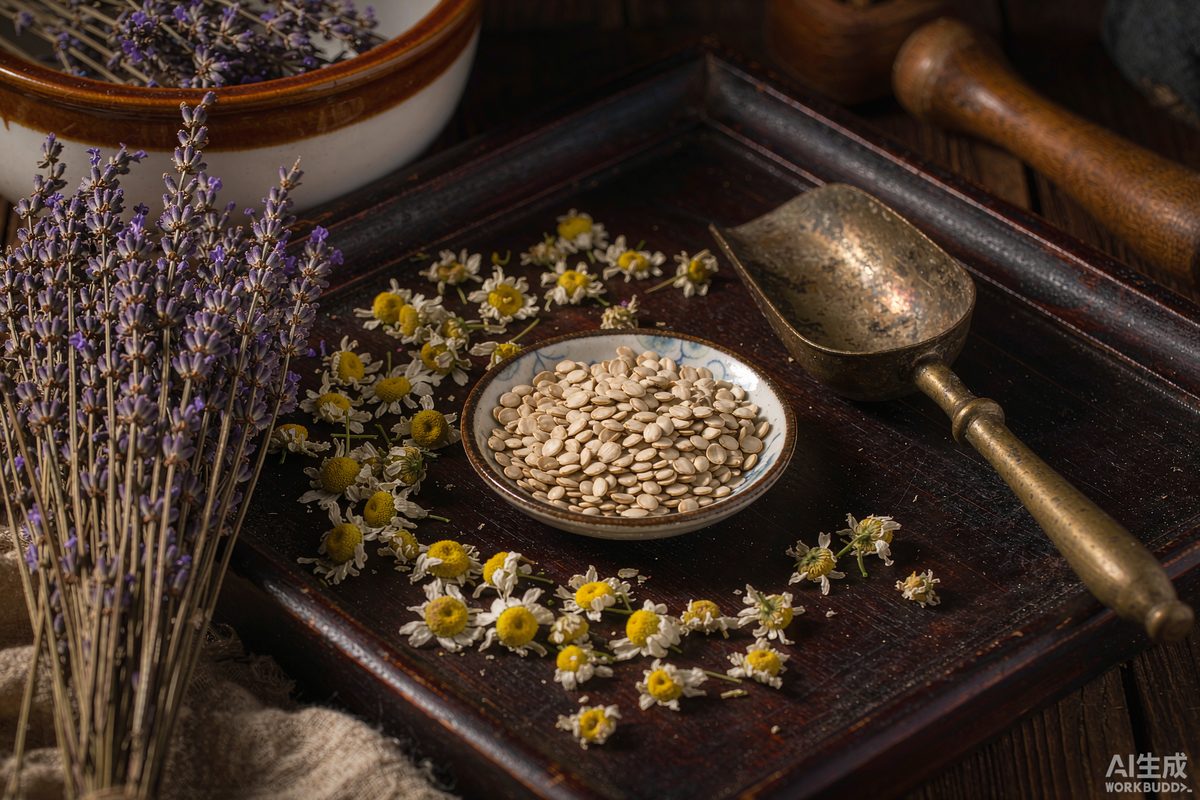
- If you're hungry, drink a small cup of warm chamomile tea — warm fluids support Triple Burner function without burdening it.
- Take a warm (not hot) shower around 9 PM. The slight drop in body temperature afterward signals the Triple Burner that sleep is approaching.
"The Triple Burner governs the passageways of water and Qi. It is the official in charge of irrigation, controlling the waterways throughout the body."
11 PM-1 AM: Your Gallbladder Has Opinions About Your Decisions
In Western anatomy, the gallbladder is a bile storage sac — unglamorous, easy to remove, not missed much. In TCM, the Gallbladder governs decision-making, courage, and judgment. It's said to give you the ability to 'make decisions and carry them out without hesitation.'
Notice how problems feel unsolvable at midnight but manageable by morning? That's Gallbladder Qi at work. During its peak hour from 11 PM to 1 AM, the Gallbladder processes more than fats and cholesterol. It chews through what TCM calls 'decision residue' — the mental and emotional weight of choices you've made, avoided, or been avoiding.
Physiologically, this window matters because it's when human growth hormone secretion begins its nightly surge. Cellular repair kicks off. This is, arguably, the most restorative phase of your entire sleep cycle. If you're awake during the Gallbladder hour — scrolling, worrying, staring at the ceiling — you're skipping the body's main repair shift.
I've noticed something in clinic that the texts don't mention explicitly: patients who chronically wake during the Gallbladder hour tend to be people paralyzed by decisions in their waking life. Not always. But often enough that I've started asking: what decision are you avoiding? Sometimes the Gallbladder doesn't need herbs. Sometimes it just needs you to decide.
Be in bed before 10:45. You want deep sleep established before this window opens, not after it closes.
- Be in bed by 10:45 PM at the latest — you want to be in deep sleep before the Gallbladder hour begins.
- Reduce decision fatigue during the day by making small choices automatic (meal prep, outfit selection).
- If you're lying awake during this window, mentally review a single decision you've been avoiding — sometimes the Gallbladder just needs you to decide.
"The Gallbladder holds the office of justice and judgment. All decisions and judgments issue from it."
1-3 AM: The Liver. Yes, This Is the One Everyone Asks About

This is the most common wake-up window I see in practice, and it's not close. The Liver hour runs from 1 to 3 AM, and in TCM, the Liver is the general of the body's armies. It stores blood during rest, releases it during activity, and keeps Qi moving smoothly through every organ and meridian.
During sleep, the Liver's job is detoxification: filtering metabolic waste, neutralizing toxins, storing purified blood for tomorrow. But here's the part most people miss — the Liver doesn't just process alcohol and pharmaceuticals. In TCM, it processes emotional residue too. Anger, resentment, frustration, unexpressed grief. All of it lands in the Liver.
When you wake up at 3 AM with a mind spinning like a washing machine, that's Liver Qi Stagnation with Heat. The Liver is trying to do its cleanup, but the emotional debris has piled up. The stuck energy generates heat. That heat rises and disturbs the Heart Shen — the spirit that should be peacefully anchored during sleep. So you wake up. Wide awake. Alert.
Modern science has validated a piece of this. Liver enzyme activity — especially the CYP450 cytochrome enzymes that run phase I detoxification — peaks during the early morning hours. Your circadian clock directly regulates liver gene expression. Chronic disruption of this rhythm is now linked to metabolic syndrome, fatty liver disease, and certain cancers. The ancients weren't guessing.
They were describing, in their own language, a biological reality we're still decoding.
I had a patient — mid-40s, finance, high-stress — who woke every night at 2:45 AM, heart pounding. He'd already tried trazodone, zolpidem, Ambien — they either didn't work or left him wrecked the next day. When I asked what was happening in his life, he mentioned, almost as an aside, that he'd been in a bitter legal dispute with his business partner for eighteen months. The timeline matched.
His Liver was carrying a lawsuit. We treated the Liver stagnation — herbs, acupuncture, plus the uncomfortable work of actually addressing the conflict — and the 2:45 wake-up faded over three weeks. The body clock was never wrong. It was just waiting for someone to listen.
- Reduce alcohol consumption — the Liver's detox workload should not include processing your evening wine during its peak hour.
- Practice a 'liver release' exercise before bed: lie on your right side (Liver's anatomical position) and breathe deeply into the right ribcage area for 5 minutes.
- Consider supporting Liver function with bitter greens (dandelion, arugula) in your evening meal, which stimulate bile production.
- If anger or frustration is a theme in your life, journal about it specifically before bed — give the Liver less emotional work to do overnight.
"The Liver is the general of the armed forces. Strategy and planning issue from it. When the Liver is diseased, the spirit is disturbed."
3-5 AM: Lungs, Grief, and the Breath You Can't Quite Catch
Waking between 3 and 5 AM points to the Lungs. In TCM, the Lungs govern respiration and the Wei Qi — the protective energy that circulates at the body's surface, defending against pathogens. They also govern grief. This is the hour when people processing loss — recent or buried deep — often find themselves awake with a weight on the chest.
The Lungs are also responsible for dispersing and descending Qi throughout the body. When this function falters, you might wake short of breath, congested, or with a dry cough that only shows up at this specific hour and disappears by morning. It's oddly specific — and in TCM, specificity is always a clue.
Physiologically, cortisol begins its predawn rise around 3-4 AM, nudging the body toward waking. Histamine levels also spike during this window, which is why allergic rhinitis and asthma attacks cluster between 3 and 5 AM. The Lungs are the most externally-facing organ system in TCM — the bridge between your inner world and the outside environment.
When patients tell me they wake during this window, I ask a different set of questions: What boundary has been crossed? What grief is unexpressed? What are you holding in that needs to be let out? The Lungs' function — taking in the new, releasing the old — mirrors the breath itself. Sometimes the body wakes you not because something is broken, but because something is finished and needs to be released.
- Practice deep diaphragmatic breathing if you wake at this hour — place one hand on your belly and breathe slowly, extending exhales longer than inhales.
- Consider an air purifier in the bedroom to reduce the Lung's workload during its peak detox hour.
- Address unresolved grief through therapy, journaling, or a grief ritual — the Lungs store what you don't process.
"The Lungs are the official in charge of management and regulation. They govern Qi and respiration, and control the hundred vessels."
5-7 AM: Your Large Intestine Wants You to Let Go
The sleep cycle closes with the Large Intestine, 5 to 7 AM. This is the body's elimination window. In an ideal rhythm — the kind the ancients described and probably enjoyed more than we do — you wake naturally around 6 or 7 AM and have a bowel movement shortly after rising.
Physically, the Large Intestine separates what's useful from what's waste and releases the remainder. Psychologically, in TCM, it governs the ability to let go — of people, situations, beliefs, habits that have outlived their purpose.
Constipation during this window, especially chronic, often correlates with a broader inability to release. I've seen it enough to stop being surprised. Patients who hold on to everything — grudges, obligations, stuff — tend to hold on physically too. The gut and the psyche share real estate.
How you handle this hour sets the tone for the day. If you're slamming snooze and fighting wakefulness, you're resisting the natural upward surge of Yang energy that starts at 5 AM. Better: wake with the first light, drink a glass of warm water with lemon to stimulate peristalsis, and give yourself unhurried time to answer the Large Intestine's call.
This simple morning ritual — practiced for millennia in Chinese households — aligns your elimination with your internal clock in a way no fiber supplement can replicate.
And if you wake at 5 AM and can't get back to sleep, ask yourself the Large Intestine's question: what am I holding onto that needs to go?
- Drink 12-16 oz of warm water immediately upon waking to stimulate the descending colon.
- Practice a gentle abdominal self-massage: clockwise circles around the navel for 2-3 minutes.
- Don't ignore the urge — the Large Intestine's window is only two hours, and missing it consistently leads to chronic constipation.
"The Large Intestine is the official in charge of transit. It receives the turbid remnants from the Small Intestine and transmits them outward."
Two Weeks. A Notebook. Let's See What Your Body Says.
The Ziwu Liuzhu isn't a doctrine. It's a map. Your wake-up time is the most reliable clue you have to which organ system needs attention. So here's the experiment.
Track your wake-up times for two weeks. Exact time — to the nearest 15-minute window — plus any physical sensations or emotional themes. Cross-reference with the clock: 11 PM-1 AM suggests Gallbladder and decision-related stress. 1-3 AM points to Liver stagnation and unprocessed anger or frustration. 3-5 AM implicates the Lungs and unexpressed grief. Waking at 5 AM and staying awake?
Large Intestine — something needs releasing.
Then implement. For Liver-pattern waking, the herbal formula Suan Zao Ren Tang has real clinical backing — a 2015 meta-analysis of RCTs found significant improvement in sleep quality scores versus placebo. For Lung-pattern waking, breathing exercises and environmental adjustments often do the job. For Gallbladder-hour insomnia, sometimes the intervention isn't an herb; it's making a decision you've been postponing.
And the single most important piece: go to bed by 11 PM. No clock strategy compensates for a bedtime that misses the Gallbladder-Liver transition, the deepest restorative phase of the sleep cycle. This isn't mysticism. It's a two-thousand-year-old operating manual for the human body, and it still works.
Two weeks. A notebook on the nightstand. See what your body tells you. I suspect it has been trying to get your attention for a while.
- Create your own organ clock chart on paper and keep it by your bed for a two-week tracking experiment.
- If your wake-up pattern persists beyond 3 weeks of targeted intervention, consult a licensed acupuncturist or TCM practitioner for a full differential diagnosis.
- Combine the organ clock approach with standard sleep hygiene (cool room, dark environment, consistent schedule) — TCM and modern sleep science are allies, not enemies.
"When the flow of Qi follows the seasons, and the body's rhythms are in harmony with heaven and earth, illness cannot arise."